
Some links below are Amazon affiliate links — we earn a small commission if you buy, at no extra cost to you.
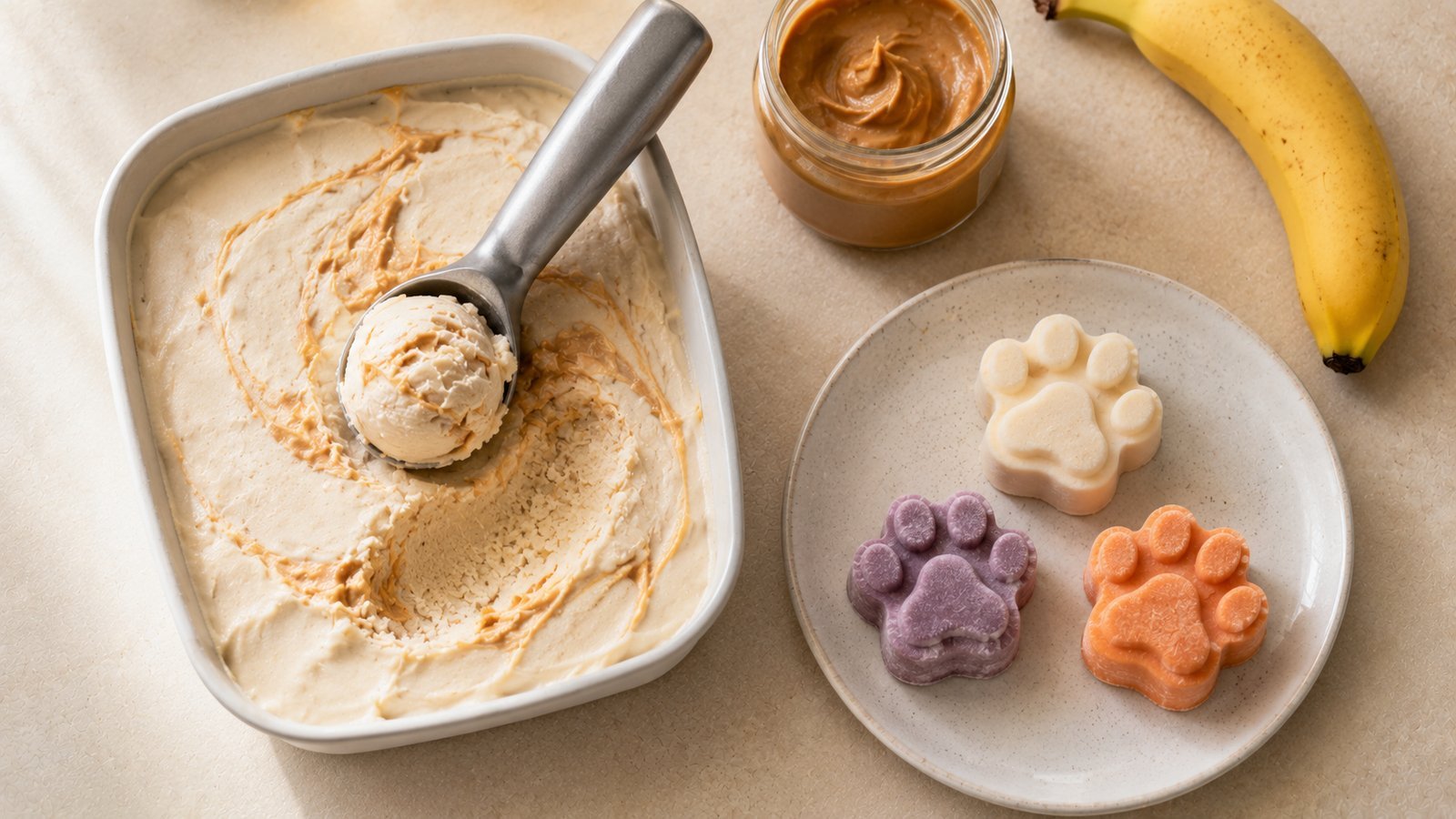
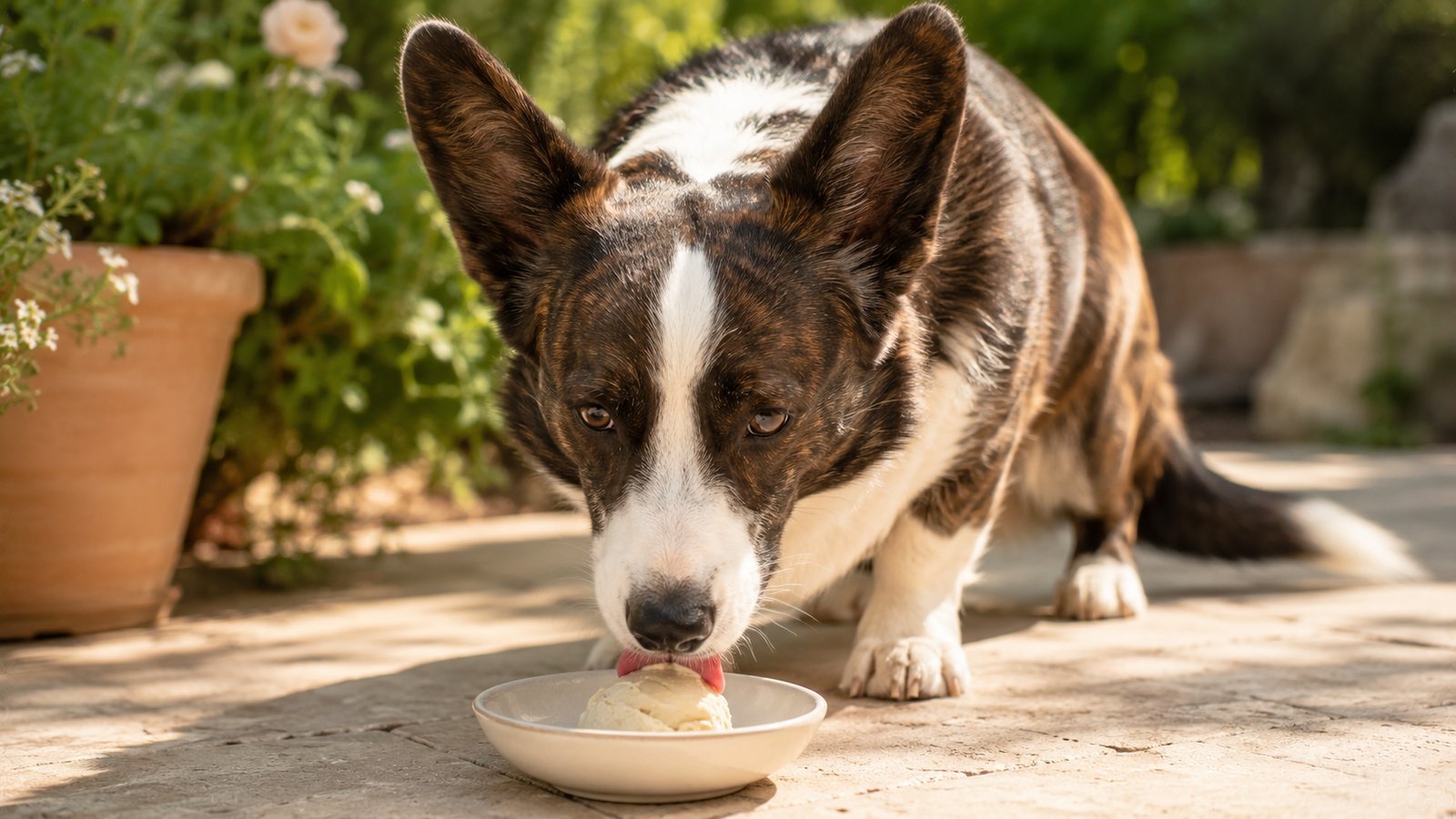
Dog ice cream is the easiest homemade treat there is — most versions are two ingredients and a blender — and it’s also the one where the base you choose matters more than the flavour you pick.
Because a large share of adult dogs don’t digest lactose well. Make your ice cream with cow’s milk and you may hand your dog a stomach ache dressed as a treat. Make it with the right base and it’s one of the best things you can give them on a hot afternoon.
Here’s what’s on this page:
- 6 dog ice cream recipes, sorted by base rather than by flavour
- The lactose question, answered properly — which bases are fine and which aren’t
- Why human ice cream is genuinely not an option, including the version that’s actively dangerous
- Portion sizes, because this is the most calorie-dense treat format there is
Start with the base, not the flavour
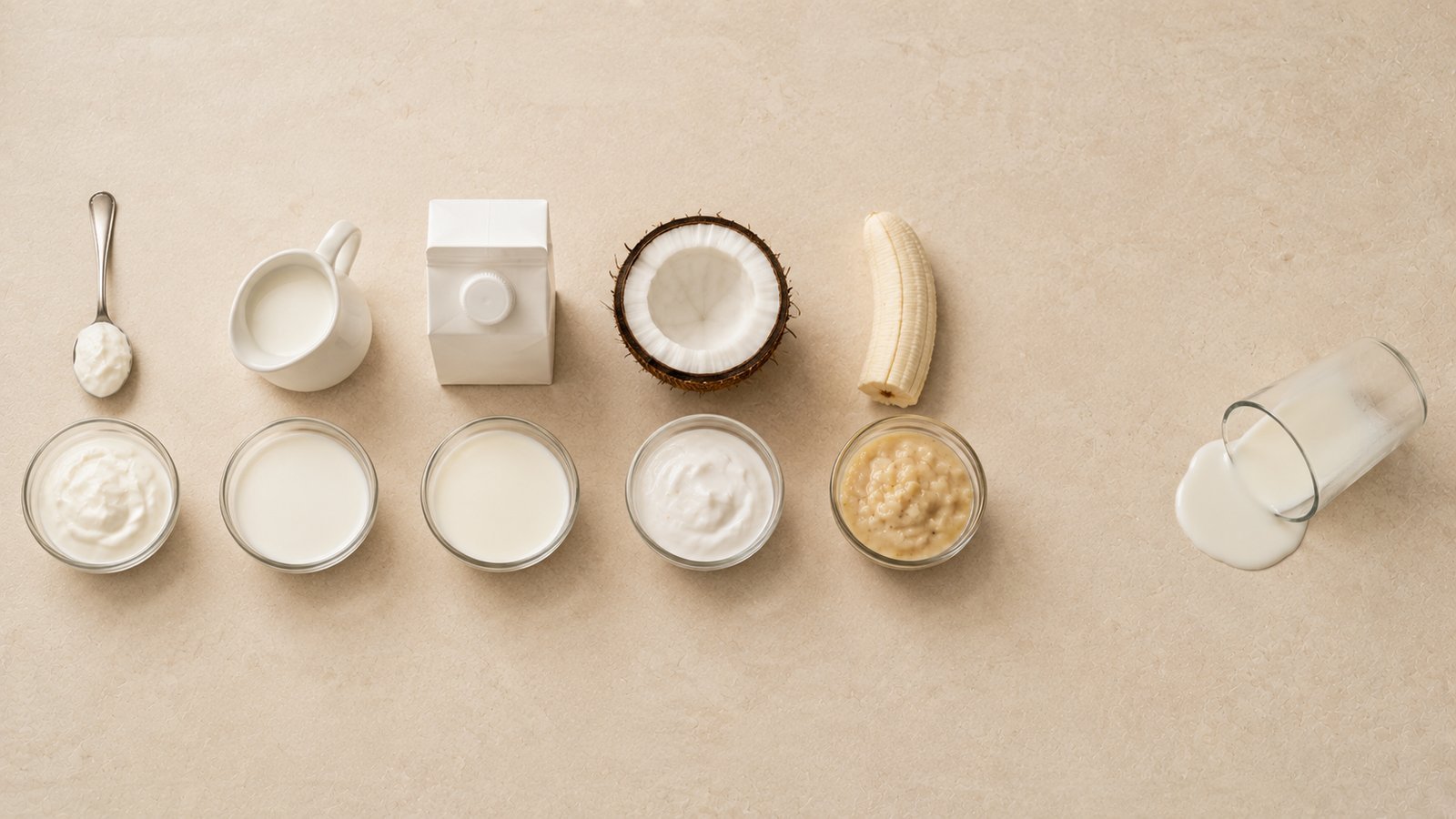
Every dog ice cream is a base plus a flavour. Get the base right and the rest is easy.
| Base | Lactose | Notes |
|---|---|---|
| Plain unsweetened yogurt | Low | The bacteria pre-digest much of the lactose. Best all-round choice. |
| Plain kefir | Lowest | Even more fermented than yogurt. Thin — needs banana to thicken. |
| Goat’s milk | Lower than cow’s | Better tolerated by many dogs. More expensive. |
| Coconut milk | None | Dairy-free, but high in fat — small portions only. |
| Banana, blended | None | Freezes to a genuinely creamy texture on its own. |
| Cow’s milk / cream | High | Skip it. This is the one that causes the upset stomachs. |
| Human ice cream | High + other problems | See below. |
Whichever you use: read the label. Skip anything sweetened, flavoured or labelled sugar-free — sugar-free products are where xylitol shows up, and xylitol is acutely toxic to dogs. (In plain unsweetened yogurt it isn’t a realistic concern; in peanut butter it absolutely is, and that one is well documented.)
Plain means plain. No vanilla, no honey, no “just a little” fruit-on-the-bottom.
Why human ice cream isn’t an option
Not “not ideal” — genuinely not an option, for four separate reasons:
- Chocolate. Obvious in chocolate ice cream, less obvious in the ripple, the brownie chunks and the shell topping.
- Xylitol. Standard in sugar-free and low-carb ranges, and dangerous in small amounts.
- Macadamia nuts. Common in premium flavours.
- Fat and sugar load. Even a plain vanilla scoop is a large dose of both, and it displaces a meaningful chunk of a small dog’s daily calories. If your dog has a history of pancreatitis, ask your vet where their line is.
And underneath all four, the lactose. A bowl of the family ice cream is one of the most common causes of a dog having a bad night in summer.
The full reference list is in our safe human foods guide.
Portion size — read this before you make a batch
Dog ice cream is calorie-dense, especially the peanut butter and coconut versions. It’s a treat, and treats should stay under about 10% of daily calories.
Rough guide per serving:
| Dog weight | One serving |
|---|---|
| Under 10 lb | 1 tbsp |
| 10–25 lb | 2 tbsp |
| 25–50 lb | ¼ cup |
| 50–80 lb | ⅓ cup |
| 80 lb+ | ½ cup |
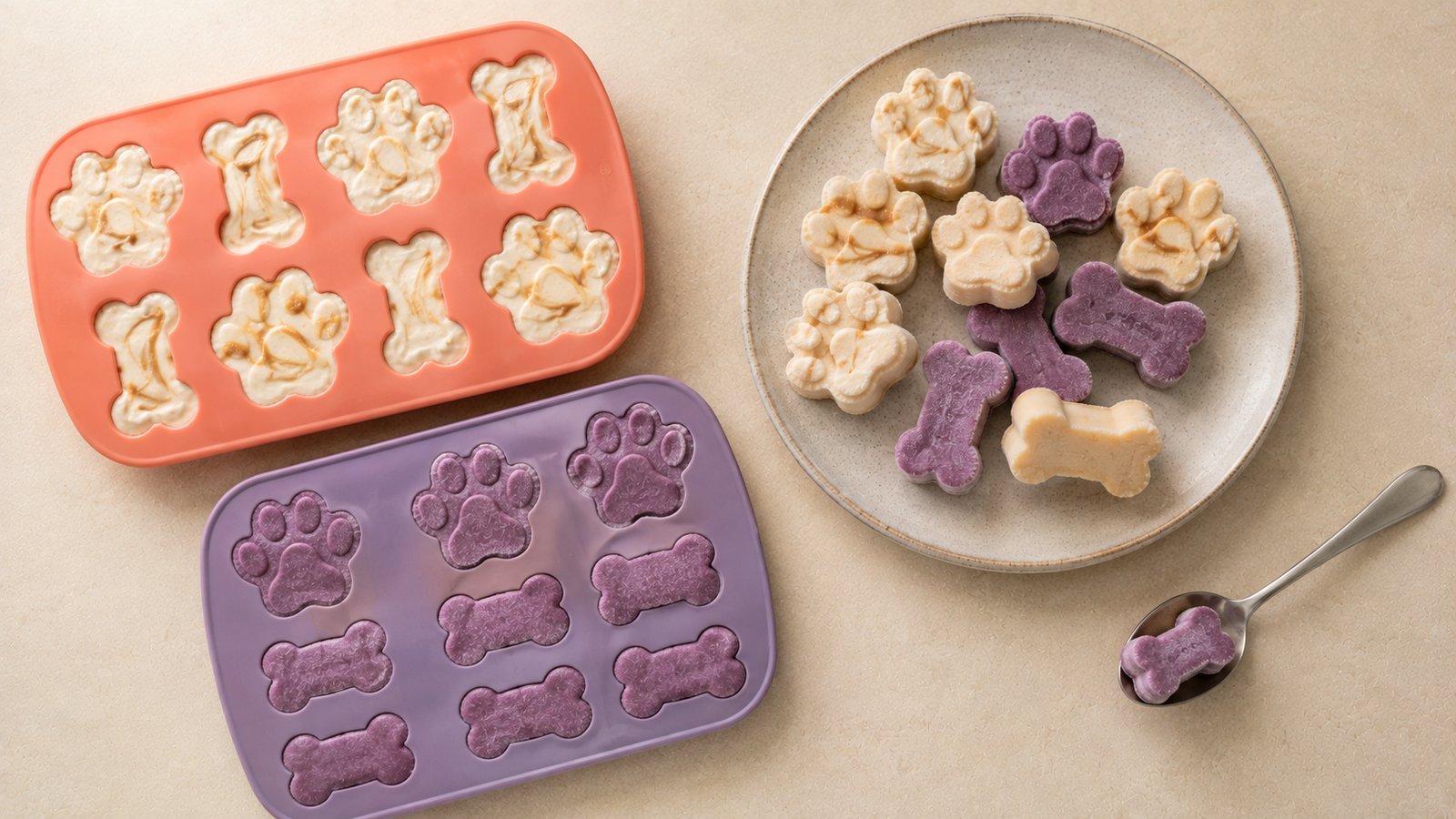
Freeze in portions, not in a tub. A silicone mold or ice cube tray solves the portioning problem permanently — one or two cubes is a serving, and nobody has to make a judgement call with a scoop in their hand.
Serve it semi-soft. Let it sit out 5 minutes. This isn’t just about brain freeze — rock-hard frozen items are a genuine tooth-fracture risk for enthusiastic chewers, and a solid frozen lump is easier to gulp whole. Soft enough to dent with a spoon is the target.
Introduce it in a small amount the first time. Even low-lactose bases can upset a dog who isn’t used to dairy at all.
Homemade dog ice cream: the 6 recipes
All blend smooth and freeze to a scoopable texture. All are dog-safe as written — no xylitol, no chocolate, no macadamia, no added sugar or honey.
1. Two-Ingredient Banana Nice Cream
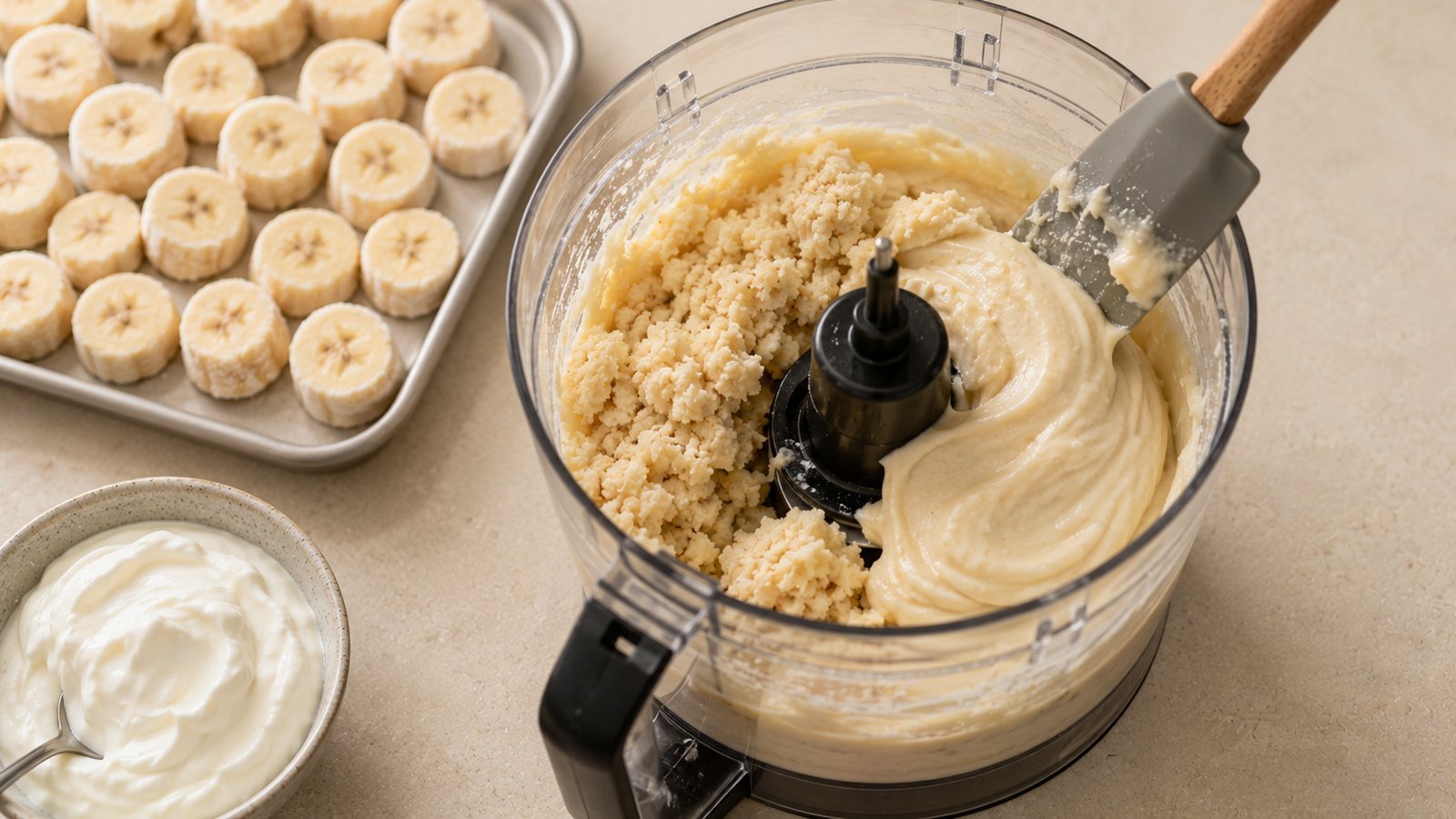
The one to make first. No dairy at all, and bananas freeze creamier than anything else in the fruit bowl.
Ingredients
- 3 ripe bananas, peeled, sliced and frozen solid
- 2–3 tbsp plain unsweetened yogurt
Method
- Freeze the banana slices flat on a tray for at least 3 hours.
- Blend the frozen slices in a food processor. They’ll go crumbly, then gluey, then suddenly turn creamy — keep going through the gluey stage, that’s where people give up.
- Add the yogurt and blend 10 seconds more.
- Serve immediately as soft-serve, or freeze in molds for later.
Makes: ~1½ cups · Keeps: 2 months frozen. Note: bananas are high in natural sugar. This is a treat, not a daily habit.
2. Peanut Butter Swirl Scoop
The one every dog votes for.
Ingredients
- 1 cup plain unsweetened yogurt
- 2 frozen bananas
- 2 tbsp xylitol-free peanut butter
Method
- Blend the bananas and yogurt until smooth.
- Warm the peanut butter for 10 seconds so it’s pourable.
- Pour the base into a container, drizzle the peanut butter over, and drag a knife through once to swirl.
- Freeze 4 hours.
Makes: ~2 cups · Keeps: 2 months frozen. Check the peanut butter label every time. Xylitol appears in more brands each year, and it’s the single most common way dogs are accidentally poisoned by a homemade treat.
3. Pumpkin Pie Dog Ice Cream
Autumn in a bowl, and the gentlest one here on a sensitive stomach.
Ingredients
- 1 cup plain unsweetened yogurt
- ½ cup 100% pure pumpkin puree — not pie filling
- ¼ tsp ground cinnamon
- 1 frozen banana
Method
- Blend everything until completely smooth.
- Pour into molds or a shallow container.
- Freeze 4 hours.
Makes: ~1¾ cups · Keeps: 2 months frozen. Pie filling vs. puree: pie filling contains added sugar and spices including nutmeg, which is toxic to dogs in quantity. The cans sit next to each other and look almost identical. Read the label. Cinnamon yes, nutmeg no — they’re used together in human baking and only one of them is fine for dogs.
4. Goat Milk & Blueberry Soft Serve
For dogs who don’t get on with cow-dairy at all.
Ingredients
- 1 cup plain goat’s milk (or goat kefir)
- ¾ cup blueberries, fresh or frozen
- 1 frozen banana, for body
Method
- Blend until smooth and deep purple.
- Pour into molds and freeze 4 hours.
Makes: ~1¾ cups · Keeps: 2 months frozen. Goat’s milk is lower in lactose than cow’s, not lactose-free. If your dog reacts to dairy of any kind, use recipe 1 or 5 instead. It stains. White dogs will have a purple beard for an afternoon.
5. Coconut & Mango (dairy-free)
No dairy anywhere. The richest one here, which is both why dogs love it and why the portion is small.
Ingredients
- ¾ cup full-fat coconut milk (canned, unsweetened — check for no additives)
- 1 cup mango, peeled, stone removed, chopped
- 1 tbsp plain pumpkin puree, to thicken
Method
- Blend until smooth.
- Freeze in small molds — smaller than the other recipes.
- Freeze 4 hours.
Makes: ~1½ cups · Keeps: 2 months frozen. 🔴 Portion this one down. Coconut milk is high in fat, which makes this by far the most calorie-dense recipe here — one small cube, not three. You’ll often see rich food described as a direct cause of pancreatitis; a 2026 JAVMA review of the evidence found that link weaker and more complicated than commonly stated. If your dog has a pancreatitis history, that’s a conversation with your vet rather than a rule of thumb — but the calorie argument for a small portion stands on its own. Mango stone out, always — it’s a choking and obstruction hazard, and the skin is tough to digest.
6. Savoury Bone Broth Scoop
For dogs who genuinely don’t care for sweet things — and there are more of them than the internet suggests.
Ingredients
- 1 cup homemade unsalted bone broth, chilled
- ½ cup plain unsweetened yogurt
- ¼ cup cooked shredded chicken, finely chopped
Method
- Whisk the broth and yogurt together.
- Stir the chicken through so it’s evenly distributed.
- Pour into molds and freeze 4 hours.
Makes: ~1½ cups · Keeps: 1 month frozen. Shop-bought stock is not a substitute — almost all of it contains onion, which is toxic to dogs. Homemade and unsalted only. This one contains meat. Don’t leave it sitting out to soften for more than a few minutes.
Which one for which dog
| If your dog… | Make | Why |
|---|---|---|
| Has never had dairy | #1 Banana Nice Cream | No dairy at all |
| Reacts to cow’s milk | #4 Goat Milk or #5 Coconut | Lower or zero lactose |
| Will do anything for peanut butter | #2 PB Swirl | Obvious |
| Has a delicate stomach | #3 Pumpkin Pie | Gentlest, prebiotic fiber |
| Doesn’t like sweet food | #6 Savoury Broth Scoop | No fruit, no sugar |
| Has had pancreatitis | #1 or #3, small portions | Avoid #5 — too rich |
| Is on a diet | #3 Pumpkin Pie, small | Lowest calorie density here |
Ways to serve it that aren’t a bowl
- Stuff a rubber toy with the soft mix and freeze it — turns a 30-second treat into 20 minutes of work.
- Spread it on a lick mat and freeze. Licking is calming for a lot of dogs; there are 15 more lick mat combinations here.
- Freeze in a paper cup, then peel the cup away for a hold-able cone. Supervise — some dogs will try to eat the paper.
- Layer two flavours in a mold, freezing 30 minutes between layers.
Frequently asked questions
Can dogs eat ice cream? Not human ice cream. Sugar, fat, lactose, and often chocolate, xylitol or macadamia. Make them their own — it takes five minutes.
Is yogurt safe for dogs? Plain, unsweetened yogurt in moderation, yes — the fermentation reduces the lactose considerably. Check the label for xylitol, and skip anything flavoured or sweetened.
My dog is lactose intolerant. What can I use? Recipe 1 (banana only) or recipe 5 (coconut). Goat’s milk is lower in lactose but not free of it.
How much dog ice cream can I give? See the portion table above — roughly 1 tbsp for a small dog up to ½ cup for a large one, within the 10% treat allowance. The coconut one should be smaller than that.
Can puppies have it? Small amounts of the simplest versions, once they’re weaned and eating solids. Puppy stomachs are sensitive; introduce anything new slowly.
Can I make it without a blender? Mash very ripe banana thoroughly with a fork and stir the yogurt in. The texture is chunkier but dogs are not food critics.
Is dog ice cream just for summer? Mostly, but frozen treats are also useful year-round for slowing down fast eaters and for keeping a bored dog occupied. If it’s a hot day you’re worried about, our summer heat safety guide matters more than any treat.
What’s the difference between this and frozen dog treats? Texture and method. Ice cream is blended smooth and scoopable; frozen treats are usually chunks, cubes or pops. If you want the second kind, we have 10 frozen dog treat recipes.
The bottom line
Every homemade dog ice cream on this page comes down to the same two decisions: pick a base your dog digests, and keep the portion small.
Dog ice cream is genuinely easy and genuinely worth making. Just start from the base rather than the flavour: plain yogurt, kefir, goat’s milk, coconut or straight banana — never cow’s milk, never the tub from your own freezer.
Then portion it like the calorie-dense treat it is, serve it slightly soft, and check every peanut butter label for xylitol.
Nuggy’s position is that the peanut butter one is the only one that counts and the rest are a waste of a bowl. Which base is your dog going to get?
For more everyday options, our healthy homemade dog treats covers the non-frozen side.
This article is general information, not veterinary advice. If your dog eats something containing xylitol, chocolate or macadamia nuts, contact your vet immediately.
As an Amazon Associate we earn from qualifying purchases.