
This post contains affiliate links. I may earn a small commission if you buy through them, at no extra cost to you.
✅ Yes, dogs can eat blueberries — and they’re one of the healthiest treats you can give. Low in calories, high in antioxidants, and the perfect size for training. No prep needed beyond a quick rinse.
Quick Answer Box
✅ Blueberries are completely safe for dogs — fresh or frozen.
Rinse and serve. No peeling, no coring, no seeds to worry about. They’re low in sugar relative to other fruits and rich in antioxidants. Limit to a small handful per day — they’re treats, not a meal replacement.
Intro
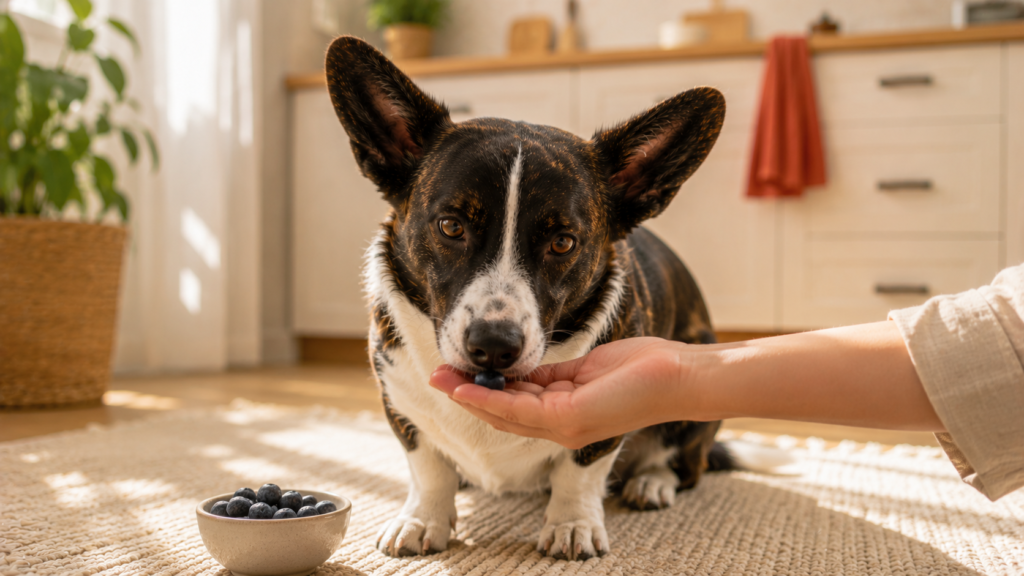
Blueberries are Nuggy’s version of candy. I discovered this when I dropped one on the floor during breakfast and he hoovered it up before I could even reach down. Now I keep a small container in the fridge specifically for him — they’re genuinely one of the best treats I’ve found.
Here’s why blueberries are so good for dogs: they’re tiny (no choking risk for most dogs), require zero preparation, are low in calories, and are packed with antioxidants. If you’re looking for a healthy training treat or just want to share a snack without guilt, blueberries are the answer.
Are Blueberries Safe for Dogs?
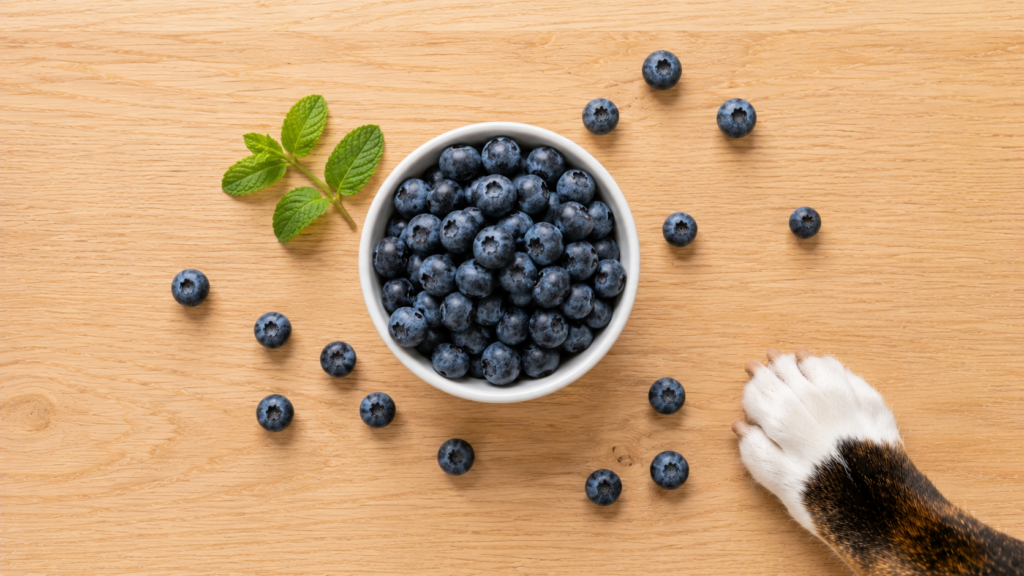
Yes — blueberries are one of the safest fruits you can give your dog. There are no toxic compounds, no dangerous seeds, no tricky preparation. Rinse and serve.
Both fresh and frozen blueberries are safe. Frozen blueberries are actually a favourite with many dogs, especially in summer — the cold temperature makes them extra satisfying and they take a tiny bit longer to eat.
The only minor consideration: blueberries can cause mild digestive upset if a dog eats a very large quantity in one go (think a full punnet, not a handful). Stick to a reasonable portion and there’s nothing to worry about.
Benefits of Blueberries for Dogs
Blueberries are genuinely one of the most nutritious treats you can offer a dog — they’re often called a superfood for good reason:
- Antioxidants — blueberries are one of the richest antioxidant sources available. Antioxidants fight free radicals, which are linked to ageing, inflammation, and chronic disease. This applies to dogs too.
- Vitamin C — supports immune function and acts as an antioxidant.
- Vitamin K — important for blood clotting and bone health.
- Fibre — supports healthy digestion in appropriate amounts.
- Manganese — supports bone development and energy metabolism.
- Low in calories — about 57 kcal per 100g. A handful of blueberries is one of the lowest-calorie treats you can give.
- Low in sugar — lower than bananas or grapes, making them a better option for dogs watching their weight.
Research has also looked at whether antioxidants in blueberries may help reduce cognitive decline in older dogs — early findings are promising, though more research is needed.
How to Serve Blueberries to Your Dog

Blueberries are the easiest fruit treat to prepare — just rinse and go.
How many is safe?
| Dog size | Max serving |
|---|---|
| Small (< 10 kg) | 10 blueberries |
| Medium (10–25 kg) | small handful (15–20) |
| Large (> 25 kg) | generous handful (25–30) |
These are daily maximums — treats should make up no more than 10% of daily calories.
Serving ideas:
- Fresh from the fridge — rinse and serve. Done.
- Frozen — freeze a portion and serve as a cooling treat. Most dogs love the texture and temperature.
- Training treats — blueberries are the perfect training treat size. No need to break them up, low calorie, and most dogs are highly motivated by them. Keep a small container handy during training sessions.
- Blueberry lick mat — blend a handful of blueberries with plain yogurt (xylitol-free) and spread on a lick mat, then freeze. Freeze into a silicone mould for a fun shaped treat.
- Mixed frozen treat — add blueberries to our 10 Homemade Frozen Dog Treats recipes — they work brilliantly as a mix-in.
Pro Tip
For small dogs, you can gently squish each blueberry before serving — this reduces any choking risk and releases more of the juice, which most dogs find even more appealing.
The Bottom Line
Can dogs eat blueberries? Yes — and if there’s one fruit treat I’d recommend keeping in the fridge for your dog, it’s blueberries. They’re healthy, low calorie, require zero prep, and almost every dog goes crazy for them.
Nuggy gets a small handful most days — as a training treat, a post-walk snack, or just because he looks at me in that particular way. They’re one of the few treats I genuinely don’t feel any guilt about.
For more safe fruit and food options, see our Foods Dogs Can Eat and Can’t — Safe Human Foods Guide. And for more treat ideas, Safe Homemade Dog Treats has plenty of recipes that use blueberries.
FAQ
Q: How many blueberries can a dog eat per day?
A: It depends on size. A small dog can have around 10, a medium dog a small handful (15–20), and a large dog up to 25–30. Treats should make up no more than 10% of daily calories.
Q: Can dogs eat frozen blueberries?
A: Yes — frozen blueberries are completely safe and many dogs prefer them. They’re a great cooling summer treat. For very small dogs, you can squish them slightly first to reduce any choking risk.
Q: Can puppies eat blueberries?
A: Yes, in small amounts. Blueberries are a safe and gentle fruit for puppies. Start with just a few to check for any digestive reaction, and make sure they’re not too cold if serving frozen to a very young puppy.
Q: Are blueberries better than other fruit treats for dogs?
A: Blueberries are among the best fruit treats for dogs — high in antioxidants, low in calories, low in sugar, and no prep needed. They’re often considered a superfood for dogs for good reason.
Q: Can dogs eat blueberry muffins or blueberry yogurt?
A: No to muffins — they contain sugar, butter, and potentially xylitol. Blueberry yogurt can be okay if it’s plain, unsweetened, and xylitol-free — but always check the label. Plain fresh blueberries are always the safest option.
Q: Do blueberries help with dog allergies?
A: There’s some evidence that the anti-inflammatory properties of blueberry antioxidants may help reduce inflammation, which could benefit dogs with allergies. However, this isn’t a treatment — if your dog has allergies, consult your vet.