
This post contains affiliate links. I may earn a small commission if you buy through them, at no extra cost to you.
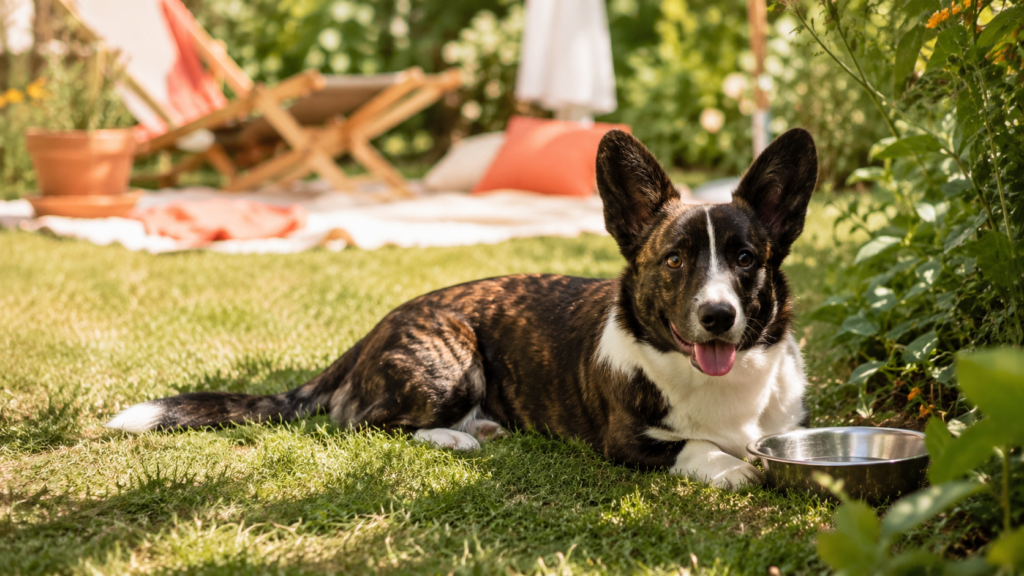
Summer is Nuggy’s favourite season — right up until it isn’t. The moment temperatures push past 25°C, he starts slowing down on walks, seeking shade, and giving me the look that says “why are we still outside?”
Dogs can’t sweat the way we do. They rely almost entirely on panting to cool themselves, which becomes less effective as the air temperature rises. That makes them far more vulnerable to heat than most people realise — and some of the risks aren’t obvious at all.
Here are 10 things I’ve learned (a few the hard way) about keeping dogs safe when the temperature climbs.
1. Know the Signs of Heatstroke — and Act Fast
Heatstroke is a genuine medical emergency. It can develop quickly and become life-threatening within minutes if not addressed. Knowing the signs means you can act before the situation becomes critical.
Early warning signs:
- Heavy, excessive panting — more intense than normal exertion panting
- Drooling more than usual
- Restlessness, inability to settle
- Bright red gums and tongue
Signs of serious heatstroke:
- Weakness and stumbling
- Glazed eyes
- Vomiting or diarrhea
- Gums turning pale, grey, or bluish
- Collapse or loss of consciousness
What to do immediately:
- Move your dog to a cool, shaded area (air conditioning is ideal)
- Offer small amounts of cool (not ice cold) water to drink
- Apply cool — not cold — water to the paw pads, armpits, and groin area
- Do NOT use ice packs or very cold water — this constricts blood vessels and can make things worse
- Get to a vet as fast as possible, even if your dog seems to recover
Don’t wait to see if your dog “walks it off.” Heatstroke causes internal organ damage that isn’t visible from the outside.
2. The Pavement Test — Do This Before Every Summer Walk
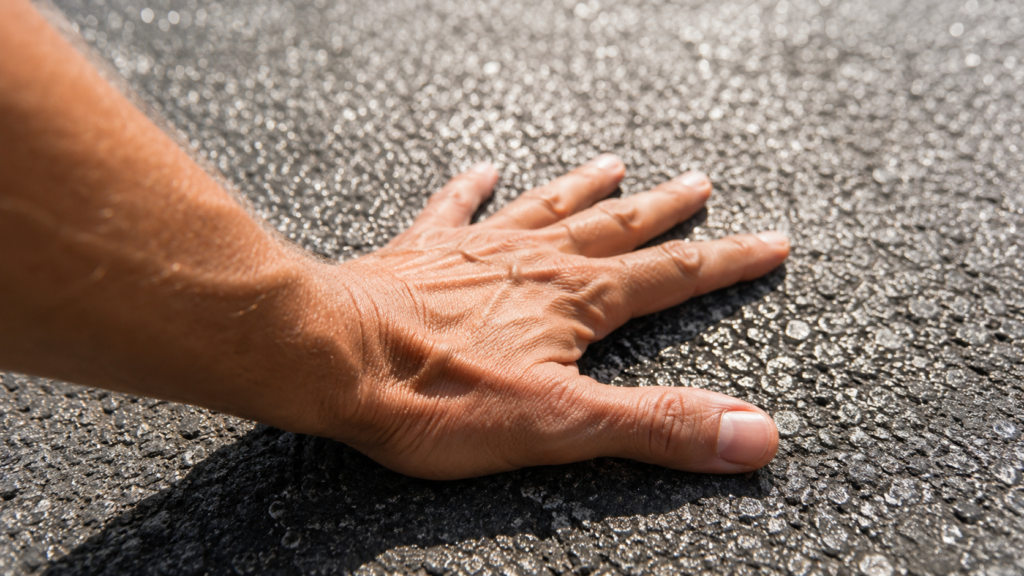
Asphalt and tarmac absorb heat dramatically. On a 30°C day, pavement surface temperature can exceed 60°C — hot enough to cause burns in under a minute.
The 7-second test: Press the back of your hand flat on the pavement. Hold it for 7 seconds. If it’s uncomfortable for you, it’s painful for your dog.
What to do:
- Walk early morning (before 9am) or evening (after 7pm) when pavement has cooled
- Stick to grass, dirt paths, or shaded routes during the hottest part of the day
- If you’re caught out, walk on grass verges wherever possible
- Check your dog’s paw pads after walks — redness, blistering, or your dog licking their paws excessively are signs of burns
Signs of burned paw pads: limping, refusing to walk, licking at paws, visible redness or blistering on the pad surface. This needs vet attention.
3. Never Leave Your Dog in a Parked Car
Even on a mild day, a car interior heats up to dangerous temperatures within minutes. On a 22°C day, a car interior can reach 47°C within an hour — and most of that increase happens in the first 20 minutes.
Cracking a window makes almost no difference.
The rule is simple: if you can’t take your dog with you, leave them at home. No errand is worth the risk.
If you see a dog in a hot car showing signs of distress, in most countries you have legal grounds to intervene and alert emergency services.
4. Hydration Is the Most Important Thing You Can Do
Dogs need significantly more water in hot weather. A dog that drinks 500ml on a cool day may need twice that in summer heat, more if they’re active.
Practical hydration tips:
- Always have fresh water available indoors and in the garden — refill bowls frequently, as warm water is less appealing
- On walks, carry water and offer it every 15–20 minutes
- A collapsible dog travel bowl fits in any pocket or bag and makes outdoor hydration easy — this is what I carry with Nuggy on any walk over 20 minutes
- Add a few ice cubes to the water bowl — most dogs enjoy it and it helps keep the water cool
- Wet food and watermelon pieces (seeds removed) add moisture to your dog’s diet during hot spells
Signs of dehydration: dry gums, loss of skin elasticity (gently lift the skin at the back of the neck — it should spring back immediately; if it doesn’t, your dog needs water and possibly a vet), lethargy, sunken eyes.
5. Adjust Walk Timing and Duration
The single easiest summer change is when you walk, not just how long.
Target windows:
- Morning: Before 9am while the ground is still cool from overnight temperatures
- Evening: After 7–8pm once the pavement has had time to cool down
During peak heat (11am–5pm), keep outdoor time to short toilet breaks in shaded areas. A well-exercised dog in the morning will rest contentedly through the hottest part of the day.
On very hot days (above 30°C), even short walks can be risky for brachycephalic breeds (flat-faced dogs like Pugs, French Bulldogs, Bulldogs) and overweight dogs, who have a much harder time regulating temperature. These dogs should have outdoor time strictly limited to the coolest parts of the day.
6. Set Up Cooling Stations at Home
For dogs that spend time outdoors in a garden, or even just indoors in a hot house, cooling stations make a real difference.
Easy options:
- A paddling pool or shallow tub with a few inches of cool water — many dogs will step in and lie down voluntarily
- A cool, damp towel for your dog to lie on
- A battery-powered fan in their favourite resting spot
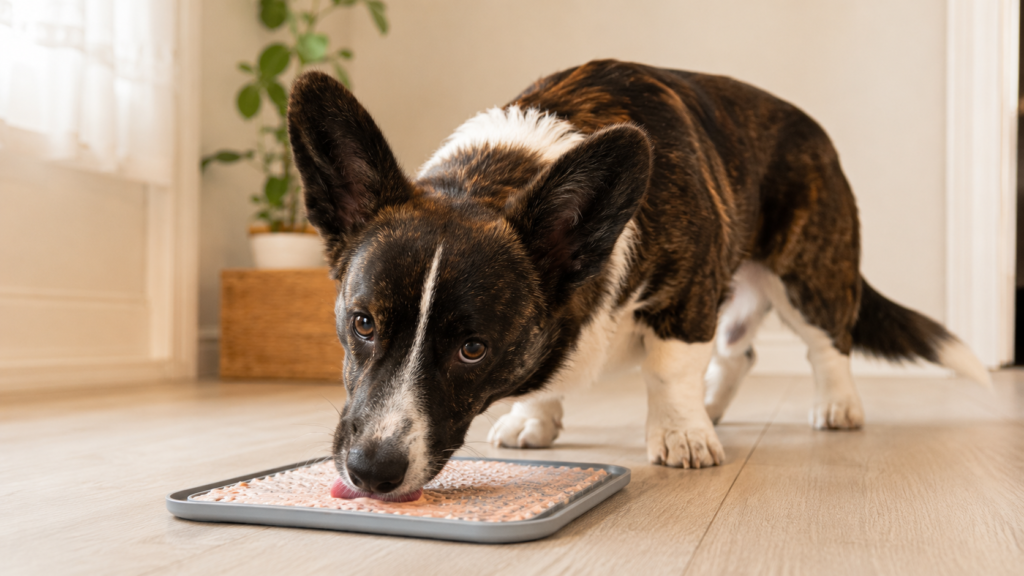
- Frozen treats on a lick mat keep dogs occupied and cool simultaneously
Speaking of frozen treats: freeze plain yogurt, banana, or pumpkin puree in a lick mat and let your dog work at it in a cool spot. The licking action is naturally calming and the frozen content brings their core temperature down. We do this with Nuggy on any day above 28°C. You can also freeze dog-friendly slushies in a Pupsicle treat mold — our Homemade Frozen Dog Treats article has 10 summer-ready recipes.
7. Don’t Shave Your Dog — Especially Double-Coated Breeds
This one surprises people. The intuition is “dog is hot → remove fur → dog is cooler.” For most dogs, this is wrong.
A double coat (like Corgis, Huskies, Golden Retrievers, and most working breeds have) acts as a two-way insulator. In winter it traps warmth; in summer it traps cool air close to the skin and protects from direct sun. Shaving a double coat removes this protection and can:
- Cause sunburn on the exposed skin
- Damage the coat’s natural structure (sometimes permanently, a condition called “post-clipping alopecia”)
- Actually make your dog hotter by removing the insulating layer
The right approach for double-coated dogs in summer: regular brushing to remove dead undercoat allows air to circulate much better than shaving. A thorough deshed brush-out before summer is more effective than a shave.
Single-coated or short-coated breeds (Vizslas, Boxers, Greyhounds) can safely have their coat trimmed short if needed, but check with your groomer.
8. Watch What Your Dog Eats at Summer Gatherings
BBQs and garden parties are full of hazards for dogs:
- Corn cobs — the most dangerous BBQ item. Dogs swallow them whole; corn cobs cause intestinal obstruction requiring emergency surgery
- Onions, garlic, and chives — all toxic to dogs. Burgers, sausages, and marinades often contain them
- Bones — cooked bones splinter and can cause internal lacerations or choking
- Alcohol — even small amounts cause serious toxicity; keep drinks out of reach
- Sunscreen and insect repellent — if dropped or applied to your dog, DEET-containing products are toxic; use pet-specific formulations only
A summer gathering is also a high-stress environment for many dogs — lots of unfamiliar people, noise, and activity. Watch for signs of anxiety (excessive panting in a cool environment, pacing, hiding) and give your dog access to a quiet retreat if needed. Our How to Calm a Dog with Separation Anxiety article covers managing overstimulation.
9. Water Safety — Not All Dogs Are Natural Swimmers
Many dogs enjoy water in summer, but don’t assume your dog can swim just because they’re a dog. Some breeds (particularly short-legged or top-heavy dogs like Corgis, Dachshunds, and Bulldogs) are poor swimmers.
If your dog is going in water:
- Introduce gradually in shallow water, never throw a dog in
- Use a dog life jacket for any open water (lakes, sea, rivers)
- Rinse off after swimming in chlorinated pools or saltwater — both can irritate skin
- Dry ears thoroughly after water exposure to prevent ear infections
- Don’t let your dog drink from rivers or stagnant water — leptospirosis and blue-green algae are genuine summer risks
10. Know Which Dogs Are Most at Risk
Some dogs struggle with heat much more than average and need extra monitoring:
- Brachycephalic breeds (Pugs, Frenchies, Bulldogs, Shih Tzus) — their shortened airways make efficient panting almost impossible
- Elderly dogs — reduced cardiovascular efficiency makes heat regulation harder
- Overweight dogs — the extra insulation and strain on the heart significantly reduces heat tolerance
- Very young puppies — less efficient thermoregulation
- Dogs with heart or respiratory conditions — already working harder; heat compounds the strain
If your dog falls into any of these categories, be more conservative about heat exposure, shorten walks further, and have your vet’s number ready.
The Bottom Line
Most summer dangers for dogs are avoidable with a few simple adjustments: walk early, test the pavement, carry water, and know the warning signs of heatstroke.
Nuggy’s summer routine looks like this: 7am walk on grass, water available at all times with ice cubes, a frozen lick mat session around midday, and a short evening walk after the pavement cools. Simple — but it’s made a real difference in how he handles the heat.
For travel-specific tips, check our How to Travel with a Dog guide — summer road trips come with their own set of considerations. And keep your Dog Health Care Checklist handy — it covers the year-round basics that support your dog through every season.
Frequently Asked Questions
Q: At what temperature is it too hot to walk a dog?
A: As a general guide, once temperatures exceed 25°C, reduce walk duration and stick to shaded routes. Above 30°C, walk only in early morning or late evening. For brachycephalic or overweight dogs, these thresholds are lower — be more conservative.
Q: How do I cool down a dog that has overheated?
A: Move to shade or air conditioning, offer small sips of cool water, and apply cool (not ice cold) water to the paw pads, armpits, and groin. Get to a vet as quickly as possible — even if your dog seems to recover, internal damage may have occurred.
Q: Can dogs get sunburned?
A: Yes — especially dogs with white, thin, or short coats and dogs with pink skin on their nose, ears, or belly. Dog-specific sunscreen (never DEET-containing human products) can be applied to exposed areas. Your vet can recommend appropriate products.
Q: How much water does a dog need in summer?
A: A general baseline is about 30–50ml of water per kilogram of body weight per day — more in heat and after exercise. A 10 kg dog needs roughly 300–500ml on a cool day and significantly more in summer. Offer water frequently and watch for signs of dehydration.
Q: Is it safe for dogs to swim in the sea or lakes?
A: Yes, with precautions. Use a life jacket in open water, rinse off salt or chlorine after swimming, don’t let your dog drink the water, and dry ears thoroughly to prevent infections. Avoid water bodies with blue-green algae (which appears as green scum) — it’s extremely toxic to dogs.
Q: Can I put ice in my dog’s water bowl?
A: Yes — this is safe and most dogs enjoy it. Ice water does not cause bloat (a myth that circulates online). Ice cubes can also be given as treats and are a great low-calorie summer snack.