
This post contains affiliate links. I may earn a small commission if you buy through them, at no extra cost to you.
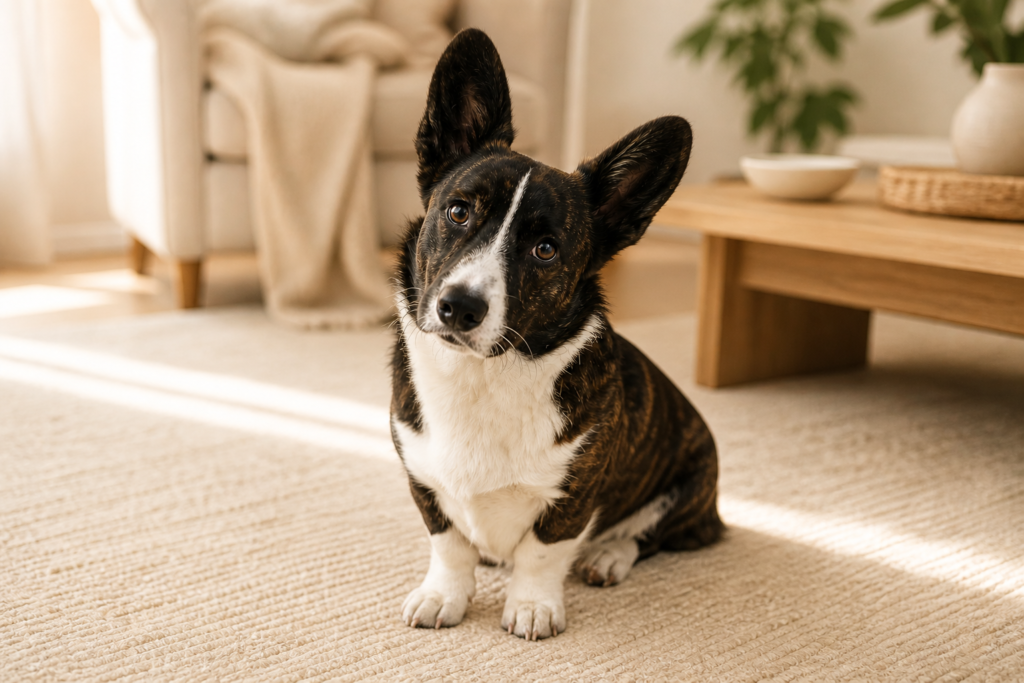
You grab your keys. Your dog’s ears perk up. You put on your shoes — and suddenly they’re glued to your side, panting, pacing, staring at you with those eyes that say please don’t go.
Separation anxiety is one of the most common — and most misunderstood — dog behavior problems. It’s not your dog being dramatic. It’s genuine distress. And without the right approach, it usually gets worse, not better.
The good news? Separation anxiety is very treatable. With some consistency and the right tools, most dogs improve significantly within a few weeks. Here’s exactly how to do it.
What Is Separation Anxiety in Dogs?
Separation anxiety happens when a dog becomes distressed after being separated from their owner (or sometimes a specific family member). It’s more than just missing you — it’s a panic response their nervous system triggers the moment they sense you’re about to leave.
Common signs:
- Excessive barking, whining, or howling when alone
- Destructive behavior — chewing furniture, scratching doors
- Pacing, drooling, or panting
- Trying to escape (broken nails, damaged crates, scratched doorframes)
- Accidents indoors, even in a house-trained dog
- Following you from room to room (“velcro dog” behavior)
- Getting visibly distressed when you pick up your keys or put on shoes
The difference between separation anxiety and normal boredom: a bored dog chews things and settles. An anxious dog spirals.
Why Do Dogs Develop Separation Anxiety?
Some dogs are simply more prone to anxiety — it has a genetic component. But several triggers can cause or worsen it:
- Schedule changes — a sudden shift in your routine (new job, working from home ending)
- Life disruptions — moving house, a new baby, loss of a companion
- Pandemic dogs — dogs adopted during lockdown who never learned to be alone
- Rescue dogs — previous abandonment or trauma
- Lack of early alone-time training — puppies who were never taught independence
Understanding the cause doesn’t always change the fix, but it helps you be patient with the process.
How to Calm a Dog with Separation Anxiety: 7 Steps That Work
This is a gradual desensitization approach — the same method recommended by most veterinary behaviorists. Go at your dog’s pace, not yours.
Step 1 — Practice Short Departures (Start Tiny)
The biggest mistake owners make is jumping straight to long absences. That’s like throwing someone who’s afraid of heights onto a skyscraper rooftop.
Start with micro-departures:
- Put on your shoes. Sit back down. Do nothing.
- Pick up your keys. Set them down.
- Walk to the door. Come back immediately.
- Step outside for 10 seconds. Come back before they react.
- Gradually increase duration — 30 seconds, 2 minutes, 5 minutes, 15 minutes.
The goal is to stay below the anxiety threshold the whole time. If your dog is already whining at 2 minutes, your sessions are too long. Go shorter.
Do 3–5 short sessions per day. Consistency beats duration.
Step 2 — Create a Safe Space They Actually Love
A crate isn’t a punishment — for an anxious dog, it can become a genuine den of calm. The key is making sure they associate it with good things, not with you leaving.
How to build a positive crate association:
- Feed meals in or near the crate
- Drop high-value treats inside randomly throughout the day
- Put a worn t-shirt of yours inside (your scent is calming)
- Cover it with a blanket to make it more den-like
- Never use the crate as punishment
If your dog already has a negative crate association, start from scratch — door open, treats scattered inside, zero pressure.
A well-sized crate makes a real difference. For medium to large dogs, the MidWest Homes for Pets iCrate is a solid choice — it comes with a divider panel so you can resize it as they build confidence, and the foldable design is practical for most homes.
Step 3 — Use Calming Aids That Actually Help
Calming aids won’t fix separation anxiety on their own, but they can take the edge off while you work on the behavioral side — especially in the early stages.
ThunderShirt
A ThunderShirt applies gentle, constant pressure to your dog’s torso — similar to swaddling a baby. Studies show it reduces anxiety in around 80% of dogs. Put it on 15–20 minutes before you leave (not just when they’re already panicking) so they associate it with calm, not crisis.
Dog calming music
Yes, this actually works. Through a Dog’s Ear is a research-backed classical music playlist specifically designed to calm dogs — you can find it on Spotify or YouTube. Leave it playing quietly when you go out.
Dog calming essential oils
Lavender and chamomile used in a diffuser can have a mild calming effect. Keep it subtle — dogs’ noses are powerful, and strong scents are overwhelming. Never apply essential oils directly to your dog’s skin or coat.
For internal supplements, Zesty Paws makes calming chews with L-Theanine and melatonin that some owners find helpful — but talk to your vet before adding supplements to your dog’s routine.
Step 4 — Give Them Something to Do Before You Leave
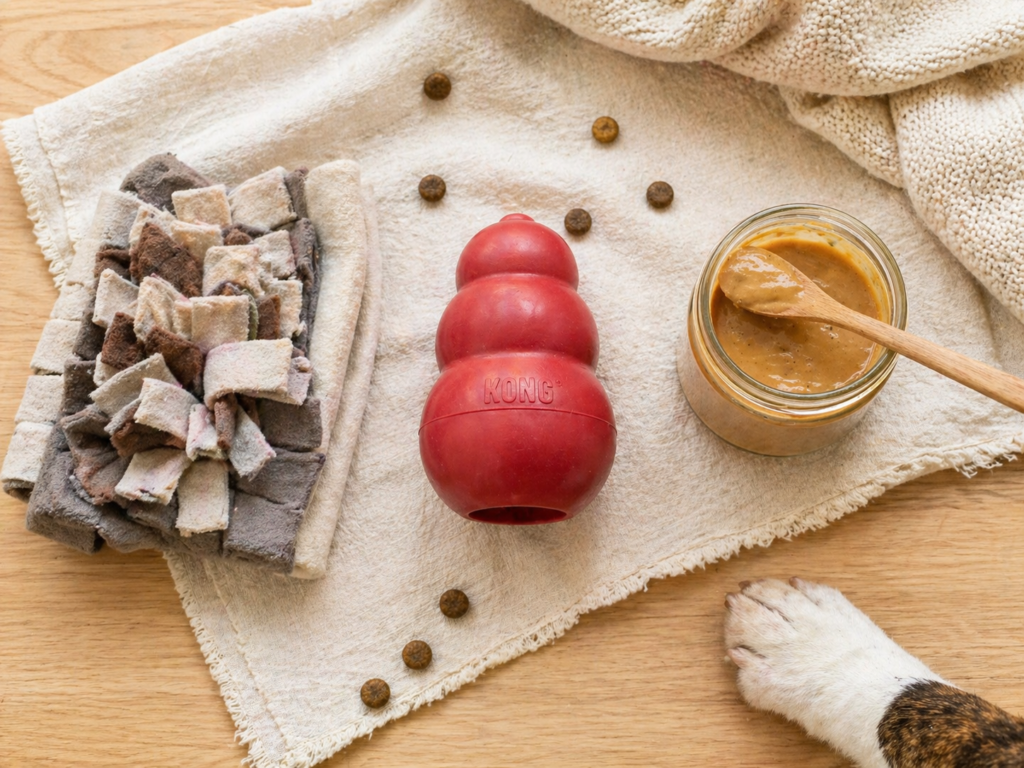
A dog that’s occupied is a dog that’s not watching the door.
The KONG Classic is the gold standard here. Stuff it with peanut butter, plain yogurt, or wet food, freeze it overnight, and give it to your dog right as you leave. A frozen KONG takes most dogs 20–40 minutes to work through — by then, their nervous system has often settled.
Other pre-departure enrichment ideas:
- Snuffle mat with kibble scattered through it
- Lick mat with smeared peanut butter or banana
- A long-lasting chew (bully stick, yak chew)
Looking for more enrichment ideas? Check out our guide: 12 Easy Enrichment Ideas That Actually Calm Your Dog
Step 5 — Keep Your Arrivals and Departures Low-Key
This one feels counterintuitive, but it matters: don’t make a big deal of leaving or coming home.
Long goodbye rituals — “Mama will be back soon, I love you, be a good boy!” — actually increase anxiety. You’re signaling that something significant is happening. Keep departures calm and matter-of-fact.
Same with arrivals: wait until your dog is calm before greeting them. If they’re jumping and spinning, give them a moment to settle, then say hello. This teaches them that calm behavior = attention.
It’s not about being cold — it’s about not reinforcing the drama.
Step 6 — Build Independence Throughout the Day
Separation anxiety isn’t only a “when you leave” problem — it’s a relationship pattern. Velcro dogs that follow you everywhere are often more anxious because they never practice being separate from you.
A few small habits that build independence:
- Out-of-sight practice: Close the bathroom door when you shower. Go to another room for 10 minutes.
- Place training: Teach “go to your mat” — a cued calm settle that you can use throughout the day. Start right on the mat, reinforce heavily, then gradually increase distance and duration.
- Avoid constant contact: If your dog is always on your lap or pressed against you, gently encourage them to settle nearby instead — on their own bed, not yours.
Related: 10 Simple Daily Habits That Keep Dogs Happy and Balanced
Step 7 — Natural Calming Remedies to Support the Process
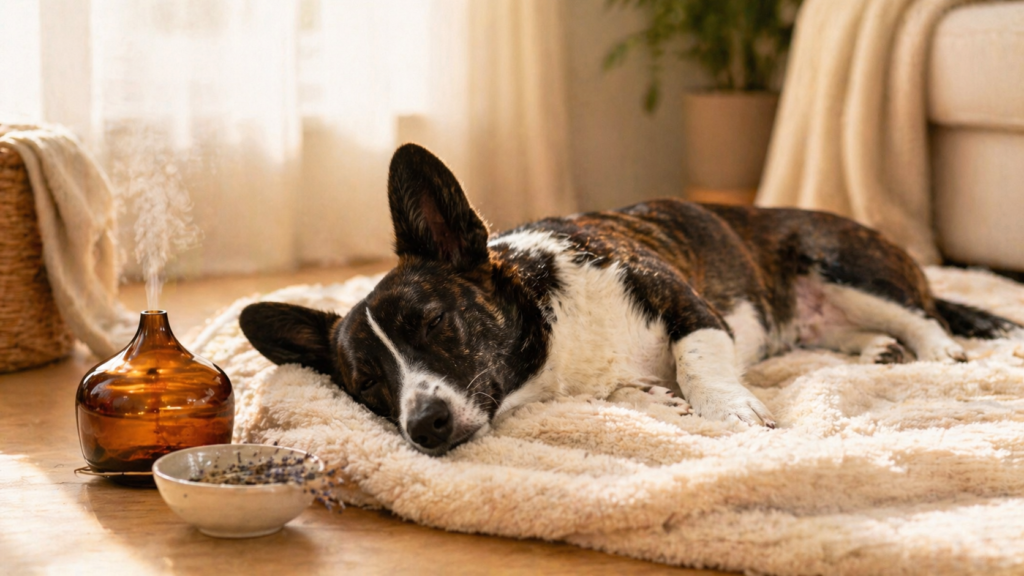
While training is the foundation, some natural remedies can support your dog’s nervous system as you work through the steps above.
What works (with caveats):
- CBD oil for dogs — emerging evidence suggests it can reduce anxiety. Use a pet-specific formulation; human CBD products may contain ingredients harmful to dogs.
- Adaptil DAP diffuser — a synthetic version of the dog-appeasing pheromone mother dogs release. Plug it in where your dog spends most of their time.
- Melatonin — can be calming for mild anxiety. Dose depends on your dog’s weight; check with your vet first.
- Chamomile and valerian root — both have mild sedative properties and are generally safe for dogs in appropriate doses.
What doesn’t work:
- Punishing anxious behavior (it makes it worse)
- Ignoring it and hoping they “grow out of it” (they won’t)
- Getting another dog as a solution (separation anxiety is about you, not other dogs)
When to See a Vet or Professional Trainer
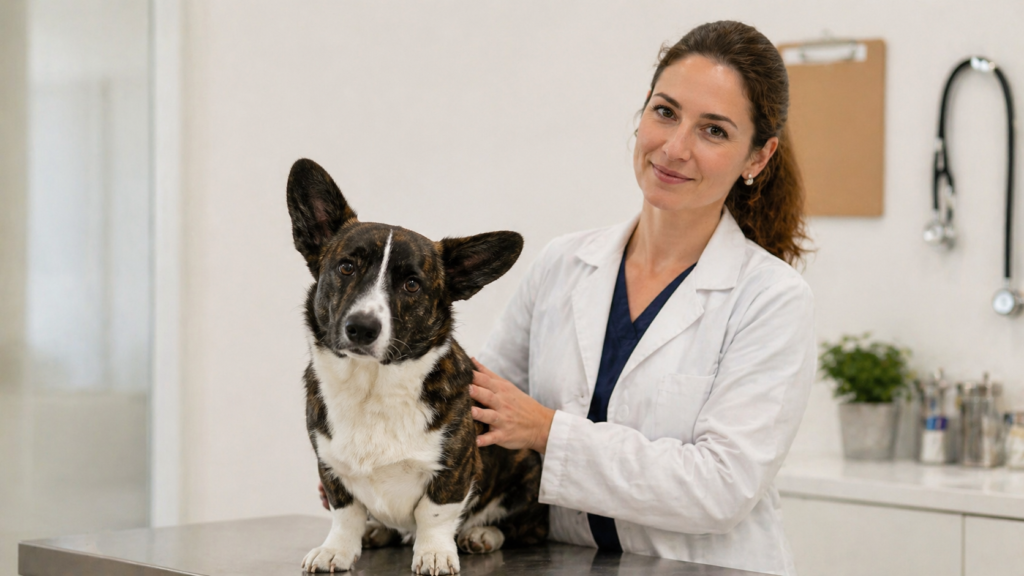
For mild to moderate separation anxiety, the steps above are enough for most dogs. But if your dog:
- Is injuring themselves trying to escape
- Refuses to eat at all when you’re away
- Shows no improvement after 4–6 weeks of consistent work
- Has had a traumatic history (rescue, abuse)
…it’s time to call in a professional.
Your vet can rule out any medical causes and, in severe cases, may prescribe anti-anxiety medication (like fluoxetine or clomipramine) to use alongside behavioral training — not instead of it. Medication lowers the anxiety ceiling enough for the training to work; most dogs can be weaned off it once the behavior is established.
A certified professional dog trainer (CPDT-KA) or veterinary behaviorist (DACVB) is worth every cent for severe cases. Look for someone who uses positive reinforcement, not punishment-based methods.
For a broader look at common dog behavior issues: Dog Behavior Problems Explained — Causes, Meaning & Solutions
Final Thoughts
Separation anxiety can feel overwhelming — especially when you have to leave for work and your dog is visibly suffering. But you’re not helpless, and your dog isn’t broken.
Start small. Be consistent. Celebrate tiny wins (10 minutes alone without a peep is a win). Most dogs make real progress within 4–8 weeks when their owner sticks with the desensitization process.
If Nuggy taught me anything, it’s that patience is the actual training tool. The steps are just the framework.
Have questions about what’s worked for your dog? Drop a comment below — I read every one.
🧰 Tools Mentioned in This Article
| Product | Why It Helps | Link |
|---|---|---|
| ThunderShirt | Pressure wrap that reduces anxiety in ~80% of dogs | View on Amazon |
| MidWest iCrate | Safe, den-like crate with divider panel | View on Amazon |
| KONG Classic | Freeze with food for 30–40 min of distracted calm | View on Amazon |