
This post contains affiliate links. I may earn a small commission if you buy through them, at no extra cost to you.
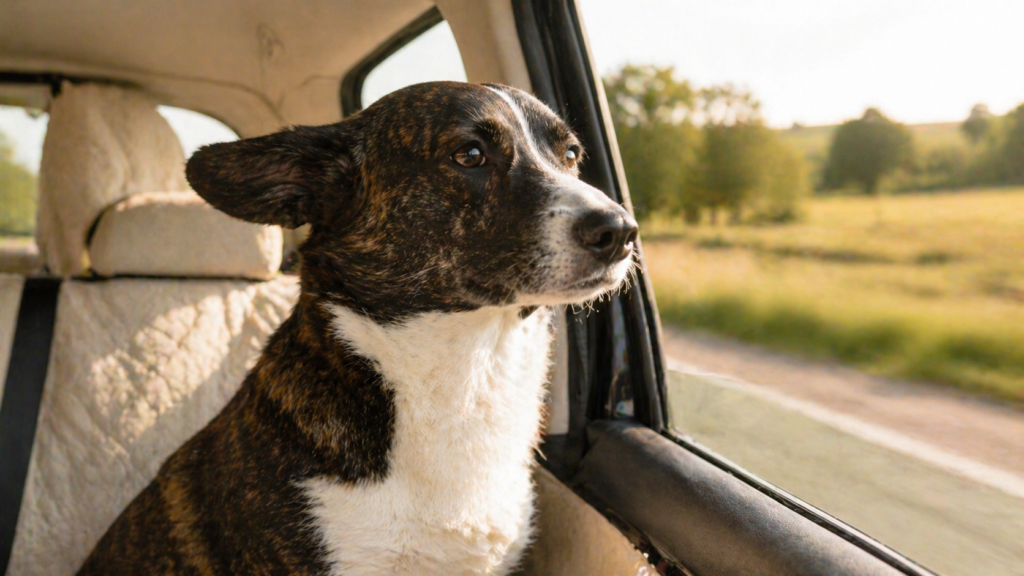
Taking your dog on their first road trip is one of those genuinely fun milestones — windows down, dog happy, open road ahead. But the difference between a great trip and a stressful one usually comes down to one thing: preparation.
Most first-time dog travelers underpack the important things and overpack the rest. This guide covers everything you actually need — before you leave, what to bring, how to keep your dog safe in the car, and how to handle the road itself.
Before You Leave: Planning Makes the Trip
A little prep work before departure saves a lot of problems on the road.
Visit the Vet
If you haven’t been in recently, a pre-trip vet visit is worth it — especially for a first road trip. Ask about:
- Car sickness — some dogs are prone to motion sickness, especially young dogs. Your vet can prescribe Cerenia (maropitant), which works very well and is far more effective than over-the-counter options.
- Anxiety — if your dog is stressed by car rides or new environments, your vet can discuss short-term anxiety support.
- Vaccinations and health records — some dog-friendly hotels and state parks require proof of rabies vaccination. Keep a digital copy on your phone.
- Tick and flea prevention — if you’re heading somewhere wooded or rural, make sure protection is current.
Practice Car Rides First
If your dog hasn’t been in the car much, don’t make their first long exposure a four-hour drive. Build up gradually:
- Sit in the parked car with them — engine off, treats, relaxed
- Short drive around the block (5 minutes)
- 20-minute drive
- 1-hour drive
Watch for signs of stress or nausea: drooling, yawning, whining, vomiting. Catch these early and address them before the main trip.
Book Dog-Friendly Accommodation
This seems obvious, but “pet-friendly” policies vary wildly. Before you book:
- Check the exact pet policy — weight limits, breed restrictions, fees
- Ask specifically about whether dogs can be left in the room alone (many hotels prohibit this)
- Look for hotels with green space nearby for bathroom breaks
- BringFido.com and GoPetFriendly.com are the best search tools for this
The Dog Travel Essentials Checklist
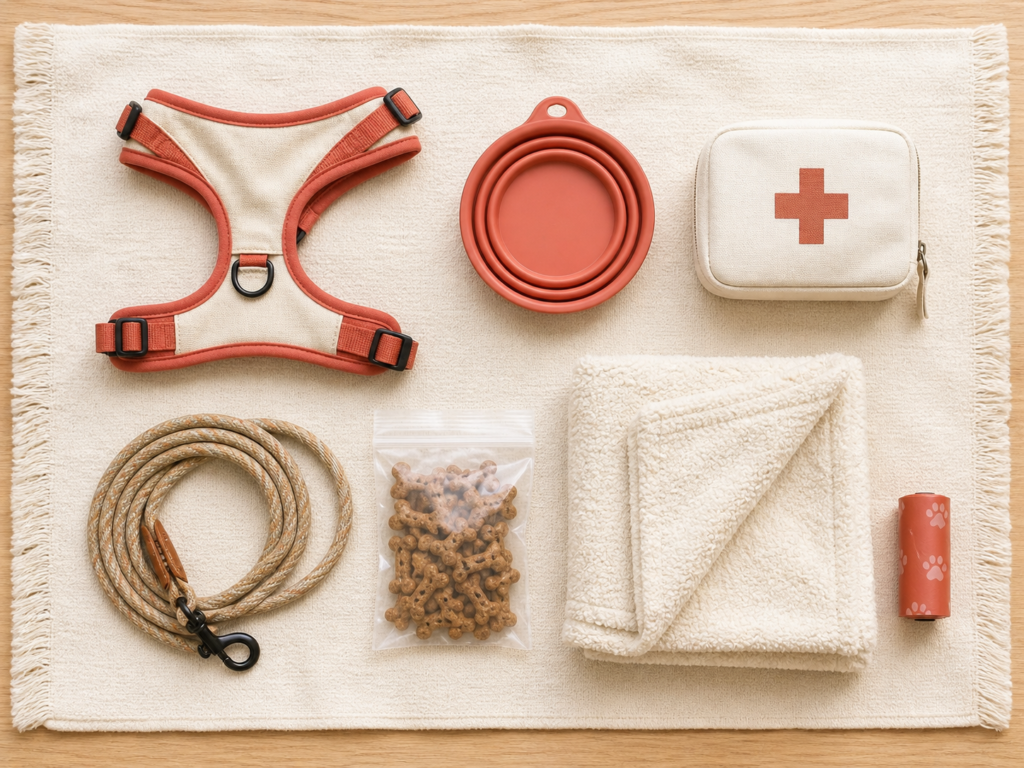
Pack this list before you leave. These are the things that actually matter.
🔒 Safety
- Harness + car seatbelt or crate (see safety section below — this is non-negotiable)
- ID tag with your current phone number — not your home address
- Microchip registered with up-to-date contact info
- Leash (bring a spare — leashes get left at rest stops)
🥣 Food and Water
- Enough of your dog’s regular food for the whole trip, plus extra
- Collapsible water bowl
- Water from home, or bottled — sudden water changes can upset some dogs’ stomachs
- Travel-sized treats for rewards and distraction
🛏️ Comfort
- Their bed or a familiar blanket — something that smells like home
- A favorite toy
- If crate-trained: their crate (doubles as safe sleeping space at the destination)
💊 Health and Emergency
- Vaccination records (digital copy)
- Prescription medications with enough supply
- Basic first aid: gauze, antiseptic wipes, tweezers for ticks, digital thermometer
- Your vet’s number + nearest emergency vet at your destination (look this up before you go, not when you need it)
- Any calming aids your dog uses (ThunderShirt, calming chews, etc.)
🧹 Cleanup
- Waste bags (always more than you think you’ll need)
- Paper towels + enzyme cleaner spray (for car accidents)
- Towels for muddy paws
Car Safety for Dogs: Seatbelt or Crate?
This section matters more than most dog travel guides acknowledge. An unrestrained dog in a moving car is a projectile in an accident — at 35 mph, a 30-pound dog hits with roughly 900 pounds of force. Beyond the accident risk, loose dogs in cars are a distraction that causes accidents.
You have two solid options:
Option 1: Crash-Tested Harness + Seatbelt Tether
A regular harness clipped to a seatbelt tether keeps your dog in the back seat and limits movement without confining them. For the harness, the Ruffwear Front Range is a well-built, escape-resistant option that works for both travel and walks at your destination — dual-use and worth every cent.
For the tether, the Kurgo Direct to Seatbelt Tether clips directly into your car’s seatbelt buckle without an adaptor — simple, secure, and under $20. Pair this with the harness (never clip directly to a collar — neck injury risk in sudden stops).
Option 2: Secured Crate
A crate secured in the cargo area or back seat is the gold standard for car safety — it protects your dog from impact in a crash AND keeps them calm and contained. Dogs who are crate-trained often do better on long trips because the crate feels like home. The MidWest Homes for Pets iCrate folds flat for easy packing and doubles as sleeping space at your destination.
The one option to avoid: letting your dog ride in the front seat or on your lap. Airbags deploy at 200+ mph and are fatal to dogs in the passenger seat.
On the Road: Breaks, Food, and Keeping Calm
Rest Stops
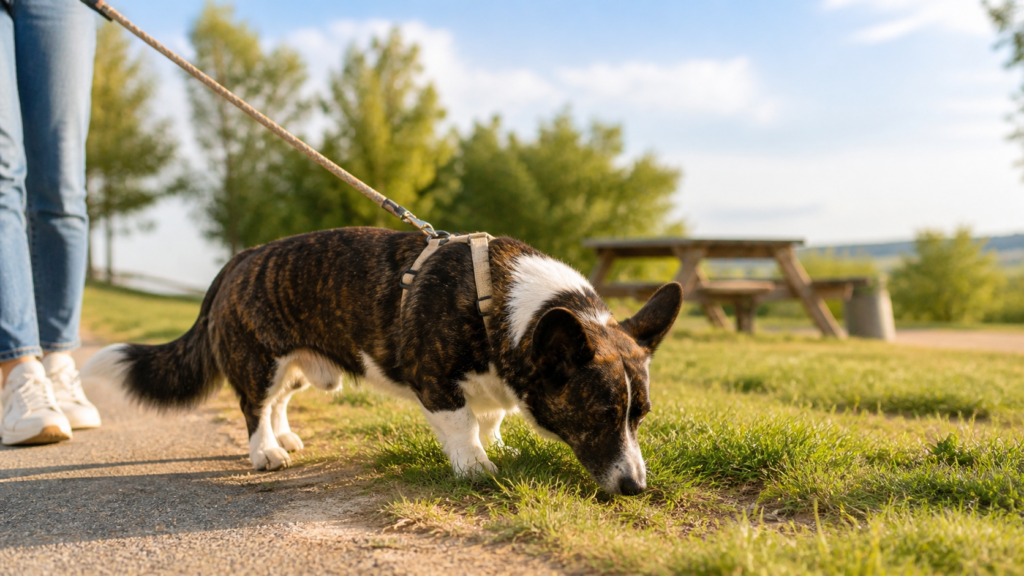
Plan a break every 2–3 hours — dogs need to stretch, drink, and use the bathroom. At rest stops:
- Always leash before opening the car door — rest stops are unfamiliar, high-stimulation environments where dogs bolt
- Let them sniff and walk (even 5–10 minutes of movement helps)
- Offer water at every stop — traveling dogs dehydrate faster than you’d expect
- Don’t feed a full meal right before a long drive stretch — travel on a light stomach reduces nausea risk
Feeding on the Road
Stick to your dog’s regular feeding schedule as closely as possible. If you normally feed twice a day, continue that. Avoid feeding 1–2 hours before a long drive segment.
Don’t let your dog drink from unknown water sources (streams, puddles at rest stops) — risk of parasites and bacteria varies by region.
Keeping an Anxious Dog Calm
New environments, moving vehicles, and disrupted routines are all triggers for anxious dogs. A few things that help in the car:
- Familiar scent — their blanket from home
- Calming music playing softly
- Covering the crate partially if crate-traveling (reduces visual stimulation)
- Short breaks for sniff walks — sniffing naturally lowers cortisol
For dogs with significant travel anxiety: How to Calm a Dog with Separation Anxiety has transferable techniques.
At the Destination
Arriving somewhere new is exciting for dogs — and overwhelming. Give your dog time to decompress.
First 30 minutes at a new place:
- Walk the perimeter of the space on leash before letting them off if you’re somewhere unfamiliar
- Let them sniff thoroughly — sniffing is how dogs process new environments
- Don’t rush greetings with new people or dogs; let your dog set the pace
Overnight:
- Keep their sleeping arrangement as similar to home as possible — same bed, same blanket, same spot in the room if you can manage it
- First night in a new place is often restless for dogs; this is normal and usually resolves by night two
If leaving them alone in the hotel room:
- Check the hotel policy first — many prohibit it
- If allowed: crate them (familiar, secure space), leave something that smells like you, and keep it short for the first time
- A frozen KONG or long-lasting chew gives them something to focus on
For more enrichment ideas that work in new environments: 12 Easy Enrichment Ideas That Actually Calm Your Dog
Final Thoughts
The dogs that travel best are the ones whose owners planned for their needs, not just their own convenience. A good harness, a rest stop every two hours, their own blanket at the hotel — small things that make a real difference to a dog navigating a big, unfamiliar experience.
First road trips are almost always better than owners expect. Dogs are adaptable, curious, and — when they feel safe — genuinely love new experiences. Set them up for success and they’ll surprise you.
Before you travel, run through: The Ultimate Dog Health Care Checklist
🧰 Products Mentioned in This Article
| Product | Why It Helps | Link |
|---|---|---|
| Ruffwear Front Range Harness | Escape-resistant harness for car + trail use | View on Amazon |
| Kurgo Seatbelt Tether | Simple, secure clip-in tether for back seat | View on Amazon |
| MidWest iCrate | Foldable crate — car safety + hotel sleeping space | View on Amazon |