
This post contains affiliate links. I may earn a small commission if you buy through them, at no extra cost to you.
Walk down the pet food aisle and you’ll find shelves full of bags labeled “Senior Formula.” But here’s something most dog food brands would rather you didn’t know: the AAFCO (the body that regulates pet food in the US) has no official nutritional standard for “senior” dog food. The word means whatever the manufacturer decides it means.
That doesn’t mean your senior dog’s food doesn’t matter — it matters a lot. It just means you need to know what to actually look for, rather than trusting the label to do the thinking for you.
This guide breaks down what senior dogs genuinely need nutritionally, what types of food work best, and which specific products are worth your money.
What Nutrients Actually Matter for Senior Dogs
Before picking a food, understand what’s working harder in your older dog’s body — and what it needs more of.
Protein — more, not less
This is the most persistent myth in senior dog nutrition: that older dogs need reduced protein to protect their kidneys. For dogs with healthy kidneys, this is false. Protein restriction is only appropriate if your vet has diagnosed kidney disease.
Senior dogs actually need more high-quality protein than adults because their bodies become less efficient at using it. Muscle mass (sarcopenia) is one of the biggest quality-of-life threats for aging dogs — adequate protein helps preserve it. Look for a named animal protein (chicken, salmon, beef, lamb) as the first ingredient.
Omega-3 fatty acids (EPA + DHA)
EPA and DHA from fish oil are the single most evidence-backed supplement for senior dogs. They reduce joint inflammation, support cognitive function, protect kidney health, and keep coat and skin in good condition. Ideally your senior’s food includes them — if not, a fish oil supplement fills the gap.
Glucosamine and chondroitin
Many senior formulas include these joint-supporting compounds. They’re not a replacement for a dedicated joint supplement in dogs with significant arthritis, but as a baseline in food they help.
Fiber and digestive support
The senior digestive system slows down. Moderate fiber (from vegetables, beet pulp, or prebiotics) supports gut motility and healthy stools. Some seniors also benefit from added probiotics.
Caloric density — watch this carefully
Less active seniors gain weight easily. A food that was appropriate at age four may be too calorie-dense at age nine. On the other hand, some older dogs lose weight and muscle — they may need more calorie-dense food, not less. Watch your individual dog, not just the age on the bag.
Types of Food for Senior Dogs — Pros and Cons
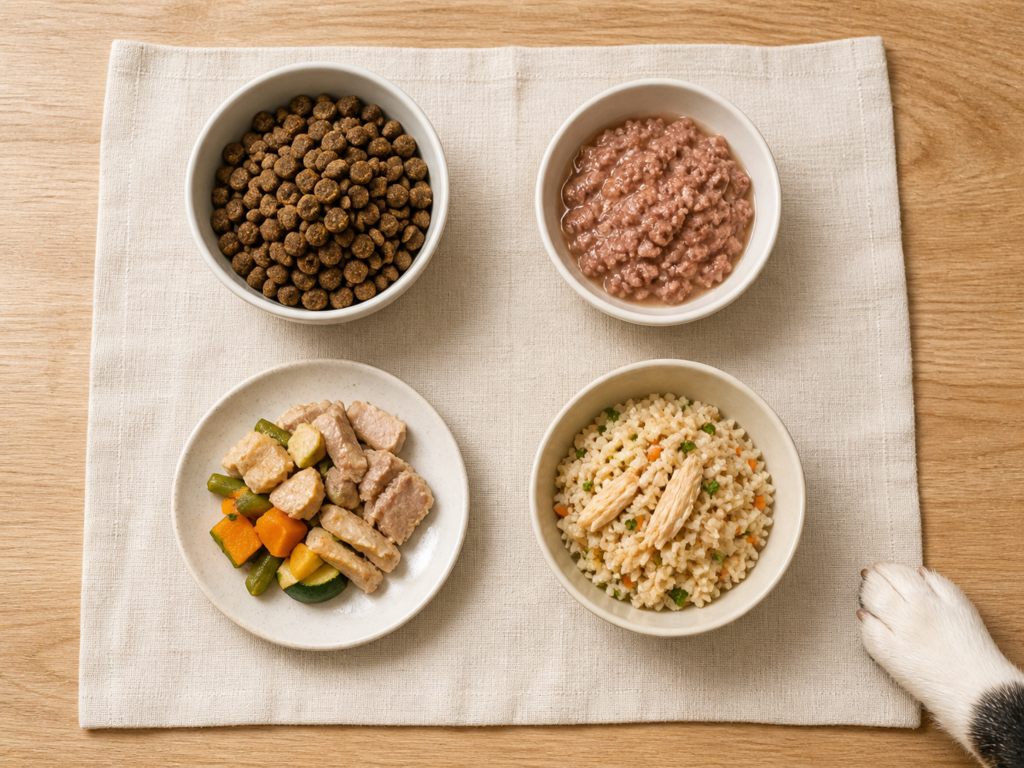
There’s no single “best” format. The right choice depends on your dog’s dental health, digestion, preferences, and your budget.
Dry kibble
The most practical and budget-friendly option. Good dry kibble is calorie-controlled, convenient, and supports dental health through the mechanical action of chewing. Downside: lower moisture content (important for senior hydration) and quality varies wildly. Adding warm water or low-sodium broth improves palatability and hydration.
Wet / canned food
Higher moisture content helps with hydration, easier to eat for dogs with dental issues or reduced appetite, and typically more palatable. Downside: more expensive, opens can go stale quickly, and some wet foods are high in fat. Great as a topper on kibble or as the main diet for dogs with dental problems.
Fresh / gently cooked food
Services like Ollie and The Farmer’s Dog deliver pre-portioned, gently cooked meals based on your dog’s specific weight, age, and activity level. Higher bioavailability, real whole ingredients, no preservatives. Genuinely excellent quality — and the high cost reflects that. Worth it for owners willing to invest, especially for picky seniors or dogs with health issues.
Homemade food
Full control over ingredients — beneficial for dogs with allergies or specific dietary needs. The challenge: getting the nutritional balance right. A homemade diet without proper supplementation can create deficiencies over time. If you go this route, consult a board-certified veterinary nutritionist.
Budget-friendly homemade option: Cheap Homemade Dog Food: How to Feed Your Dog on a Budget
Top Food Picks for Senior Dogs
These are the options most consistently recommended by vets and supported by nutritional research.
Best Dry Food: Hill’s Science Diet Senior 7+
Hill’s Science Diet Adult 7+ is the benchmark for senior dry dog food. Hill’s works with a team of veterinary nutritionists, and their formulas are backed by feeding trials (not just nutritional analysis on paper). The 7+ formula provides:
- Easy-to-digest ingredients
- Controlled phosphorus for kidney support
- Natural omega-3s and vitamin E for immune and joint health
- Appropriate calorie level for less active seniors
Hill’s has been running feeding trials on its senior formulas for decades — that track record is the reason it turns up everywhere.
Best Dry Food for Active Seniors: Purina Pro Plan Senior 7+
Purina Pro Plan Bright Mind Adult 7+ is designed specifically for cognitive health in aging dogs. It contains enhanced botanical oils that have been shown in clinical studies to promote alertness and mental sharpness in dogs over seven. High in protein (chicken as the first ingredient), well-tolerated by most digestive systems, and available in multiple formats.
If your senior is still active and you’re concerned about cognitive decline, this is the pick.
Best Fresh Food: Ollie or The Farmer’s Dog
For owners who want the absolute best quality and have the budget for it, fresh food delivery services are in a different league. Both Ollie and The Farmer’s Dog create personalized meal plans based on your dog’s age, weight, and health goals — delivered fresh to your door.
The ingredients are human-grade whole foods: real chicken, beef, turkey, vegetables. No fillers, no by-products, no preservatives. Dogs generally love it, and the bioavailability of nutrients in gently cooked whole food is higher than processed kibble.
Both have their own websites with trial offers — worth trying if you’re open to the investment.
How to Read a Senior Dog Food Label
Don’t let the front of the bag do the selling. Turn it over.
First five ingredients: These make up the bulk of the food. Look for a named animal protein (chicken, beef, salmon — not “poultry meal” or “meat by-products”) as the first ingredient. If the first ingredient is a grain or vegetable, the protein content is lower than it appears.
Guaranteed Analysis: Check crude protein (look for 22%+ for seniors) and fat content (seniors often do better with moderate fat, 10–15%).
AAFCO statement: Should say “complete and balanced for all life stages” or specifically for “adult maintenance.” Life stages matters — some foods are only tested for puppies (growth stage) and may not meet adult or senior needs.
Avoid: Artificial preservatives (BHA, BHT, ethoxyquin), artificial colors (Red 40, Yellow 5), excessive fillers (corn syrup, wheat middlings as first ingredients).
Foods to Limit or Avoid for Senior Dogs
Some foods that were fine in youth become more problematic in senior dogs:
High sodium foods — senior kidneys handle sodium less efficiently. Avoid salty treats, processed human food, and deli meats.
Very high fat foods — seniors with reduced activity gain weight easily on high-fat diets. Also increases pancreatitis risk in dogs prone to it.
Cooked bones — splinter risk applies at any age, but older dogs with dental disease are especially vulnerable.
Xylitol, grapes, raisins, onions, garlic — toxic at any age, worth repeating.
Full safe and unsafe foods guide: Foods Dogs Can Eat and Can’t — Safe Human Foods Guide
How Much to Feed a Senior Dog

Feeding guidelines on bags are starting points, not gospel — they’re deliberately generous because selling more food benefits the manufacturer.
For most senior dogs: start at the low end of the recommended range for your dog’s ideal weight (not their current weight if they’re overweight), then adjust based on body condition over 2–4 weeks.
Body condition score (BCS): You should be able to feel your dog’s ribs with light pressure but not see them. Visible ribs = underweight. Can’t feel them at all = overweight. Most senior dogs do best fed twice daily — it’s easier on the digestive system than one large meal.
If your senior is losing weight despite eating well, that warrants a vet visit — it can signal hyperthyroidism, kidney disease, diabetes, or cancer.
Signs the Food Is Working (or Not)
Give any new food 6–8 weeks before drawing conclusions. Signs you’ve found the right fit:
✅ Consistent, well-formed stools
✅ Stable or improving body weight
✅ Good energy for their age
✅ Healthy coat — shiny, minimal shedding beyond normal
✅ Eating enthusiastically
Signs to reconsider or consult your vet:
❌ Loose stools or constipation that persists beyond the adjustment period
❌ Itching, skin irritation, or ear infections (possible food sensitivity)
❌ Weight loss despite eating normally
❌ Decreased appetite lasting more than 2–3 days
❌ Increased thirst or urination (warrants bloodwork)
Final Thoughts
The best food for your senior dog is the one that keeps them at a healthy weight, maintains muscle mass, supports their joints, and — critically — that they actually want to eat. Senior dogs can become picky; palatability matters.
Start with a senior formula like Hill’s 7+ or Purina Pro Plan Bright Mind, adjust portions based on body condition, and add a quality omega-3 supplement if the food doesn’t include it. That foundation covers most senior dogs well.
And if you want to go further — fresh food, personalized nutrition, or a homemade diet with proper supplementation — the options are there. Your senior dog has earned the good stuff.
More on senior dog health: Senior Dog Care: What Changes After Age 7
🧰 Products Mentioned in This Article
| Product | Why It Helps | Link |
|---|---|---|
| Hill’s Science Diet Adult 7+ | Best all-round senior dry food for most dogs | View on Amazon |
| Purina Pro Plan Senior 7+ | Best for cognitive health in active seniors | View on Amazon |