
Some links below are Amazon affiliate links — we earn a small commission if you buy, at no extra cost to you.
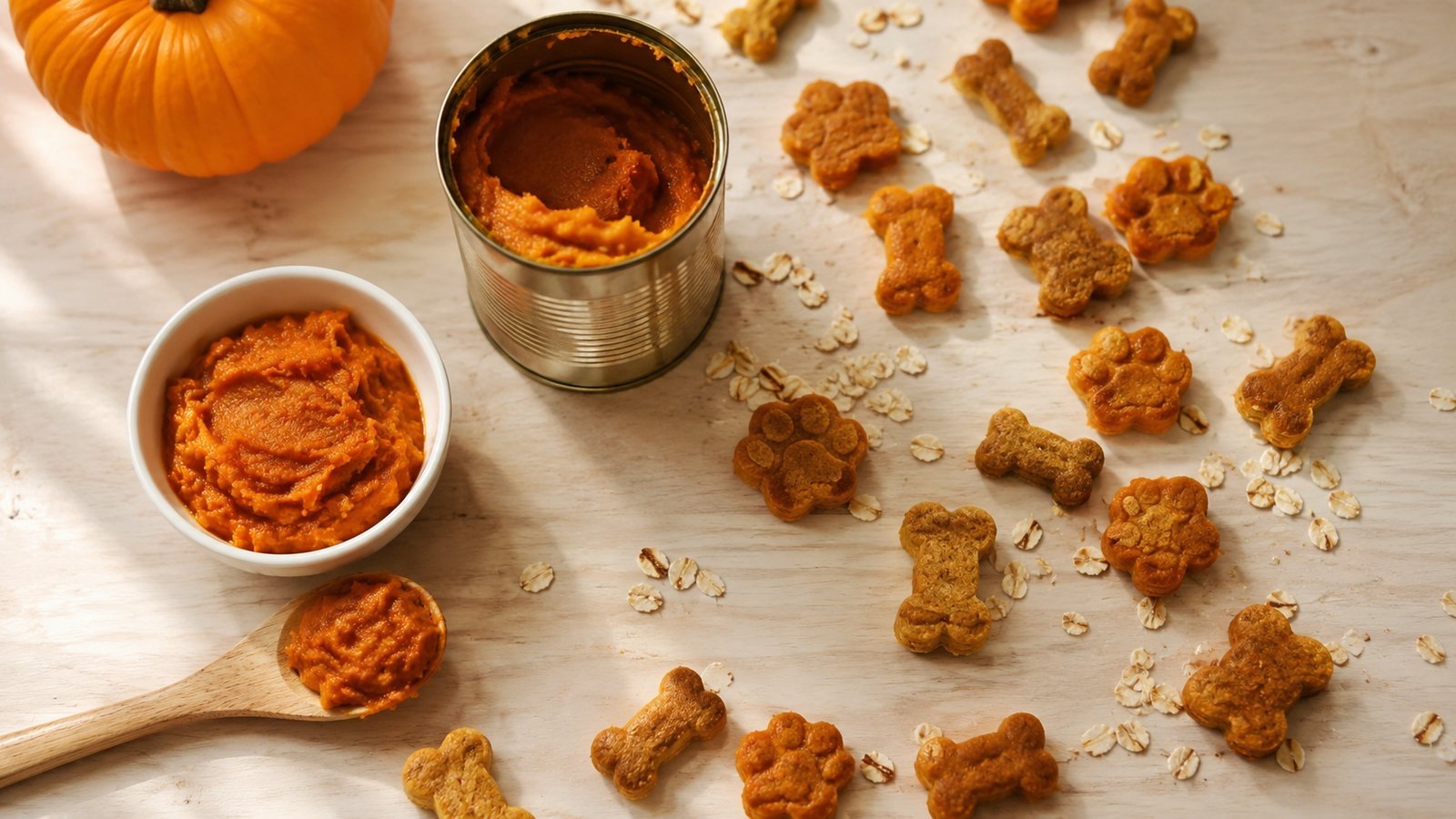
Homemade pumpkin dog treats are the one treat almost every dog will eat, and the one ingredient most owners get slightly wrong. Not dangerously wrong — just enough to waste the benefit.
Two things this page does that most pumpkin posts don’t: it tells you how much pumpkin your dog should actually get per day, by weight, and it tells you what pumpkin does and doesn’t do. Because “pumpkin is good for dogs” is true and almost useless.
Here’s what’s on this page:
- 8 pumpkin dog treat recipes — baked, frozen, soft, and one that isn’t a treat at all
- The daily amount by dog size, in teaspoons, so you stop guessing
- Puree vs. pie filling — the difference that actually matters
- When pumpkin is the wrong answer, which nobody writes about
How much pumpkin can a dog actually have?
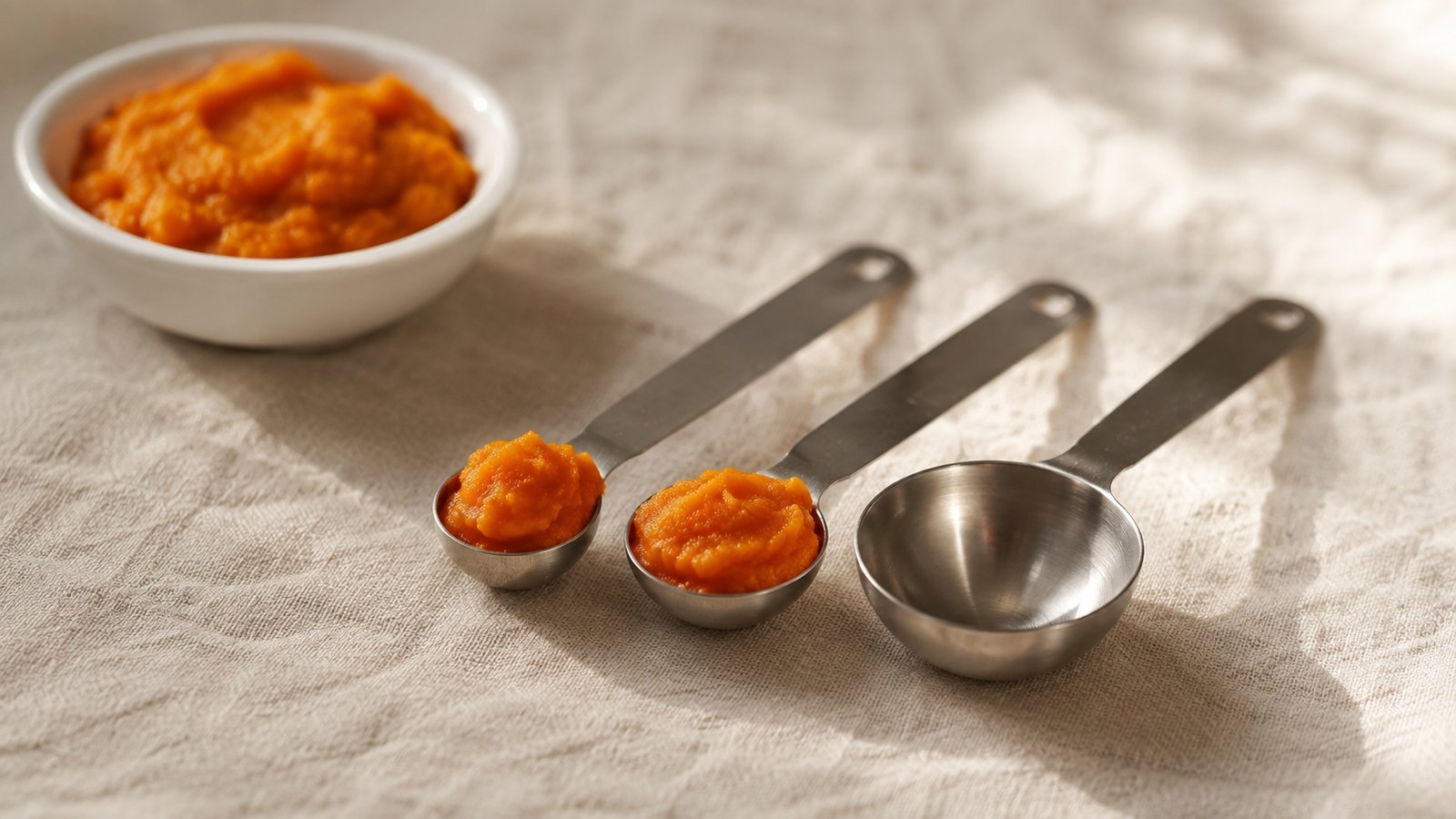
This is the question, and here’s the answer. General veterinary guidance is roughly 1 teaspoon of plain pumpkin puree per 10 lb of body weight per day:
| Dog weight | Plain pumpkin per day |
|---|---|
| 2–10 lb | ½–1 tsp |
| 11–20 lb | 1–2 tsp |
| 21–50 lb | 2–5 tsp |
| 51–90 lb | 1½–3 tbsp |
| 91 lb+ | 3 tbsp |
Two caveats that matter more than the numbers:
It counts toward the 10% treat allowance. Treats — all treats, pumpkin included — should stay under about 10% of daily calories. Pumpkin is low-calorie, which helps, but it isn’t free.
More is not better. The realistic consequence of overdoing pumpkin is exactly what you were trying to fix: gas, bloating and loose stools, because you’ve overshot on fiber. That’s the failure mode you’ll actually meet.
You’ll also read warnings about vitamin A toxicity. Pumpkin is high in vitamin A, but at the doses in that table the arithmetic doesn’t get you near a toxic load — a teaspoon of canned pumpkin carries a few hundred IU. It becomes a real consideration only if pumpkin is a large, sustained part of the diet rather than a treat, and it’s worth knowing about rather than worrying about.
Start at the low end of your dog’s range and stay there for a few days before you increase anything.
What pumpkin actually does (and doesn’t)
It does help with both diarrhoea and constipation. That sounds like a contradiction and isn’t. Pumpkin contains both soluble and insoluble fiber — soluble fiber absorbs water and firms up loose stools, insoluble fiber adds bulk and gets a sluggish gut moving. Same food, opposite problems.
It does feed gut bacteria. Pumpkin acts as a prebiotic, which is a slower and less headline-grabbing benefit than “stops diarrhoea” but probably the more valuable one over months.
It is genuinely useful for weight management. A few teaspoons of pumpkin stirred into a smaller portion of food adds bulk and moisture for very few calories. A dog on a diet feels less cheated.
What it does not do: fix the underlying cause of anything. Pumpkin is a symptom tool. If your dog’s stools have been off for more than a day or two, or there’s vomiting, lethargy or blood involved, pumpkin is not the answer and you need a vet. We covered the sensible home options in home remedies for a dog’s upset stomach — every one of them has a “call the vet if” line for good reason.
Puree vs. pie filling: get this right or skip the rest
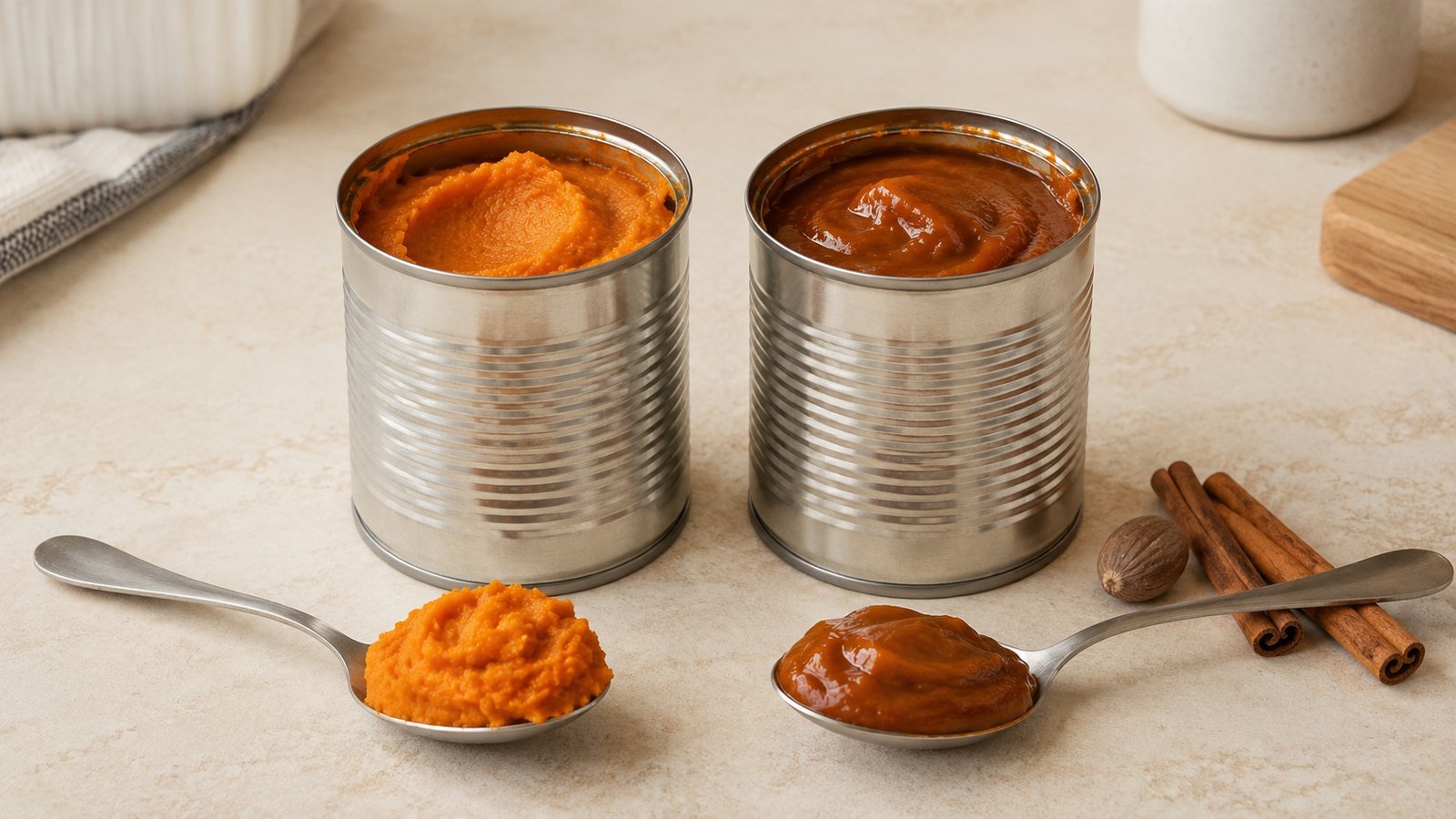
Buy 100% pure pumpkin. Not pumpkin pie filling. Not pumpkin pie mix.
The two cans sit next to each other on the same shelf, look nearly identical, and one of them contains added sugar plus nutmeg, cinnamon and cloves. Nutmeg is the problem ingredient — it’s genuinely toxic to dogs in quantity — and the sugar load is pointless on top of it.
You’ll also see it claimed that pie filling contains xylitol. I couldn’t verify that in mainstream canned pie filling, and I’m not going to repeat it as fact. Where xylitol does turn up is sugar-free and “no added sugar” baking products — so read those labels specifically.
Check the ingredients list. It should say one thing: pumpkin. Libby’s 100% Pure Pumpkin is the one most people already have in the cupboard, and buying a multipack is cheaper than the single cans at the supermarket if you’re going to make treats regularly.
Fresh pumpkin works too, but cook it first — roast or steam until soft, then blend. Raw pumpkin is hard to digest and chunks of it carry an obstruction risk.
What to leave out: skin, stem and leaves are all tough and indigestible. Seeds are fine if roasted plain, with no oil, salt or seasoning — but they’re a separate treat, not part of the puree.
Homemade pumpkin dog treats: the 8 recipes
Every one uses plain pumpkin puree. Storage times assume an airtight container.
A general rule before you start: no xylitol, no chocolate, no raisins, no onion or garlic, no nutmeg. If you’re unsure about anything you want to add, our safe human foods guide has the full list.
1. Three-Ingredient Pumpkin & Banana Bites (baked)
The one to make first. Three ingredients, one bowl, and dogs go quietly insane for it.
Ingredients
- 1 cup plain pumpkin puree
- 1 ripe banana, mashed
- 2½ cups oat flour (or rolled oats blitzed in a blender)
Method
- Heat the oven to 350°F / 175°C.
- Mix everything into a stiff dough. If it’s sticky, add oat flour a tablespoon at a time.
- Roll to about ¼ inch and cut into small shapes, or roll into balls and flatten with a fork.
- Bake 25–30 minutes until firm and dry to the touch.
- Cool completely on a rack — they crisp as they cool.
Makes: ~40 small treats · Keeps: 1 week airtight, 3 months frozen. Note: Banana adds sugar. These are a treat, not a daily supplement.
2. Frozen Pumpkin Swirl Cups
Layered rather than mixed, so the dog gets alternating textures and it takes them longer.
Ingredients
- 1 cup plain pumpkin puree
- 1 cup plain unsweetened yogurt (or lactose-free if your dog is sensitive)
- 2 tbsp xylitol-free peanut butter, softened
Method
- Spoon a layer of pumpkin into each cavity of a silicone mold or an ice cube tray, filling about a third.
- Freeze 30 minutes.
- Add a yogurt layer, freeze 30 minutes, then a thin peanut butter layer.
- Freeze at least 4 hours before popping out.
Makes: ~24 small cups · Keeps: 2 months frozen. Portion note: one or two cups is a serving for a medium dog, not a bowlful.
3. Pumpkin & Peanut Butter Training Squares
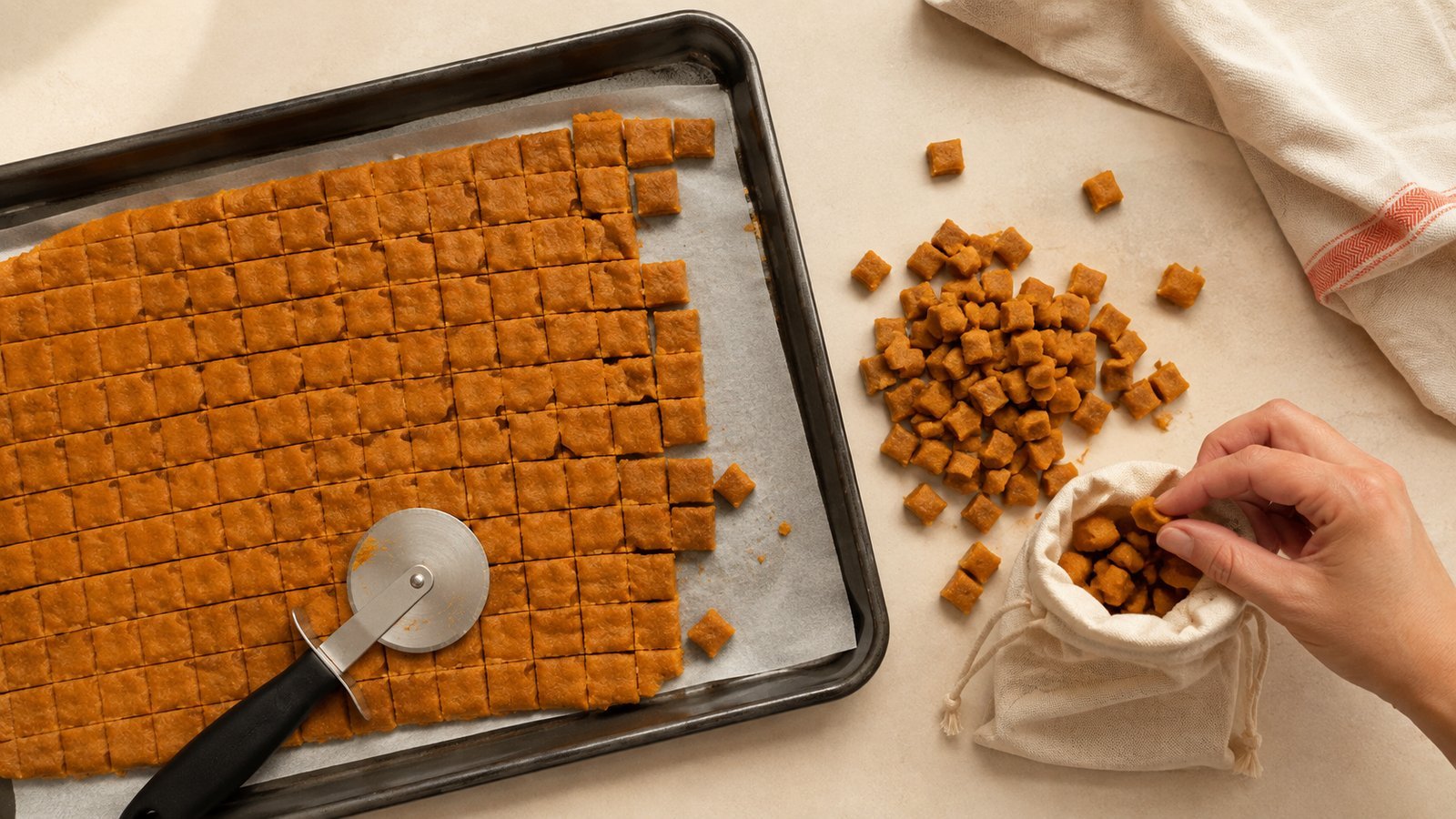
Soft, tiny, and made to be handed over fifty times in a session without wrecking a dog’s daily calories.
Ingredients
- ¾ cup plain pumpkin puree
- 3 tbsp xylitol-free peanut butter
- 1 egg
- 2 cups whole wheat flour (or oat flour)
Method
- Oven to 325°F / 160°C.
- Mix to a soft dough and press into a lined baking tray, about ¼ inch thick.
- Bake 20 minutes — you want it set but still soft, not crisp.
- Cool, then cut into pea-sized squares with a knife or pizza cutter.
Makes: 150+ training treats · Keeps: 5 days in the fridge, 3 months frozen. Why soft matters: training treats need to be swallowed in one second. A crunchy treat breaks the rhythm of a session.
4. Pumpkin, Oat & Flax Digestive Bites
The functional one. Extra fiber, plus omega-3 from flaxseed.
Ingredients
- 1 cup plain pumpkin puree
- 1½ cups rolled oats
- 2 tbsp ground flaxseed
- 1 egg
Method
- Oven to 350°F / 175°C.
- Mix, rest the dough 10 minutes so the oats absorb moisture, then roll into small balls.
- Flatten slightly and bake 22–25 minutes.
- Cool completely.
Makes: ~30 bites · Keeps: 1 week airtight, 3 months frozen. Go slowly. This is a high-fiber treat. Two a day for a medium dog, not ten — otherwise you’ll create the problem you were solving. Honest note: ground flaxseed gives ALA, not the EPA and DHA that dogs actually use well. Dogs convert ALA poorly. It’s a nice addition, not an omega-3 strategy.
5. Pumpkin & Turkey Soft Chews
Savoury rather than sweet, for dogs who aren’t interested in fruit-flavoured anything.
Ingredients
- 1 lb ground turkey, cooked and drained
- ¾ cup plain pumpkin puree
- 1 cup oat flour
- 1 egg
Method
- Oven to 350°F / 175°C.
- Mix the cooked turkey, pumpkin, egg and flour into a thick paste.
- Spread ¼ inch thick on a lined tray.
- Bake 25 minutes, then cut into strips and bake another 10 to dry them out.
- Cool completely.
Makes: ~40 strips · Keeps: Refrigerate — 4 days, or 2 months frozen. These contain meat and are not shelf-stable.
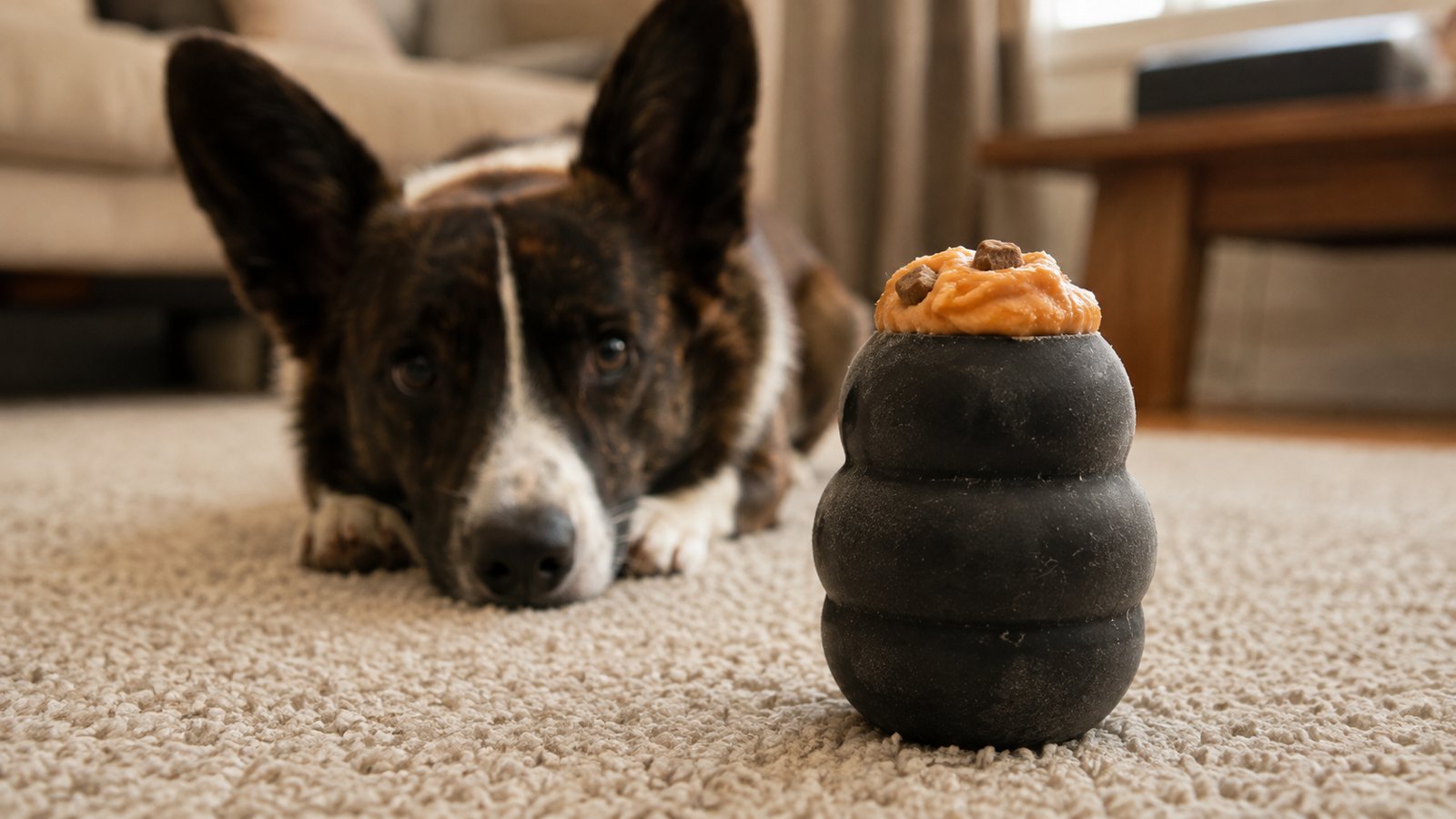
6. Pumpkin Kong Filling (not a treat — a job)
Not something you hand over. Something that occupies a dog for twenty minutes.
Ingredients
- ½ cup plain pumpkin puree
- ¼ cup plain yogurt
- 1 tbsp xylitol-free peanut butter
- A small handful of your dog’s own kibble
Method
- Stir everything together.
- Pack into a rubber stuffable toy, plug the small hole with a dab of peanut butter first so it doesn’t leak.
- Freeze at least 4 hours. Unfrozen, it’s gone in ninety seconds.
Makes: 1–2 fills · Keeps: 1 month frozen. Same idea, flatter: spread the mix on a lick mat and freeze. We have 15 more lick mat combinations if your dog takes to it.
7. Pumpkin & Apple Soft Chews (for older dogs and bad teeth)
No crunch at all. For dogs who’ve stopped being able to manage a biscuit.
Ingredients
- 1 cup plain pumpkin puree
- 1 apple, core and seeds removed, grated
- 1½ cups oat flour
- 2 tbsp water
Method
- Oven to 300°F / 150°C — lower and slower keeps them soft.
- Mix, roll thin, cut into small rectangles.
- Bake 20 minutes only. They should bend, not snap.
- Cool and refrigerate.
Makes: ~35 chews · Keeps: Refrigerate — 5 days. Soft treats mould faster than dry ones. Freeze what you won’t use in the week. Apple seeds and core out — always. The seeds contain cyanide compounds.
8. Pumpkin Broth Cubes (for sick days)
For the dog who’s gone off food and needs a reason to be interested again.
Ingredients
- ½ cup plain pumpkin puree
- 2 cups homemade unsalted bone broth or plain water
- Nothing else
Method
- Whisk until smooth.
- Pour into an ice cube tray and freeze.
- Serve one cube on top of food, or let it melt into a warm bowl.
Makes: ~16 cubes · Keeps: 2 months frozen. Shop-bought stock is not a substitute — nearly all of it contains onion, which is toxic to dogs.
Which recipe for which dog
| If your dog… | Make | Why |
|---|---|---|
| Just likes treats | #1 Pumpkin & Banana Bites | Easiest, most reliably eaten |
| Is in training | #3 Training Squares | Tiny, soft, 150 per batch |
| Has a slightly unsettled gut | #4 Digestive Bites — go slowly | Highest fiber |
| Gets bored indoors | #6 Kong Filling | 20 minutes of work |
| Has bad teeth | #7 Pumpkin & Apple Chews | No crunch |
| Won’t eat sweet things | #5 Pumpkin & Turkey | Savoury |
| Is off their food | #8 Broth Cubes | Smell and moisture, few calories |
| Needs cooling down | #2 Frozen Swirl Cups | Slow to eat |
When pumpkin is the wrong answer
Worth saying plainly, because pumpkin gets recommended for everything:
- Diarrhoea lasting more than 24–48 hours — that’s a vet visit, not a fiber problem.
- Any diarrhoea with blood, vomiting, lethargy or a painful belly — vet, now. Pumpkin will delay you.
- A dog with diagnosed diabetes — pumpkin has carbohydrate content that needs to be counted. Ask your vet before adding it daily.
- A dog already on a prescription high-fiber diet — you may be doubling up. Check first.
- Puppies with worms — a very common cause of loose stools in young dogs, and pumpkin does nothing for it.
Frequently asked questions
Can dogs eat pumpkin every day? Yes, within the amounts in the table above and inside the overall 10% treat allowance. Start low.
Can dogs eat canned pumpkin? Yes — 100% pure canned pumpkin only. Not pumpkin pie filling, which contains added sugar and spices including nutmeg.
Can dogs eat raw pumpkin? Not recommended. It’s tough to digest and chunks carry an obstruction risk. Cook and puree it.
Can dogs eat pumpkin seeds? Plain roasted seeds, without oil, salt or seasoning, in small amounts. Not the salted spiced ones you’d eat.
Can dogs eat pumpkin skin or stems? No. Both are tough and indigestible. Remove them before cooking.
How long does pumpkin take to work for diarrhoea? Often within 24 hours if fiber was the issue. If there’s no improvement in a day, stop guessing and call your vet.
Can I freeze leftover canned pumpkin? Yes, and you should — an opened can only keeps about 5 days in the fridge. Freeze it in an ice cube tray, then bag the cubes. One cube is roughly a tablespoon.
Is pumpkin good for dogs with sensitive stomachs? Often, yes — the prebiotic fiber is gentle. Introduce it slowly like any new food. For more soft options, see our safe homemade dog treats.
What if my dog won’t eat pumpkin? Some dogs won’t. Mix a small amount into something they already like, or try the savoury turkey version (#5). Don’t fight it — there are other fiber sources.
The bottom line
Pumpkin earns its reputation. It’s cheap, most dogs like it, and the fiber genuinely does something in both directions.
Just treat it like an ingredient with a dose rather than a health food you can’t overdo: 1 teaspoon per 10 lb of body weight per day, plain puree only, and if the problem lasts more than a day or two it was never a pumpkin problem.
Nuggy’s vote goes to the training squares, mostly because she’s worked out that the small soft ones come faster. Which batch is your dog going to demand?
For more everyday recipes, our 10 simple homemade dog treats has the no-fuss basics, and for October there’s a whole set of Halloween pumpkin treats shaped like things that go bump in the night.
This article is general information, not veterinary advice. Talk to your vet before adding anything to your dog’s diet, especially if they have a diagnosed health condition.
As an Amazon Associate we earn from qualifying purchases.