
This post contains affiliate links. I may earn a small commission if you buy through them, at no extra cost to you.
✅ Yes, dogs can eat apples. Apples are a safe, crunchy, low-calorie treat that most dogs enjoy. Just remove the core and seeds before serving — apple seeds contain a small amount of cyanide, and the core can be a choking hazard.
Quick Answer Box
✅ Apples are safe for dogs — sliced, cored, and seedless.
The flesh and skin are both fine. Remove the seeds (they contain trace amounts of cyanide) and the core (choking risk). A few slices a few times a week is a great low-calorie treat.
Intro
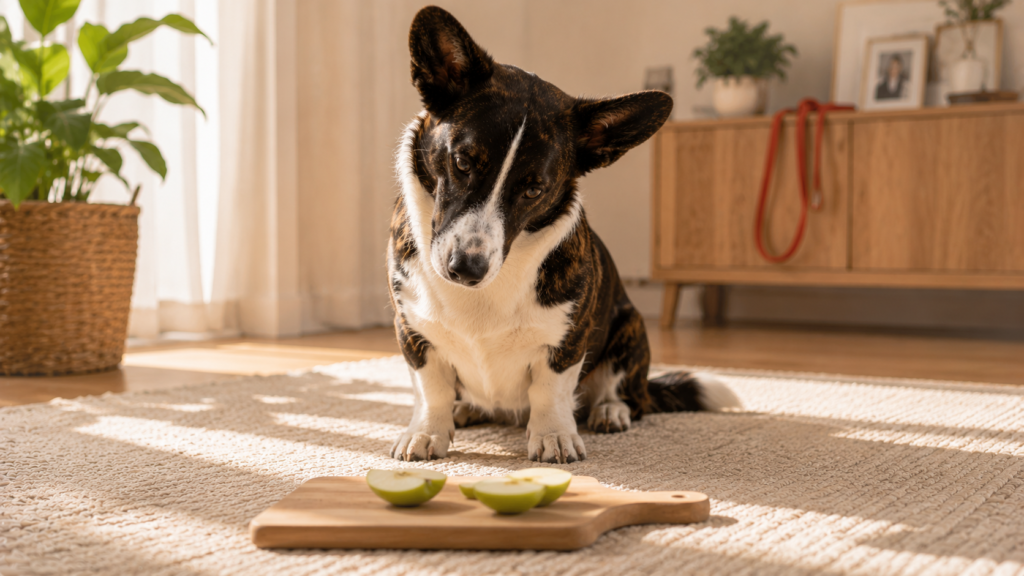
Nuggy is a crunchy-treat dog. Anything that makes a satisfying sound when he bites into it gets his full attention — and apple slices tick that box perfectly. I started giving him a slice here and there while snacking, and he’s been a fan ever since.
Apples are one of the most dog-friendly fruits you can offer. They’re crunchy, refreshing, naturally sweet, and low in calories compared to most commercial treats. The preparation takes about 30 seconds — slice, remove the core and seeds, done.
Here’s everything you need to know about giving apples to your dog safely.
Are Apples Safe for Dogs?
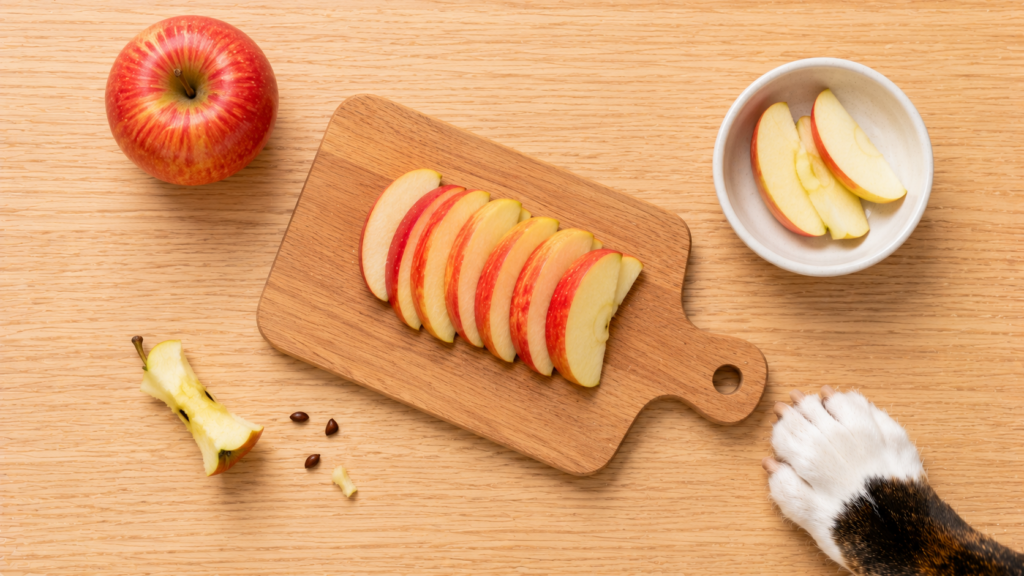
Yes — apple flesh and skin are both completely safe for dogs. Apples are a popular treat for good reason: they’re crunchy, sweet, and low in fat and protein, making them suitable even for dogs on restricted diets.
What’s safe:
- Apple flesh — yes
- Apple skin — yes, fine in moderate amounts
- Any apple variety (red, green, yellow) — all safe
What to avoid:
- Seeds — apple seeds contain amygdalin, a compound that releases cyanide when metabolised. A dog would need to eat a very large number of seeds for serious poisoning, but there’s no reason to take the risk. Always remove them.
- Core — the core is tough, dense, and a choking hazard, especially for smaller dogs. Remove it before serving.
- Apple products — apple juice, apple sauce, and many apple snacks contain added sugar or xylitol. Only fresh, plain apple.
Benefits of Apples for Dogs
Apples are more than just a tasty treat — they bring a few genuine health benefits:
- Vitamin A — supports eye health, skin, and the immune system.
- Vitamin C — antioxidant that supports immune function.
- Fibre — supports healthy digestion. The pectin in apples is a prebiotic fibre that feeds beneficial gut bacteria.
- Low in fat and protein — makes apples suitable for dogs with kidney disease or weight issues where these need to be limited.
- Low calorie — around 52 kcal per 100g, much lower than most commercial treats.
- Natural teeth cleaning — the crunch of a raw apple slice can help scrub plaque off teeth. Not a substitute for brushing, but a nice bonus.
How to Safely Serve Apples to Your Dog
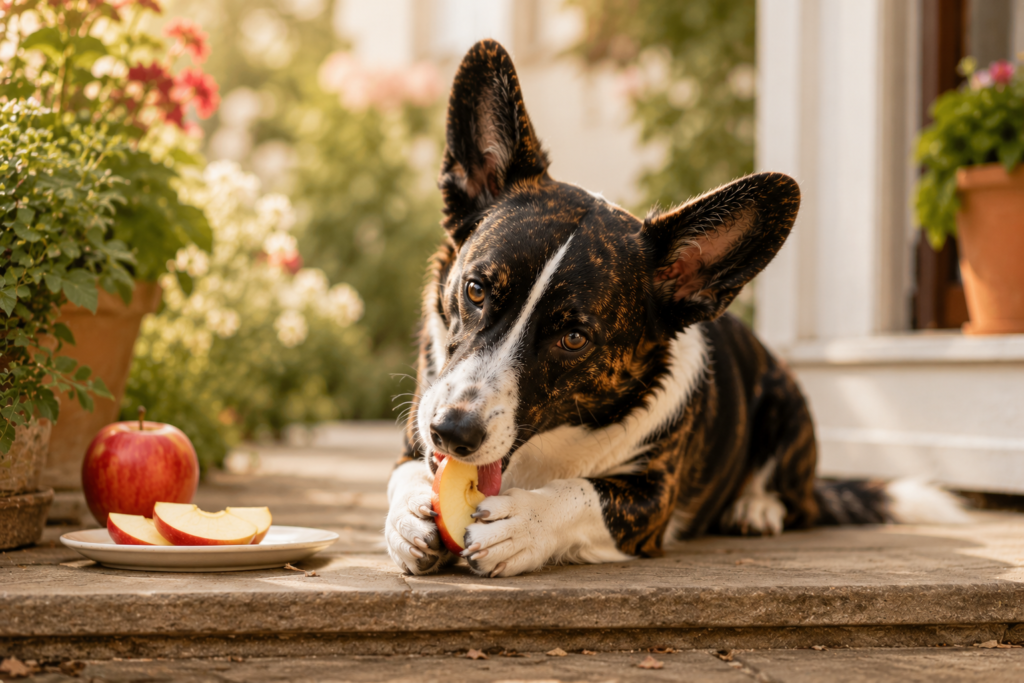
Step 1: Wash the apple.
Remove any surface residue — especially important if it’s not organic.
Step 2: Remove the core and all seeds.
Cut around the core. Check the slices for any stray seeds and remove them.
Step 3: Slice into appropriate pieces.
Leave the skin on — it’s nutritious and most dogs enjoy it. Cut into slices or chunks appropriate for your dog’s size.
How much is safe?
| Dog size | Max serving |
|---|---|
| Small (< 10 kg) | 1–2 thin slices |
| Medium (10–25 kg) | 3–4 slices |
| Large (> 25 kg) | half an apple, sliced |
Serving ideas:
- Fresh slices — simplest and most satisfying. The crunch is part of the appeal for most dogs.
- Frozen slices — slice and freeze for a refreshing summer snack.
- Apple in a KONG — chop apple finely and mix with peanut butter to stuff a KONG Classic for an enrichment treat.
- Apple dog biscuits — apple works well baked into homemade treats. Check out our Safe Homemade Dog Treatsfor recipes.
Pro Tip
Green apples (like Granny Smith) are lower in sugar than red varieties — a slightly better option for dogs watching their weight.
The Bottom Line
Can dogs eat apples? Yes — apples are one of the best crunchy treats you can give your dog. Low calorie, full of vitamins, and most dogs love the texture. The prep is easy: wash, core, deseed, slice. Done in under a minute.
Nuggy gets apple slices fairly regularly — usually as a mid-afternoon snack when I’m having one myself. It’s become a little ritual. Just don’t let them near an apple that still has the core in — learned that one the hard way when Nuggy got hold of a full apple I’d left on the counter.
For more on what’s safe to share with your dog, our Foods Dogs Can Eat and Can’t guide covers over 40 common foods. And if you want to bake something apple-flavoured for your dog, Safe Homemade Dog Treats has plenty of ideas.
Is your dog an apple fan? What variety do they prefer? Let me know in the comments!
FAQ
Q: Can dogs eat apple skin?
A: Yes — apple skin is safe and contains extra fibre. Just make sure the apple is washed first, and remove any wax coating if it’s a store-bought apple.
Q: Can dogs eat apple seeds?
A: No — apple seeds contain amygdalin, which releases cyanide when metabolised. A few seeds accidentally swallowed are unlikely to cause serious harm, but you should always remove them to be safe.
Q: Can puppies eat apples?
A: Yes, in small amounts. Start with a tiny piece to check for any digestive reaction. Make sure the apple is cored and seedless, and cut into very small pieces to avoid a choking risk.
Q: Can dogs eat applesauce?
A: Only if it’s plain, unsweetened applesauce with no xylitol. Most commercial applesauce contains added sugar — check the label carefully. Plain apple is always the safer, simpler choice.
Q: Can dogs eat apple cores?
A: No — the core is too tough and is a choking hazard, particularly for small dogs. Always remove it.
Q: How often can I give my dog apples?
A: A few slices a few times a week is a reasonable amount for most dogs. As with any treat, keep total treat intake to around 10% of daily calories.