
This post contains affiliate links. I may earn a small commission if you buy through them, at no extra cost to you.
I’ll be honest with you — the first time I packed for a road trip with Nuggy, I brought three of her favorite toys and forgot a travel water bowl. We were an hour into the drive before I realized. Not my finest moment.
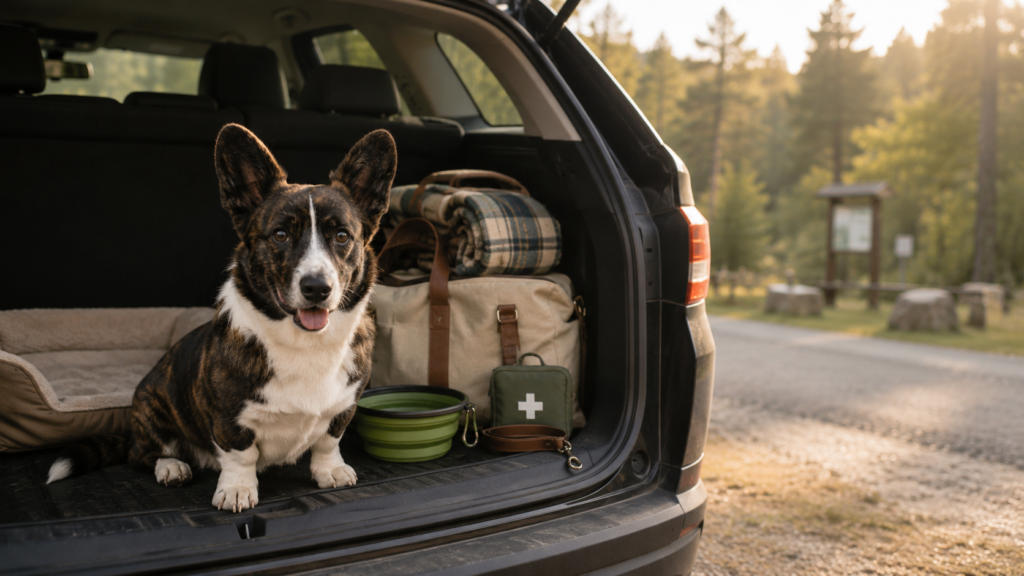
Packing for a dog sounds simple until you’re standing at the door, leash in hand, wondering if you forgot something. This checklist covers every dog road trip essential organized by category — car safety, food and water, health, comfort, and bathroom basics — so you can pack once and actually enjoy the drive.
If you’re still in the planning phase (first trip, figuring out the logistics), check out How to Travel with a Dog — First Road Trip Checklist first. This article picks up where that one leaves off: you’ve got the trip planned, now let’s make sure your bag is right.
1. Car Safety Essentials
This is the one category that most people underpack — because it feels like overkill until it isn’t.
An unrestrained dog in a moving car is a safety risk for everyone in the vehicle. In a sudden stop, a 30-pound dog becomes a 900-pound projectile. That’s not dramatic — it’s physics.
Dog car hammock or seat cover
A back seat hammock does two things: keeps your dog from sliding off the seat during turns, and protects your upholstery. We use the URPOWER Dog Car Seat Hammock — it attaches to the front and rear headrests in about a minute and creates a flat, stable surface for Nuggy to lie on. She figured out within one trip that the hammock means nap time, which is honestly the dream scenario.
Dog seat belt or travel harness
A seat belt attachment clips into the car’s seatbelt buckle and attaches to your dog’s harness — never their collar. The COOYOO Dog Seat Belt is a simple, inexpensive option that works with any harness. At under $7, there’s no reason not to have one.
Safety Note
Always attach the seatbelt to a harness, not a collar. In a collision, a collar attachment can cause serious neck injury. If your dog doesn’t have a harness yet, this is the moment to get one.
Crate or carrier (for smaller dogs or anxious travelers)
If your dog does better in an enclosed space — many do — a travel crate secured in the cargo area is actually the safest setup. Bring whatever crate they already sleep in at home. Familiar smell = calmer dog.
2. Food, Water & Treats
Hydration is the #1 thing people underestimate on dog road trips. Dogs pant to regulate temperature, and panting in a warm car burns through water faster than you think.
Collapsible travel bowls
Pack at least two — one for water, one for food. Collapsible silicone bowls take up almost no space and are far more practical than carrying a full-size ceramic bowl. The Collapsible Dog Travel Bowl 2-pack folds flat and clips to your bag or belt loop. At under $5, it’s one of the best-value items on this list.
Water — more than you think
Bring fresh water from home, especially if you’re visiting an area with different municipal water. Some dogs get an upset stomach from unfamiliar tap water. A 1-liter bottle per day is a reasonable starting point for a medium-sized dog.
Pre-portioned meals
Don’t bring the whole bag of kibble. Portion out each meal into individual zip-lock bags before you leave. It keeps things clean, eliminates the need for a scoop, and makes feeding at rest stops fast. Label each bag with AM/PM if you have a schedule-sensitive dog.
High-value treats
Road trips involve a lot of “good dog, stay calm” moments. Pack treats your dog doesn’t get every day — something they’ll reliably respond to when you need it. Vital Essentials Freeze-Dried Beef Liver works well because it’s small, high-reward, and doesn’t crumble in a bag.
Pro Tip
Freeze a stuffed KONG Classic the night before you leave. It buys you 20–30 minutes of quiet on the road and helps anxious dogs settle into car mode. That’s Nuggy’s standard road trip opener.
3. Comfort & Sleep
Dogs sleep a lot on long drives — if they’re comfortable. The wrong setup leads to restless pacing, whining, and a dog that arrives at the destination stressed instead of ready to explore.
Their own blanket from home
This is non-negotiable. Bring the blanket or bed insert your dog actually sleeps on. The familiar scent is more calming than any product you can buy. Tuck it into the hammock before you put your dog in the car.
Travel bed or crate insert
If you’re staying somewhere new — a hotel, an Airbnb, a campsite — your dog will sleep better on their own familiar surface than on an unfamiliar floor. A flat travel bed that rolls up takes minimal space in the trunk.
Their regular collar with updated ID tags
Before you leave, check that your dog’s ID tag has a current phone number. If they slip the leash in an unfamiliar place, that tag is how they get back. Even better: make sure their microchip registration is current.
4. Health & First Aid
You don’t need a veterinary kit. You need a small, organized pouch with the essentials — because a minor issue that’s easy to handle at home becomes stressful when you’re three hours from your regular vet.
Copy of vet records
Some dog-friendly hotels and campgrounds require proof of rabies vaccination. Keep a digital copy in your phone’s photos. If you’re crossing state lines with your dog, some states technically require a health certificate — it’s rarely enforced for road trips, but worth knowing.
Travel first aid kit
The ARCA PET Dog First Aid Kit covers the basics: gauze, antiseptic wipes, a digital thermometer, tweezers for ticks, and a first aid guide. It’s compact, well-organized, and the kind of thing you hope you never need but will be very glad you have. See The Ultimate Dog Health Care Checklist for a full breakdown of what to monitor on any trip.
Any regular medications
If your dog takes daily meds — joint supplements, allergy pills, anything — pack enough for the full trip plus two extra days. Put them in a labeled zip-lock with dosing notes in case someone else needs to give them.
Tick remover or fine-tip tweezers
If you’re going anywhere with grass, woods, or trails, assume ticks. A proper tick remover tool (included in most first aid kits) is faster and cleaner than regular tweezers.
Motion sickness medication (if needed)
If your dog has had trouble with car sickness before, talk to your vet before the trip. Cerenia (maropitant) is prescription-only but works very well. Ginger-based supplements are a gentler OTC option for mild cases.
5. Entertainment & Calming on the Road
Some dogs are natural road trippers — they curl up and sleep for hours. Others need help getting there. Either way, having the right items on hand makes the drive easier for everyone.
A stuffed Kong or chew
Long-lasting chews and stuffed Kongs give anxious or bored dogs something constructive to focus on. Freeze the Kong the night before (peanut butter + kibble + a little banana works great) and hand it over once you’re on the highway.
Lick mat
A MateeyLife Lick Mat smeared with a thin layer of peanut butter or plain yogurt is a surprisingly effective calming tool. The repetitive licking action releases calming hormones. Keep one in the car for rest stop downtime.
Familiar toy
One or two familiar toys from home. Not new toys — familiar ones. New things can add stimulation when you want calm.
Pro Tip
If your dog is anxious in the car, check out 7 Natural Calming Remedies for Anxious Dogs — a few of those work just as well for travel anxiety as they do for separation anxiety.
6. Bathroom Basics
Simple, but easy to forget.
Poop bags — more than you think
Pack double what you think you need. Rest stop trash cans are not always nearby. Running out is worse than carrying extra.
Pet wipes or baby wipes
For muddy paws, post-swim cleanup, unexpected messes. Wipes earn their weight on road trips.
Hand sanitizer
For you, after the above.
Small towel
A dedicated dog towel for drying off after water stops. Microfiber dries fast and takes up minimal space.
Your Complete Dog Road Trip Packing Checklist
Print this or save it to your phone before you pack.
🚗 Car Safety
- Dog car seat hammock or seat cover
- Dog seat belt (attaches to harness)
- Harness (not just collar)
- Travel crate (if applicable)
🥣 Food & Water
- Collapsible travel bowls (x2)
- Water from home (1L per day minimum)
- Pre-portioned meals in zip-lock bags
- High-value treats
- Stuffed and frozen Kong
🛏️ Comfort
- Familiar blanket or bed insert
- Updated ID tags (current phone number)
- Collar + spare leash
🏥 Health
- Dog first aid kit
- Vaccination records (digital copy)
- All regular medications (+ 2 extra days)
- Tick remover / tweezers
- Motion sickness meds (if needed)
🎾 Entertainment
- Lick mat
- Familiar toy (1–2)
- Long-lasting chew
🧹 Bathroom
- Poop bags (double what you think)
- Pet wipes
- Hand sanitizer
- Small microfiber towel
Ready to Hit the Road
Getting the packing right removes the main source of road trip stress — the nagging feeling that you forgot something. With this list checked off, the only thing left is to figure out where you’re going.
One thing I’ve learned after traveling with Nuggy: the first hour is usually the hardest. Get past that, and most dogs find their rhythm and settle into the drive. By hour two, Nuggy is usually passed out on her hammock like she owns the backseat.
What’s the one thing you always forget to pack? Drop it in the comments — I’m always adding to this list.
Planning your first trip? Start with How to Travel with a Dog — First Road Trip Checklist — it covers everything from vet prep to finding dog-friendly accommodation.