
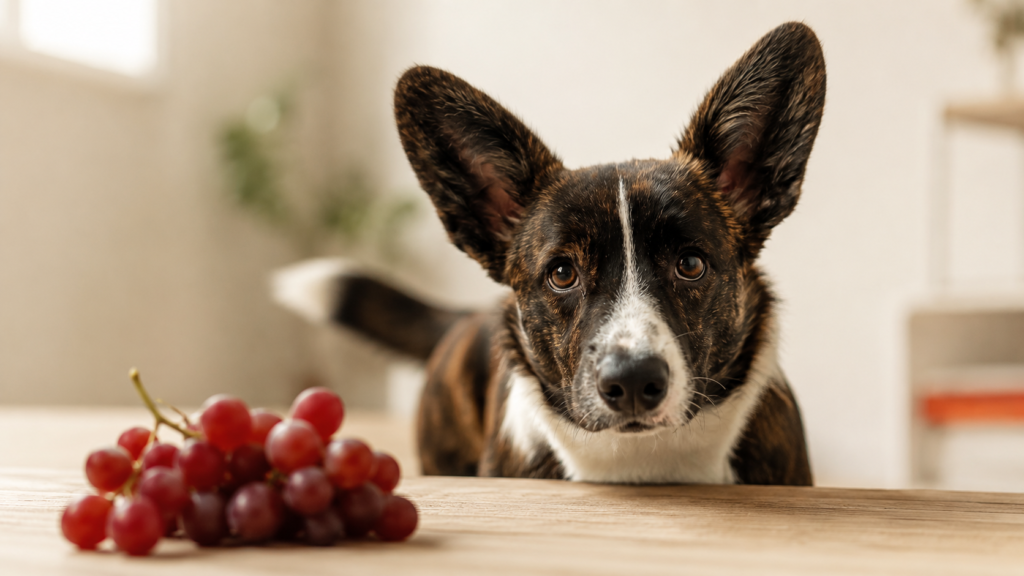
⚠️ No, dogs cannot eat grapes. Grapes — and raisins, currants, and sultanas — are highly toxic to dogs and can cause sudden kidney failure, even in small amounts. There is no known safe dose.
Quick Answer Box
⛔ Grapes are not safe for dogs — at any amount.
Even a single grape can trigger acute kidney failure in some dogs. The exact toxic compound is still unknown, which makes this especially dangerous: we can’t calculate a “safe” dose. If your dog ate grapes or raisins, treat it as an emergency and contact your vet immediately.
Intro
Nuggy once got dangerously close to the fruit bowl on our kitchen counter — nose twitching, eyes locked on a small cluster of grapes. I caught him just in time, but it shook me up. I knew chocolate was bad, but I hadn’t realised just how dangerous grapes were until I looked into it properly.
Here’s the thing: grapes look harmless. They’re small, soft, and natural. A lot of dog owners assume that if something is healthy for humans, it’s probably fine for dogs too. With grapes, that assumption could be fatal.
I’ve gone through the research and talked with our vet about this one. The short answer is: grapes are one of the most dangerous foods your dog can eat, and the scary part is that we still don’t fully understand why. In this article, I’ll walk you through exactly what makes grapes toxic, what to do if your dog already ate some, and what safe alternatives look like.
Are Grapes Safe for Dogs?
No — grapes are not safe for dogs, and this isn’t a “too much is bad” situation. Grapes are toxic to dogs at any quantity, and the danger is real even with a single grape or a small handful of raisins.
What makes this particularly unsettling is that scientists still haven’t identified exactly which compound in grapes causes the toxicity. This matters because it means there’s no way to establish a minimum safe dose. Some dogs have eaten a large amount and been fine; others have gone into kidney failure after just a few. The unpredictability is what makes grapes so dangerous.
What we do know: grape toxicity causes acute kidney injury (AKI) — a sudden, rapid loss of kidney function. In severe cases, this leads to complete kidney failure and can be fatal within days if not treated promptly.
All forms of grapes are equally dangerous:
- Fresh grapes (any colour — red, green, purple)
- Raisins (even more concentrated = higher risk per gram)
- Currants and sultanas
- Grape juice, grape jam, anything containing grape extract
- Raisin bread, fruit cake, trail mix with raisins
There is no safe form of grape for dogs.
Risks and What to Watch For
Symptoms of grape toxicity typically appear within 6–12 hours of ingestion, though in some cases the dog seems fine at first — which can lead owners to assume there’s no problem. Don’t wait for symptoms to appear. If your dog ate grapes, call your vet before any symptoms show up.
Signs of grape toxicity in dogs:
- Vomiting (often within the first 2 hours)
- Diarrhoea
- Lethargy and weakness
- Loss of appetite
- Abdominal pain (the dog may guard their belly or seem uncomfortable)
- Decreased or no urination — a critical warning sign of kidney failure
- Increased thirst initially, then sudden decrease
- Tremors in severe cases
The most dangerous sign is decreased urination. By the time a dog stops producing urine, the kidneys are already severely compromised. This is why acting fast — before symptoms escalate — is so important.
What to Do If Your Dog Ate Grapes

Act fast. This is one of the situations where waiting to see if your dog “seems okay” can cost them their life. Here’s what to do:
1. Don’t panic — but move quickly.
Staying calm helps you think clearly. You need to act within the first 1–2 hours for the best outcome.
2. Estimate how much they ate.
Try to figure out roughly how many grapes or how many raisins your dog consumed. Even a small amount warrants a call to the vet.
3. Call your vet immediately — or an emergency animal poison line.
- Your regular vet (if open)
- Pet Poison Helpline: 1-855-764-7661 (24/7, small fee applies)
- ASPCA Animal Poison Control: 888-426-4435 (24/7)
Tell them: your dog’s weight, how much they ate, and how long ago.
4. Do not induce vomiting without vet instruction.
This is important. Inducing vomiting at the wrong time can do more harm. Your vet will tell you if and how to do this safely.
5. Watch for the warning signs listed above.
Even if your vet advises monitoring at home, keep a close eye on your dog for the next 24 hours — especially urination frequency.
In many cases, the vet will recommend bringing your dog in for IV fluids and monitoring to support kidney function. The sooner this starts, the better the outcome.
Safety Note
If your dog ate raisins specifically, treat it as even more urgent. Raisins are a concentrated form — a small box of raisins can be more dangerous than a full bunch of fresh grapes by weight.
Safe Fruit Alternatives to Grapes
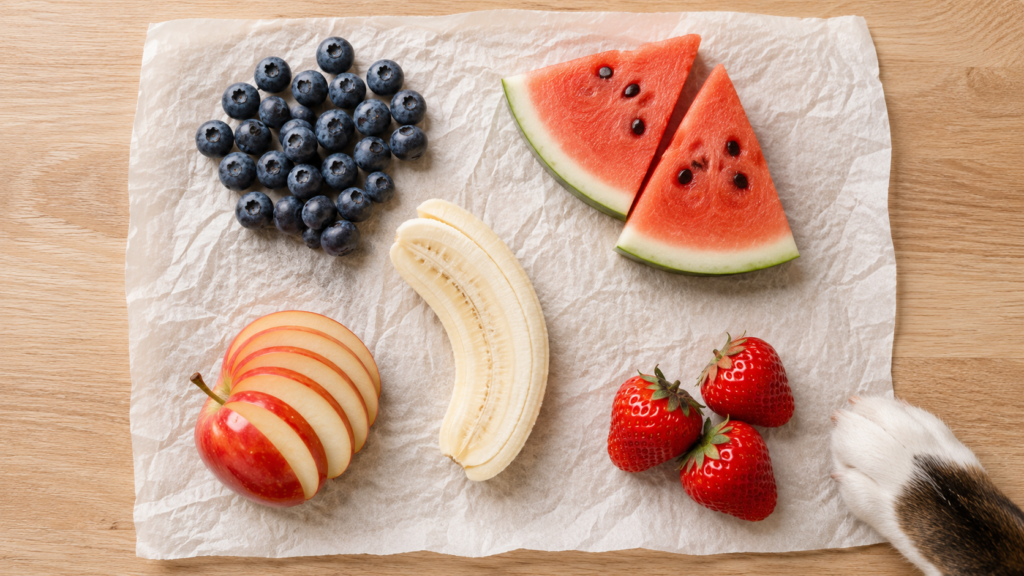
If you want to give your dog a sweet, juicy fruit treat, there are plenty of safe options that dogs genuinely love. Nuggy is obsessed with blueberries — they’re basically his version of candy.
Safe fruit alternatives:
- Blueberries — antioxidant-rich, bite-sized, great as training treats
- Watermelon — hydrating and refreshing (seeds and rind removed)
- Bananas — energy boost, great for stuffing in a Kong
- Apples — crunchy and satisfying (core and seeds removed)
- Strawberries — sweet and high in vitamin C
These are all dog-safe in reasonable amounts and make great occasional treats or training rewards. If you want some inspiration, check out our 10 Homemade Frozen Dog Treats — most of them use fruit, and they’re a brilliant summer snack.
It’s also worth bookmarking our full guide: Foods Dogs Can Eat and Can’t — Safe Human Foods Guide — it covers everything in one place, including what’s safe, what’s not, and how much is okay.
The Bottom Line
Can dogs eat grapes? No — not even one, not ever. Grapes and raisins are among the most dangerous foods for dogs, capable of causing acute kidney failure with no clear minimum safe dose. Every form is toxic: fresh grapes, raisins, currants, sultanas, grape juice, and anything containing grape extract.
If your dog has eaten grapes, don’t wait to see what happens. Call your vet or an emergency animal poison line right away. Time is the difference between a full recovery and serious kidney damage.
Nuggy never did get those grapes from the fruit bowl — and after researching this properly, I moved the bowl to a high shelf with zero hesitation. Some risks simply aren’t worth taking.
For more on what your dog can and can’t eat safely, our Foods Dogs Can Eat and Can’t guide covers over 40 common foods. And if you ever want to know about your dog’s general health routine, The Ultimate Dog Health Care Checklist is a solid starting point.
FAQ
Q: Can dogs eat one grape?
A: There is no known safe amount. Even one grape has caused kidney failure in some dogs. The risk varies unpredictably between individual dogs, which is why no amount is considered safe.
Q: What if my dog ate a grape and seems fine?
A: Contact your vet anyway. Symptoms can be delayed, and kidney damage may develop even when a dog initially appears normal. Early treatment dramatically improves the outcome.
Q: Are raisins worse than grapes for dogs?
A: Yes — raisins are dried grapes, making the toxic compounds more concentrated per gram. A small box of raisins is potentially more dangerous than a full bunch of fresh grapes.
Q: Can puppies eat grapes?
A: Absolutely not. Puppies are even more vulnerable due to their smaller body weight and developing organs. Any grape ingestion by a puppy is a veterinary emergency.
Q: What about grape-flavoured dog treats?
A: Most grape-flavoured dog treats use artificial flavouring rather than actual grape extract, and are generally considered safe. However, always check the ingredient list — and when in doubt, contact the manufacturer.
Q: Is grape seed extract in dog supplements safe?
A: This is a grey area. Grape seed extract (GSE) appears to have different properties from whole grapes and is found in some dog supplements. However, given the overall toxicity of grapes, it’s worth discussing with your vet before using any grape-derived supplement.