
This post contains affiliate links. I may earn a small commission if you buy through them, at no extra cost to you.
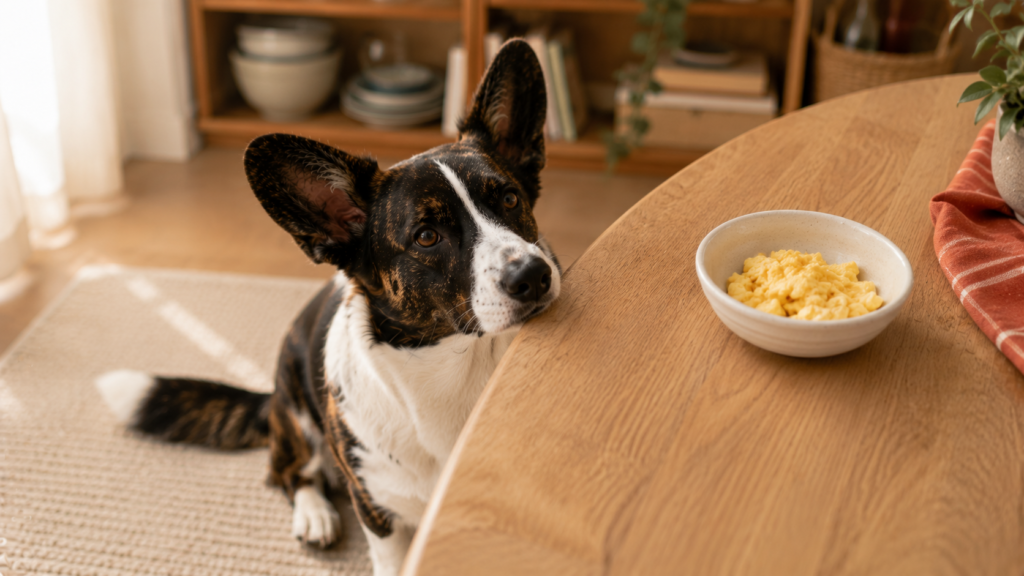
✅ Yes, dogs can eat eggs — as long as they’re cooked. Eggs are an excellent source of protein, healthy fats, and essential amino acids. Skip the raw eggs and skip the seasoning. Plain, cooked egg is the way to go.
Quick Answer Box
✅ Cooked eggs are safe and nutritious for dogs.
Scrambled, boiled, or poached — all fine as long as there’s no butter, oil, salt, or seasoning added. Raw eggs carry a small risk of salmonella and a compound in raw egg white (avidin) that can interfere with biotin absorption over time. Cooked eggs are the safe choice.
Intro
Nuggy first got egg when I was making scrambled eggs and accidentally dropped a small piece on the floor. He was on it in under a second, and the look he gave me afterwards made it very clear he’d like more. I did some research, started giving him the occasional plain scrambled egg, and now it’s become a weekend breakfast ritual.
Eggs are one of those foods that sit in a grey zone for a lot of dog owners — you’ve probably heard conflicting things. The truth is that cooked eggs are genuinely good for dogs, rich in protein and nutrients, and most dogs love them. The raw egg debate is worth understanding too — so let’s cover everything.
Are Eggs Safe for Dogs?
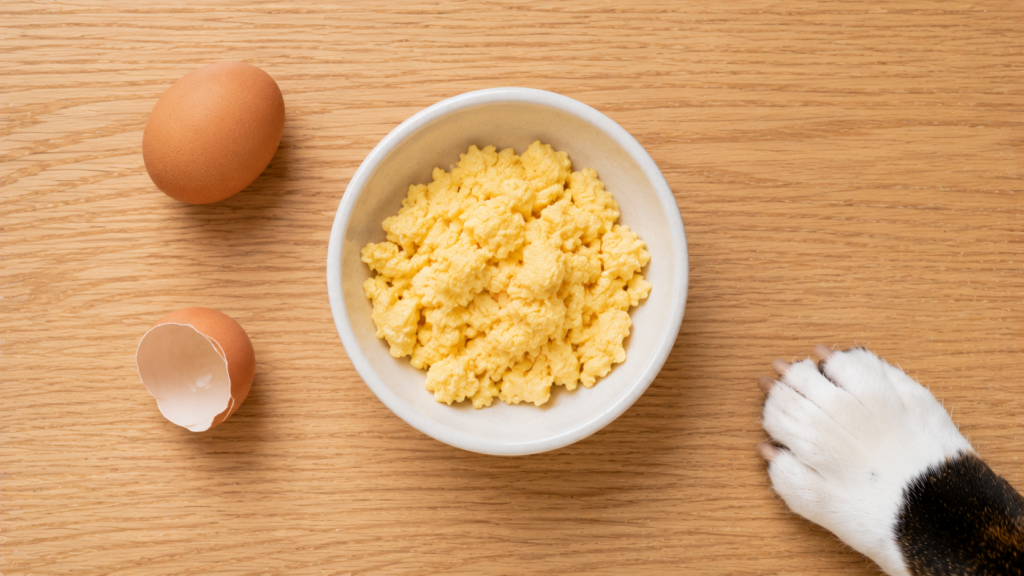
Cooked eggs — yes, completely. Raw eggs — it’s more complicated.
Cooked eggs:
Plain cooked eggs are safe and nutritious for dogs. Scrambled, boiled, poached, or fried (without oil or butter) — all fine. The key is “plain”: no salt, no pepper, no butter, no onion, no cheese, no seasoning of any kind.
Raw eggs:
There are two concerns with raw eggs:
- Salmonella — raw eggs carry a small risk of salmonella contamination, which can affect both dogs and humans handling the egg.
- Avidin — raw egg whites contain avidin, a protein that binds to biotin (vitamin B7) and prevents its absorption. Occasional raw egg is unlikely to cause problems, but feeding raw egg whites regularly over a long period can lead to biotin deficiency.
Cooking destroys both the salmonella risk and the avidin. It’s simply the safer option. Our vet’s advice was clear: cook the egg, skip the seasoning, and you’re good.
Benefits of Eggs for Dogs
Eggs are often called “nature’s multivitamin” — and dogs benefit from them just as much as humans:
- Complete protein — eggs contain all essential amino acids, making them one of the most bioavailable protein sources available.
- Healthy fats — support coat condition, skin health, and energy.
- Vitamin A — eye health, immune function, skin and coat.
- Vitamin D — bone health and immune support.
- Vitamin B12 — important for nerve function and red blood cell production.
- Riboflavin (B2) — supports energy metabolism.
- Selenium — antioxidant that supports thyroid function and immune health.
- Choline — supports brain function and liver health.
- Folate — cell growth and red blood cell formation.
Eggs are also easy to digest, which makes them a good option for dogs with sensitive stomachs or dogs recovering from illness.
How to Safely Serve Eggs to Your Dog
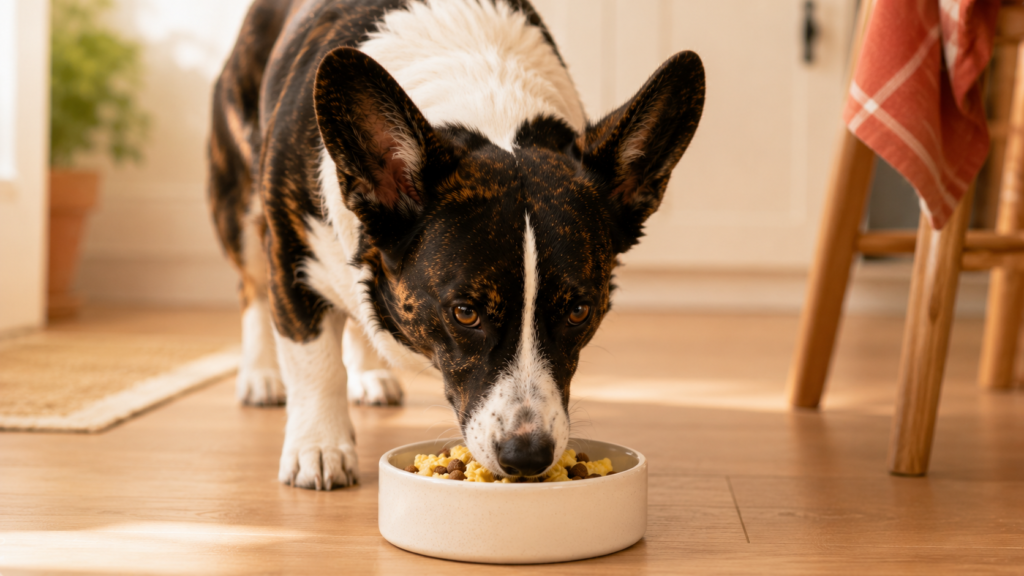
The golden rule: plain, cooked, no seasoning.
No butter. No oil. No salt. No pepper. No cheese. Nothing else. Just egg.
Best cooking methods:
- Scrambled — cook in a dry non-stick pan, no butter or oil. Easy to mix into kibble or serve separately.
- Boiled — hard or soft boiled, peeled and served whole or sliced.
- Poached — water only, no vinegar or seasoning.
How much is safe?
| Dog size | Max serving |
|---|---|
| Small (< 10 kg) | ¼ egg, 2–3× per week |
| Medium (10–25 kg) | ½–1 egg, 3× per week |
| Large (> 25 kg) | 1 egg daily is fine |
Eggs are calorie-dense — one large egg is about 70 kcal. Keep this in mind as part of the daily calorie budget.
Serving ideas:
- Plain scrambled egg mixed into kibble — easy protein boost, especially good for picky eaters.
- Hard boiled egg sliced on top of their meal — great as a food topper.
- Egg in a KONG — scramble and slightly cool, then spoon into a KONG Classic with some mashed banana or plain yogurt. Freeze for 2+ hours.
- Egg for sick dogs — plain scrambled egg is one of the gentlest foods for a dog with an upset stomach. Easy to digest and palatable even when they don’t want to eat.
Pro Tip
If your dog is a picky eater, a little scrambled egg mixed into their kibble often does the trick. The smell and flavour is hard for most dogs to resist.
The Bottom Line
Can dogs eat eggs? Yes — cooked eggs are one of the best whole-food additions you can make to your dog’s diet. High in complete protein, packed with vitamins and healthy fats, and most dogs absolutely love them. Just keep it plain, keep it cooked, and factor in the calories.
Raw eggs aren’t worth the risk when the cooked version is just as nutritious and completely safe. Our rule with Nuggy: plain scrambled egg, no seasoning, a few times a week. Simple, cheap, and genuinely good for him.
For more on safe human foods for dogs, check out our Foods Dogs Can Eat and Can’t — Safe Human Foods Guide. And if your dog ever has an upset stomach, plain scrambled egg is one of the go-to remedies in our Dog Health Care Checklist.
FAQ
Q: Can dogs eat raw eggs?
A: It’s not recommended. Raw eggs carry a small salmonella risk, and raw egg whites contain avidin, which can interfere with biotin absorption over time. Cooked eggs are just as nutritious and completely safe.
Q: Can dogs eat scrambled eggs with butter?
A: No — the butter adds unnecessary fat and calories. Scramble the egg in a dry non-stick pan with no added fat. Plain is always best.
Q: Can dogs eat the eggshell?
A: Eggshells are technically safe and are a source of calcium. Some owners grind them into a fine powder and sprinkle it over food. However, sharp shell fragments can be a hazard, so if you’re giving shells, grind them first. Not necessary if your dog eats a balanced diet.
Q: Can puppies eat eggs?
A: Yes — cooked eggs are safe for puppies and can be a good protein source. Keep portions small and age-appropriate. Always cooked, always plain.
Q: How often can I feed my dog eggs?
A: For most dogs, a few times a week is fine. Large dogs can have an egg daily without issue. Small dogs should stick to a quarter or half an egg, 2–3 times per week, to avoid excess calories.
Q: Can dogs eat fried eggs?
A: If fried without oil or butter in a dry pan, yes. If fried in butter or oil, no — the added fat is unnecessary and can cause digestive upset or pancreatitis in sensitive dogs. Scrambled or boiled is simpler and safer.