
This post contains affiliate links. I may earn a small commission if you buy through them, at no extra cost to you.
New Puppy Checklist — Everything You Need Before Your Puppy Comes Home
The week before Nuggy came home, I spent three evenings going down internet rabbit holes trying to figure out what I actually needed versus what the pet stores wanted me to buy. The lists were overwhelming and contradictory.
So here’s the list I wish I’d had: everything you genuinely need before your puppy arrives, organized by category, without the fluff.
Before Your Puppy Arrives — The Essentials
🏠 Sleeping & Crate Setup
A crate isn’t a cage — it’s your puppy’s safe space, and introducing it correctly from day one makes the whole first year easier. Puppies are denning animals; most settle into a crate quickly when it’s introduced positively.
What you need:
- Crate — sized so your puppy can stand, turn around, and lie down, but not much larger (too much space = easier to toilet in the corner). If you’re buying for adult size, use a divider to reduce the space initially
- Crate bedding — a washable fleece pad or old towel. Don’t invest in expensive bedding until you’re past the chewing phase
- Puppy pen / playpen — for containing your puppy in a safe area when you can’t supervise directly
What you don’t need yet: an expensive dog bed. Most puppies will destroy it. Wait until around 12 months.
🍽️ Feeding
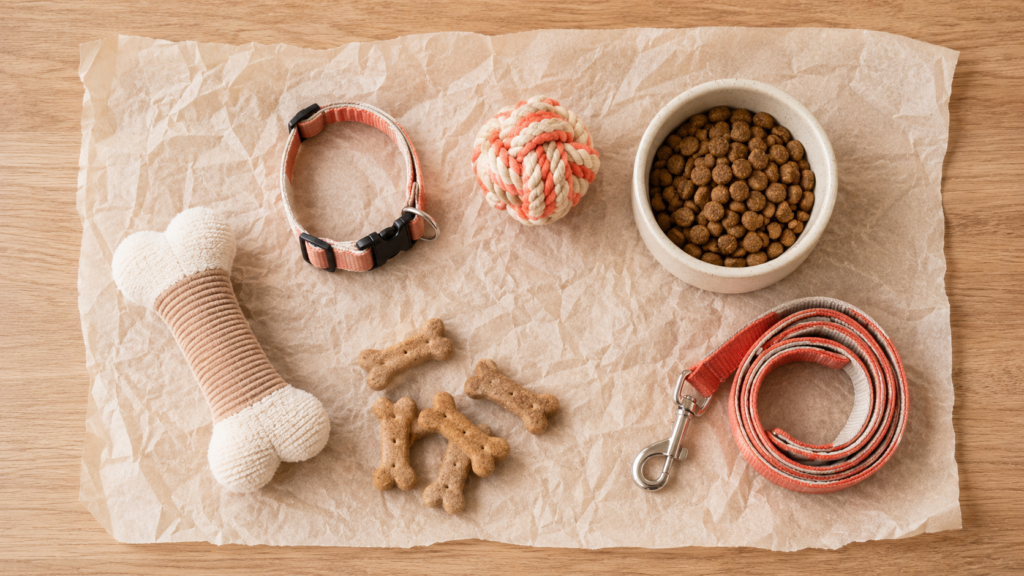
- Two stainless steel bowls — one for food, one for water. Stainless is easier to clean than plastic and doesn’t harbour bacteria in scratches
- Puppy food — ask your breeder or rescue what they’ve been feeding and start with the same brand to avoid digestive upset from a sudden diet change. Transition to your preferred food gradually over 7–10 days
- Measuring cup or small kitchen scale — puppy feeding portions matter for proper growth; don’t free-feed
🎾 Toys
Puppies need to chew. If you don’t provide appropriate outlets, they will find their own (your shoes, your sofa legs, your skirting boards).
Essential toy types:
- Chew toy — rubber or nylon, something that can take serious puppy chewing without breaking off chunks that could be swallowed
- Tug toy — rope or rubber; great for interactive play and bonding
- Puzzle/enrichment toy — a KONG Classic stuffed with kibble or a small amount of peanut butter (xylitol-free!) and frozen is the most effective puppy settling tool I’ve found. Nuggy had one from day two
What you don’t need: the entire toy aisle. Start with three or four toys of different textures and types. Rotate them to keep things interesting rather than leaving everything out at once.
🦮 Walking Gear
- Flat collar with ID tag — your puppy’s name and your phone number, required by law in most countries before going outside
- Harness — many trainers recommend a front-clip or Y-harness for puppies to avoid pressure on the developing trachea during leash training
- Leash — a standard 1.5–2m lead. Avoid retractable leads for puppies; they make leash training significantly harder
- Long line (optional) — a 5–10m lightweight line for recall training in open spaces
🛁 Grooming Basics
Start grooming handling early — the more comfortable your puppy is with being touched, examined, and handled, the easier vet visits and grooming appointments will be for life.
Minimum kit:
- Soft puppy brush — even short-coated puppies benefit from regular brushing for coat and skin health and for getting used to the sensation
- Puppy-safe shampoo — for occasional baths. Adult dog shampoo can be too harsh for puppy skin
- Nail clippers or grinder — start handling paws and touching nails from day one, even if you’re not trimming yet. The habit is more important than the tool at this stage
- Toothbrush and dog toothpaste — dental habits established in puppyhood are far easier than trying to introduce them to an adult dog
🏥 Health & Safety
- Vet appointment booked — ideally within 48–72 hours of bringing your puppy home. Your vet will check for any health issues, confirm vaccination status, and answer first-week questions
- Vaccination records — ask your breeder or rescue for the full paperwork
- Pet insurance — research and enroll before your first vet visit if possible. Many policies don’t cover pre-existing conditions, so earlier is better
- Dog first aid kit — accidents happen, especially with puppies. See our Dog First Aid Kit guide for what to include
🐾 Training Supplies
Start training the moment your puppy comes home — not because they need to perform commands, but because every interaction is teaching them something. Better to be intentional about it.
- Training treats — small, soft, low-calorie. Zuke’s Mini Naturals are what we used with Nuggy — the right size, the right softness, and they can eat dozens without stomach upset
- Clicker (optional) — marker training with a clicker is highly effective for puppies; the clear sound creates faster learning than a verbal marker for many dogs
- Treat pouch — keeps treats accessible during training without fumbling in your pocket
Puppy-Proofing Your Home
Before your puppy arrives, get down to floor level and look at the world from their perspective.
Secure or remove:
- Electrical cables — puppies chew everything. Use cable management or bitter spray on exposed wires
- Toxic plants — many common houseplants are toxic to dogs (lilies, pothos, philodendron, sago palm). Move them out of reach or rehome them
- Cleaning products and medications — locked cabinet or high shelf
- Small objects that could be swallowed — children’s toys, coins, rubber bands, hair ties
- Shoes and clothing left on the floor — save yourself the heartbreak
Block access to:
- Stairs (until your puppy’s joints are developed enough — most vets recommend limiting stair use under 12 weeks for large breeds)
- Rooms you don’t want them in initially — baby gates are easier to use consistently than chasing a puppy out of the same room 40 times
The First Week — What to Expect
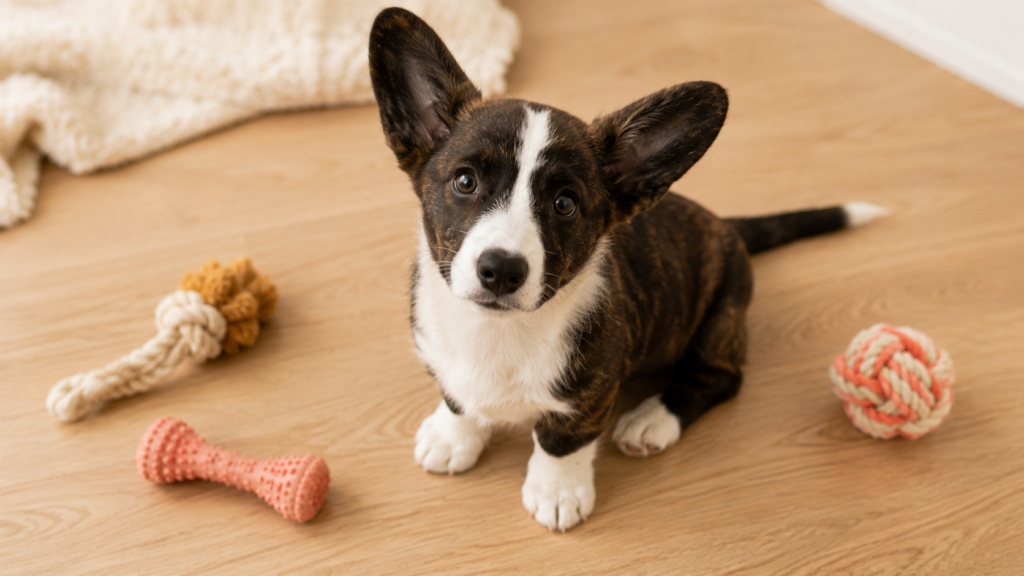
Day 1–3: Your puppy will probably be overwhelmed. Some sleep a lot; some cry at night; most do both. This is normal. Keep the household calm, limit visitors, and let your puppy explore their space at their own pace.
Night crying: Almost universal in the first few nights. Your puppy has left their mother and littermates for the first time. A crate next to your bed, a warm (not hot) water bottle wrapped in a towel, or a worn t-shirt of yours in the crate can all help.
Toilet training: Start immediately. Take your puppy outside after every meal, after every sleep, and every 30–45 minutes when they’re awake. Reward heavily when they go outside. Don’t punish accidents — they don’t understand cause and effect at this age; punishment only teaches them to hide their toileting from you.
First vet visit: Don’t skip this. Even if your puppy seems healthy, a vet check in the first 72 hours establishes a baseline and catches anything the breeder may have missed.
For a full daily routine framework, our Puppy Routine Schedule article gives you a hour-by-hour guide for the first weeks.
The Bottom Line
You don’t need everything at once. The genuine essentials are: safe sleeping space, appropriate food and bowls, a few good toys, basic walking gear, training treats, and a vet appointment booked. Everything else can be added as you learn what your specific puppy actually needs.
Nuggy came home with a crate, a KONG, a bag of treats, and a lot of optimism. That turned out to be enough for the first week.
For what comes next, our 10 Puppy Mistakes New Owners Make guide covers the most common first-year pitfalls — and how to avoid them.
Frequently Asked Questions
Q: What do I need for a puppy on the first night?
A: Crate with bedding, water bowl accessible, a worn item of your clothing in the crate, and patience. The first few nights often involve crying — this is normal and improves quickly with consistent routine.
Q: How much should a new puppy sleep?
A: Puppies sleep 16–20 hours per day. This is normal and necessary for development. Don’t worry if your new puppy seems to spend most of the day asleep — this is exactly right.
Q: When should I start training a new puppy?
A: Immediately — from the moment they come home. Not formal command training, but consistent responses to their behaviour. Every interaction teaches them something. Start with name recognition, sit, and coming when called.
Q: Do I need a dog crate for a new puppy?
A: It’s not legally required, but it’s highly recommended. A crate gives your puppy a safe den space, makes toilet training faster, and prevents destructive behaviour when you can’t supervise. Introduced correctly, most dogs choose to sleep in their crate voluntarily for life.
Q: What food should I give a new puppy?
A: Start with whatever the breeder or rescue was feeding to avoid digestive upset. Transition to your preferred food gradually over 7–10 days. Ask your vet for brand recommendations at your first appointment.
Q: How soon can I take my puppy outside?
A: Fully vaccinated puppies can go out anywhere. Before full vaccination, you can still go to gardens and homes of vaccinated dogs, and carry your puppy in areas with high dog traffic. Ask your vet for the specific timeline based on your vaccination schedule.