
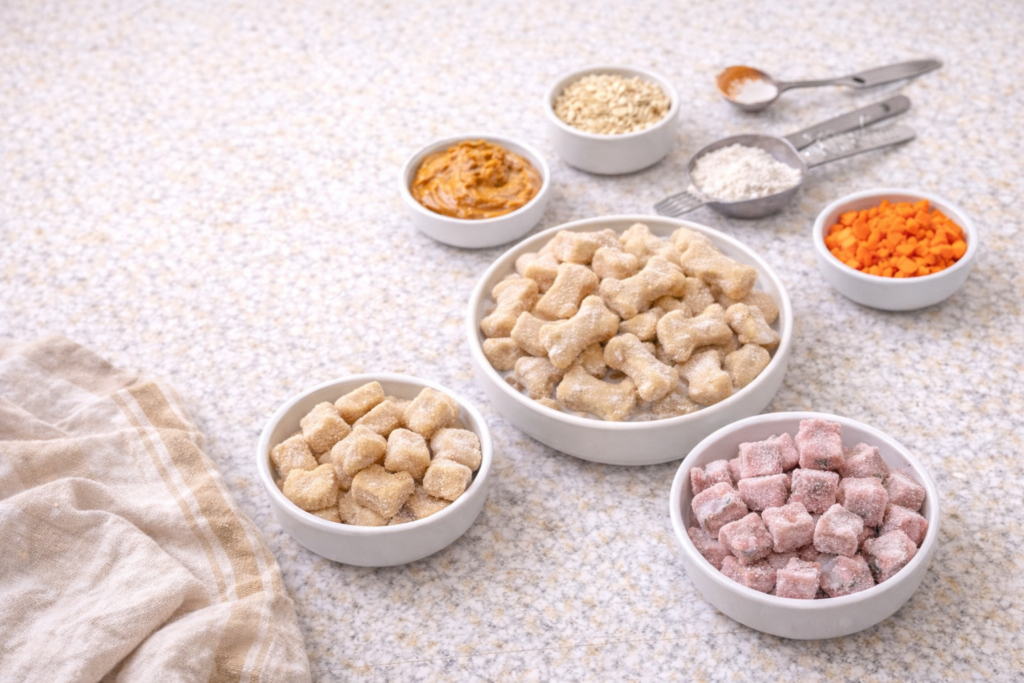
A practical guide to choosing and making truly healthy treats at home
Homemade dog treats give you full control over ingredients and quality. But “homemade” does not always mean healthy. Some recipes are better suited for special occasions, while others can be safely used every day.
This guide explains what makes homemade dog treats healthy, how to choose the right type for your dog, and includes simple starter recipes you can make at home without complicated steps.
What Makes Homemade Dog Treats Actually Healthy
Healthy homemade dog treats should support your dog’s daily routine — not overload it.
A healthy homemade dog treat is:
- Made with dog-safe, whole ingredients
- Low in added fats and sugars
- Easy to digest
- Appropriate for regular use, not just occasional rewards
Avoid ingredients such as:
- Sugar, honey, syrups
- Excess salt
- Chocolate, xylitol, raisins, grapes
- Artificial flavorings or sweeteners
Healthy treats are functional snacks, not desserts.
Baked vs No-Bake vs Frozen Dog Treats
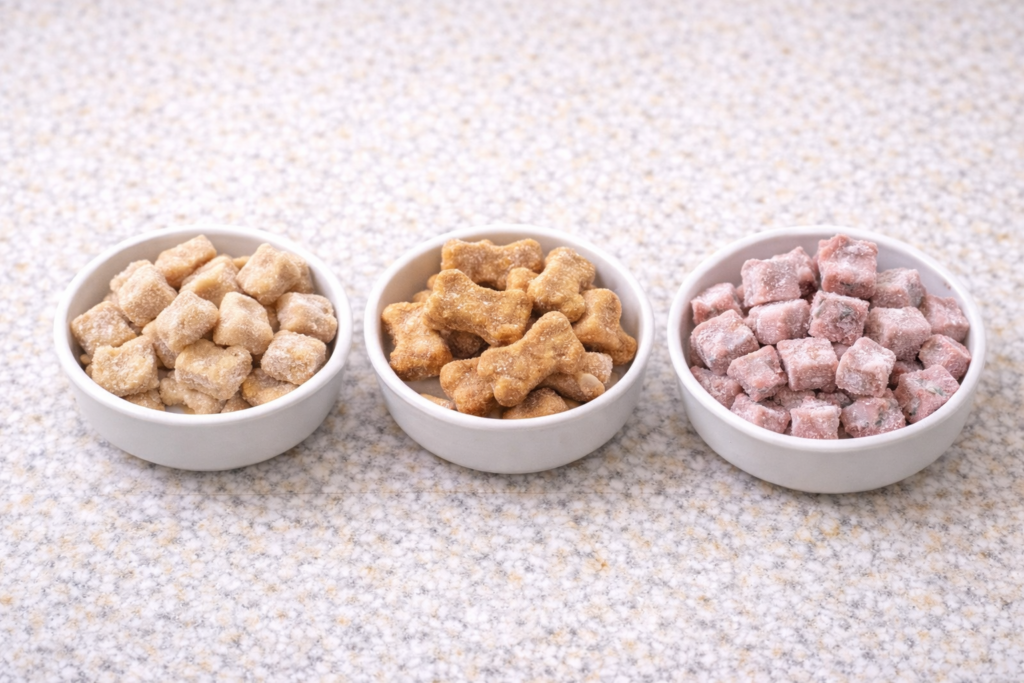
Different treat formats serve different purposes.
Baked Homemade Dog Treats
Best for:
- Crunchy texture
- Longer storage
- Occasional enrichment
They usually contain oats, whole-grain flours, pumpkin, or fruit and are easy to batch prepare.
No-Bake Homemade Dog Treats
Best for:
- Quick preparation
- Sensitive dogs
- Minimal ingredients
No-bake treats are softer and gentler on digestion.
Frozen Dog Treats
Best for:
- Hot weather
- Puppies and teething dogs
- Calm enrichment
Frozen treats slow down eating and provide cooling relief.
How Many Ingredients Are Too Many?
More ingredients do not equal better nutrition.
For most dogs:
- 2–5 ingredients are ideal
- Fewer ingredients = easier digestion
- Easier to identify sensitivities
This is why simple and 3-ingredient dog treats work so well for daily use.
Easy Homemade Healthy Dog Treats (Beginner-Friendly)
If you’re new to homemade dog treats, start with recipes that:
- Use common ingredients
- Require minimal prep
- Can be adjusted easily
Below are three simple starter recipes that represent different treat types.
Simple Healthy Dog Treat Recipes
Easy 3-Ingredient Dog Treats
Best for: beginners, sensitive dogs
Ingredients
- 1 ripe banana
- 1 cup rolled oats
- 2 tbsp unsweetened peanut butter (xylitol-free)
Instructions
- Mash the banana until smooth
- Mix in oats and peanut butter
- Shape into small treats
- Bake at 180 °C for 12–15 minutes
Soft Homemade Dog Treats
Best for: puppies, training sessions
Ingredients
- ½ cup pumpkin purée
- 1 egg
- ¾ cup oat flour
Instructions
- Mix all ingredients into a soft dough
- Spoon small portions onto a baking tray
- Bake at 170 °C for 10–12 minutes
Healthy Frozen Dog Treats
Best for: summer, calming enrichment
Ingredients
- Plain Greek yogurt
- Blueberries
- A small splash of water
Instructions
- Blend all ingredients
- Pour into molds or trays
- Freeze for 3–4 hours
Treats for Daily Use vs Training
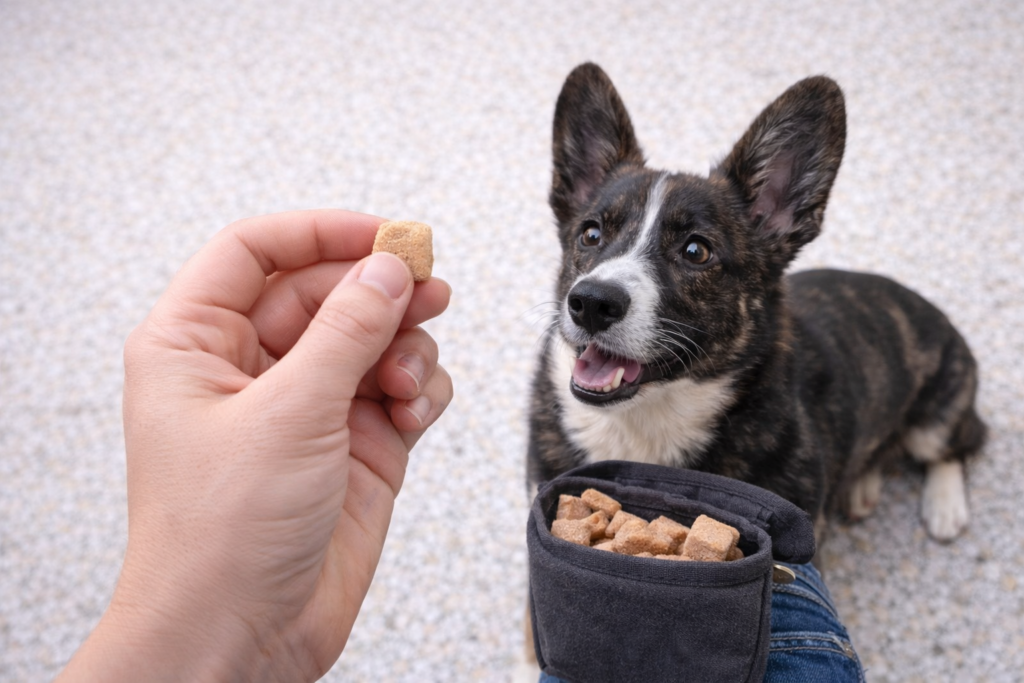
Not all treats serve the same role.
Daily Treats
- Low calorie
- Mild flavors
- Easy to digest
Training Treats
- Small and soft
- Highly motivating
- Easy to chew quickly
Homemade treats can be adapted for both by adjusting size and texture.
Long-Lasting Homemade Dog Treats
For dogs that enjoy chewing, longer-lasting treats can:
- Reduce boredom
- Extend enrichment time
- Encourage calm behavior
Baked or dehydrated treats tend to last longer than soft or frozen options.
FAQ
Are homemade dog treats healthier than store-bought?
They can be, if made with dog-safe ingredients and balanced recipes. Homemade treats allow full control over ingredients and portion size.
How often can dogs have homemade treats?
Most dogs can have small homemade treats daily, as long as they are low in calories and don’t replace regular meals.
Can puppies eat homemade dog treats?
Yes, but treats should be soft, small, and easy to digest. Avoid hard or crunchy treats for young puppies.
How long do homemade dog treats last?
- Baked treats: up to 1–2 weeks in an airtight container
- Frozen treats: several weeks in the freezer
- Soft treats: a few days refrigerated
What ingredients should always be avoided?
Never use chocolate, xylitol, grapes, raisins, onions, garlic, or artificial sweeteners.
Final Thoughts
Healthy homemade dog treats are about making informed choices, not complex recipes.
When you understand:
- Why you’re giving the treat
- How often your dog will eat it
- Which ingredients suit your dog best
…it becomes easy to choose or create treats that truly support your dog’s wellbeing.
Homemade treats don’t need to be fancy.
They just need to be simple, safe, and intentional.