
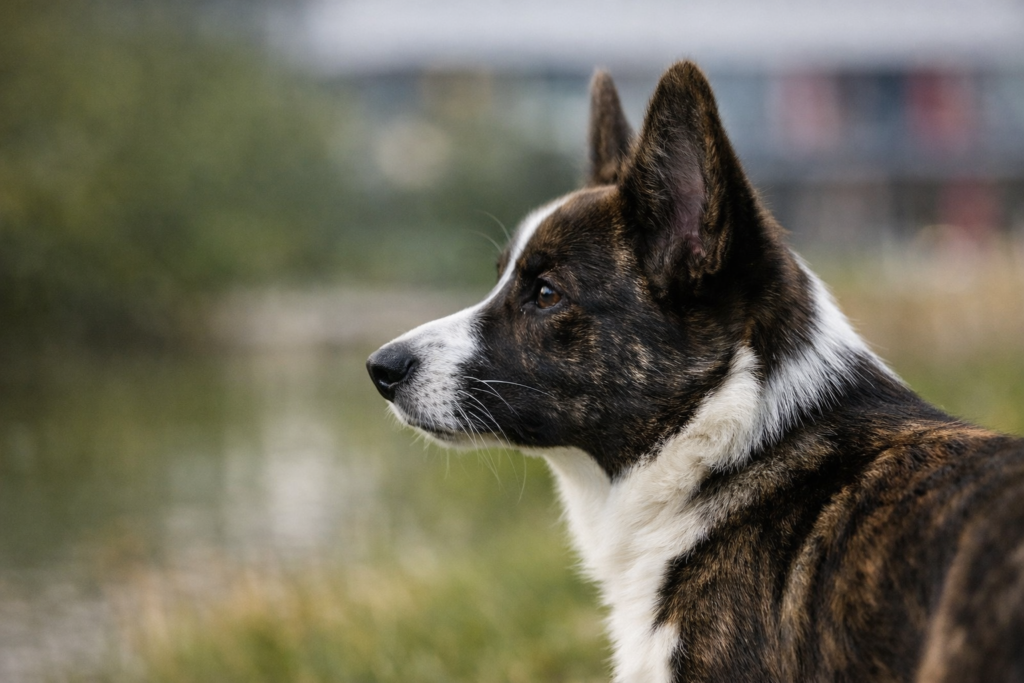
Dog body language is the primary way dogs communicate how they feel. By reading signals like posture, tail position, ears, eyes, and movement, you can understand whether your dog feels calm, stressed, fearful, playful, or uncomfortable — and respond correctly before problems escalate.
Most behavior issues don’t come from “bad dogs.”
They come from missed signals.
This guide explains dog body language clearly, practically, and safely, so you know exactly what your dog is telling you — and what to do next.
Why Understanding Dog Body Language Matters
Dogs communicate constantly, but silently.
When body language is ignored:
- stress builds
- warnings are missed
- bites feel “unexpected”
In reality, dogs almost always warn first.
Learning dog body language helps you:
- prevent aggression
- reduce anxiety
- build trust
- improve training results
Think of it as learning your dog’s native language.
How Dogs Communicate: The Big Picture
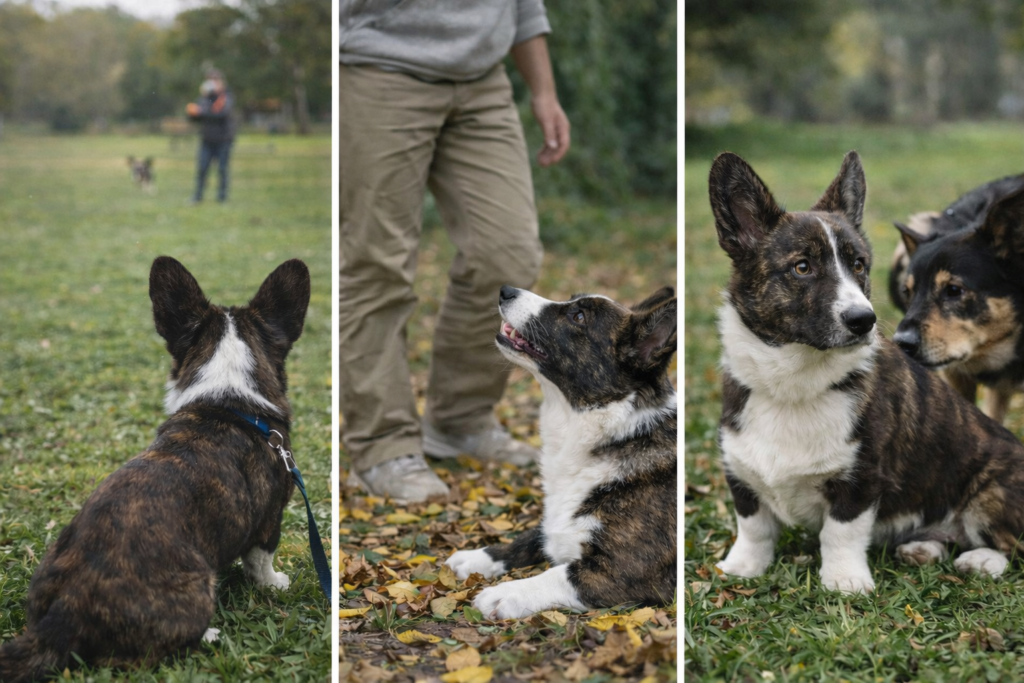
Dogs use combined signals, not single gestures.
You must read:
- body posture
- tail
- ears
- eyes
- mouth
- movement speed
One signal alone can mislead. Context matters.
Dog Body Language Signs Explained (Core Signals)
Relaxed & Calm Dog Body Language
Signs:
- loose body
- soft eyes
- natural tail position
- slow movements
Meaning:
Your dog feels safe and comfortable.
What to do:
Reinforce calm behavior. This is the emotional state you want to reward.
Playful Dog Body Language
Signs:
- play bow (front down, rear up)
- bouncy movements
- loose wagging tail
Meaning:
Invitation to interact.
Important:
Play should remain loose and mutual. Stiffness means play is turning into stress.
Stress Signals in Dog Body Language
These are early warnings many owners miss.
Signs:
- yawning (when not tired)
- lip licking
- turning head away
- sudden sniffing
- freezing
Meaning:
Your dog is uncomfortable and asking for space.
What to do:
Pause interaction. Reduce pressure. Give distance.
Signs of Discomfort in Dogs
Common but ignored signals:
- avoiding eye contact
- paw lifting
- slow movement
- body leaning away
Meaning:
The dog does not feel safe in the situation.
Ignoring these signals teaches the dog that warnings don’t work — which leads to escalation.
Fearful Dog Body Language
Signs:
- tail tucked
- ears pinned back
- crouching
- trembling
Meaning:
The dog feels threatened.
What NOT to do:
Do not force interaction or “flood” the dog.
Correct response:
Create distance. Increase predictability. Build confidence gradually.
Aggression Warning Signs in Dog Body Language
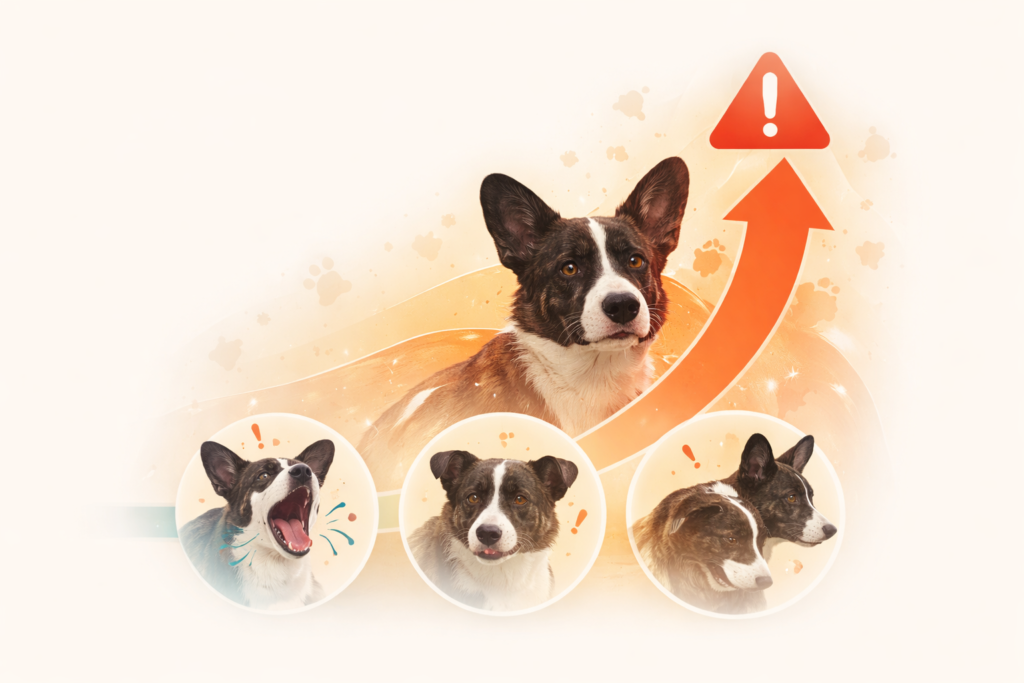
Aggression rarely comes without warnings.
Signs:
- stiff posture
- hard stare
- growling
- freezing before lunging
Meaning:
The dog feels trapped or unsafe.
Important:
Growling is communication — not disobedience. Punishing it removes the warning, not the problem.
Dog Tail Language Meaning (Common Misunderstanding)
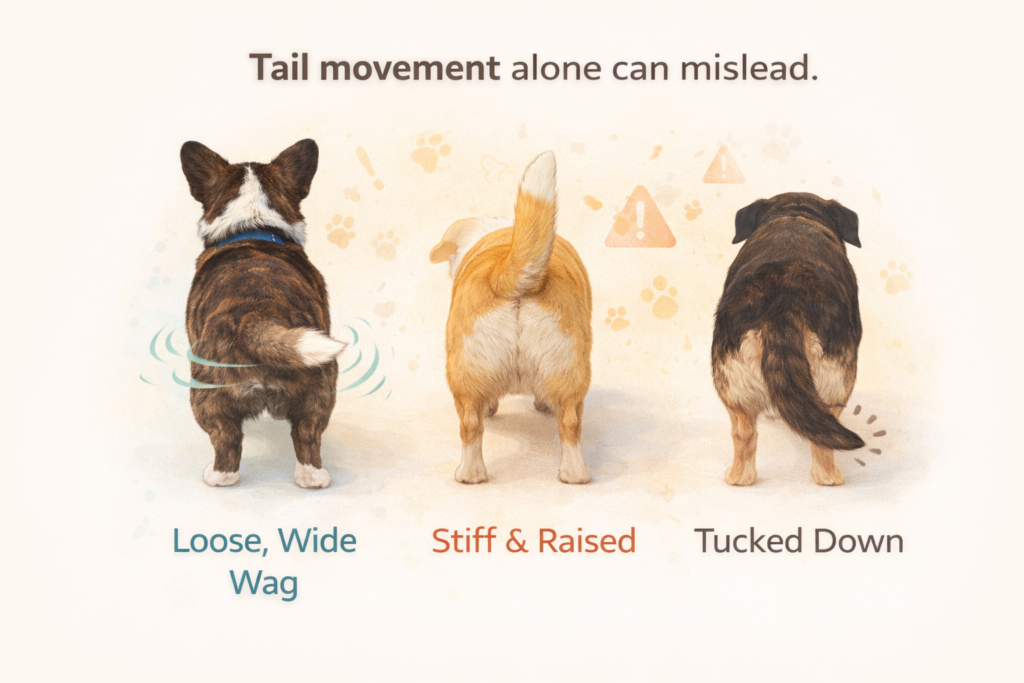
A wagging tail does NOT always mean a happy dog.
General guidelines:
- loose, wide wag = relaxed
- stiff, high wag = aroused or alert
- tucked tail = fear
Always read the tail with the rest of the body.
Dog Ears Body Language Meaning
Ears indicate emotional direction.
Examples:
- forward ears = interest or alertness
- flattened ears = fear or stress
- relaxed ears = calm state
Breed differences matter, but movement still signals emotion.
Puppy Body Language Explained
Puppies communicate even more subtly.
Common puppy signals:
- sudden biting = overstimulation
- zoomies = lack of sleep
- whining = stress or confusion
Puppies need structure, naps, and predictable routines to stay emotionally regulated.
How to Read Dog Body Language Correctly
Follow this simple rule:
Look for clusters, not single signs.
Ask:
- Is the body loose or stiff?
- Are movements smooth or frozen?
- Is the dog approaching or avoiding?
Your response should always aim to lower pressure, not increase control.
Common Mistakes Dog Owners Make
- assuming tail wag = happiness
- punishing growling
- forcing social interaction
- ignoring early stress signs
These mistakes unintentionally teach dogs to escalate.
When Dog Body Language Signals a Need for Support
If your dog shows frequent stress signals:
- persistent anxiety
- reactivity
- fear responses
It may be time to:
- improve daily routine
- increase mental enrichment
- reduce environmental pressure
- seek professional guidance
Supporting emotional needs prevents long-term behavior problems.
Final Thoughts: Listening Changes Everything
Dogs are always communicating.
When you learn to read dog body language:
- trust increases
- stress decreases
- behavior improves naturally
Most importantly, your dog feels heard.
Understanding body language isn’t advanced training — it’s responsible ownership.