
This post contains affiliate links. If you make a purchase, we may earn a small commission at no extra cost to you.
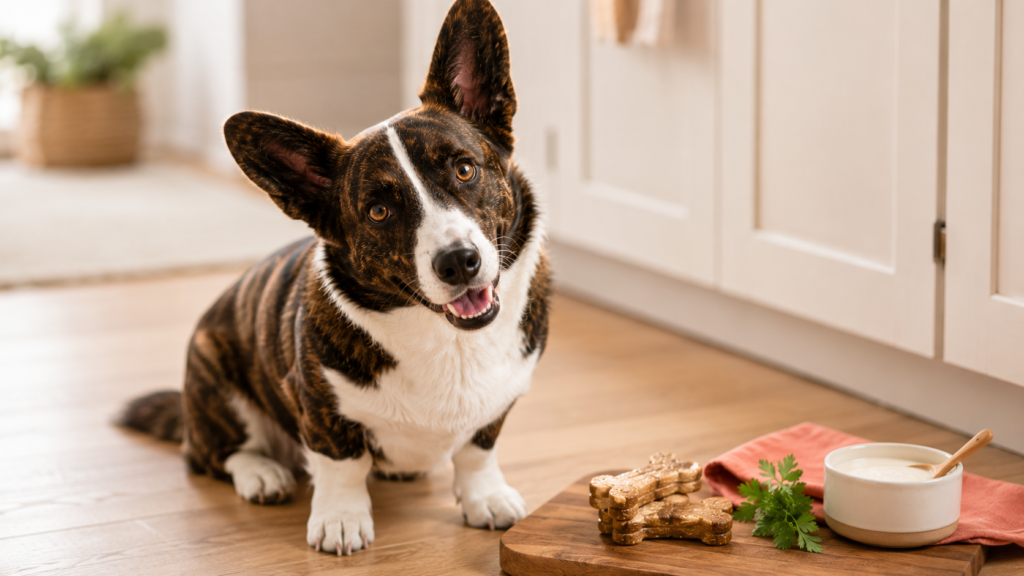
Nuggy’s breath used to stop me in my tracks. Not in a good way. I’d lean in for a cuddle and immediately have to lean back out. She’s a Corgi — they’re not exactly known for minty-fresh breath — but there’s a difference between “dog breath” and “something has gone very wrong in there.”
The fix turned out to be simpler than I expected: a combination of homemade dental treats, a DIY dog toothpaste recipe we started using twice a week, and a few small daily habits. Nuggy’s breath isn’t minty (let’s be realistic), but the difference is genuinely noticeable.
If your dog’s bad breath is a recent change or seems severe, it’s worth a vet check — it can sometimes signal dental disease or digestive issues. But for everyday dog breath? These recipes and remedies actually work.
Why Dogs Get Bad Breath (And What Actually Fixes It)
Dog bad breath is almost always caused by bacteria — specifically the bacteria that build up in plaque and tartar on the teeth. That bacterial film produces sulfur compounds, which are what you’re actually smelling.
The fix isn’t covering it up with flavored chews. The fix is reducing the bacterial load — through mechanical cleaning (brushing, crunchy treats that scrape the tooth surface), antimicrobial ingredients (coconut oil, parsley), and regular dental maintenance.
Everything in this article works on that principle. None of it is magic, but used consistently, the results add up fast.
Safety note: Never use human toothpaste on your dog. Fluoride is toxic to dogs, and xylitol — found in many minty products — can be fatal. Everything below uses dog-safe ingredients only.
5 Homemade Dental Dog Treat Recipes
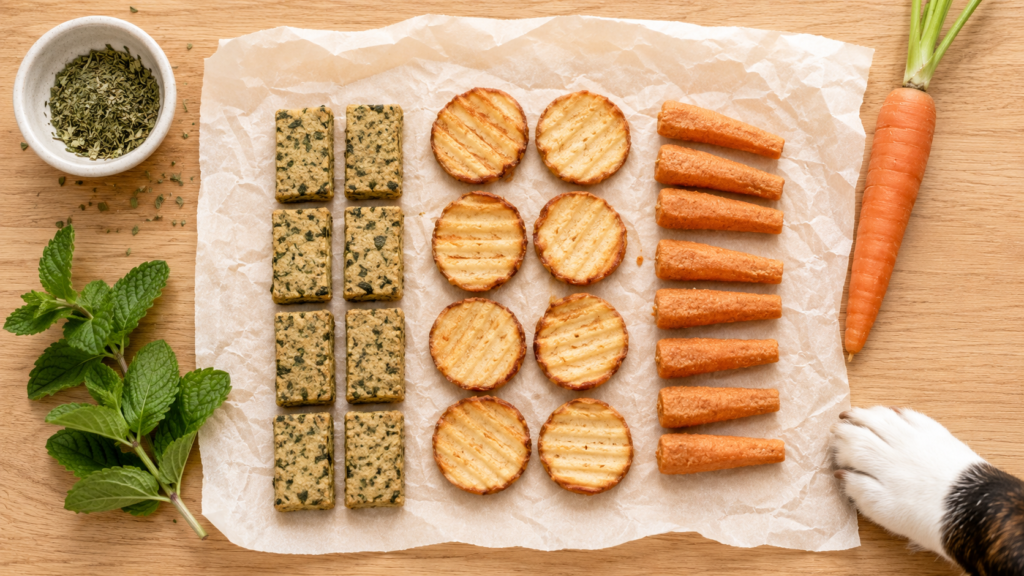
These treats combine ingredients that freshen breath naturally (parsley, mint, coconut oil) with textures that help scrape plaque off teeth mechanically. Think of them as a treat and a toothbrush in one.
1. Parsley Mint Dental Biscuits
Parsley is the MVP of dog bad breath remedies — it’s a natural breath freshener and safe for dogs in moderate amounts. These biscuits are crunchy enough to help scrape plaque, and Nuggy has never once turned one down.
Ingredients:
- 2 cups oat flour
- ½ cup fresh parsley, finely chopped
- 1 tablespoon dried mint (not peppermint essential oil — just dried culinary mint)
- 1 egg
- ⅓ cup water
Method:
- Preheat oven to 350°F (175°C). Line a baking sheet with parchment paper.
- Mix all ingredients until a firm dough forms. Add a splash more water if it’s too crumbly.
- Roll out to ¼ inch thickness and cut into small biscuit shapes.
- Bake 25–30 minutes until firm and dry throughout.
- Cool completely before storing.
Storage: Airtight container, up to 2 weeks at room temperature or 1 month in the freezer.
Nuggy rating: 4 paws — she eats these fast, which means they’re not lasting as long on the teeth as I’d like. But she loves them.
2. Coconut Oil & Turmeric Chews
Coconut oil has natural antimicrobial properties that help reduce the bacteria responsible for bad breath. Turmeric is anti-inflammatory and may support gum health. Together they make a dense, chewy treat that dogs go absolutely mad for.
Ingredients:
- 2 cups oat flour
- 3 tablespoons coconut oil (melted)
- 1 teaspoon turmeric powder
- 1 egg
- ¼ cup water
Method:
- Preheat oven to 325°F (160°C).
- Mix flour, turmeric, coconut oil, and egg. Add water gradually until dough holds together.
- Roll into small logs or use a mold to make bone shapes.
- Bake 30–35 minutes until firm. These stay slightly chewier than biscuits — that’s intentional.
- Cool completely.
Storage: Refrigerate up to 1 week (coconut oil can go rancid faster at room temperature), or freeze for up to 6 weeks.
3. Apple & Cinnamon Crunch Treats
Apple is one of the best natural tooth-cleaning foods for dogs — the firm, fibrous texture scrubs tooth surfaces as your dog chews. A small amount of cinnamon also has antimicrobial properties. Skip the apple core and seeds (they contain trace amounts of cyanide), and make sure there’s no xylitol anywhere near these.
Ingredients:
- 1½ cups oat flour
- ½ cup unsweetened applesauce (no xylitol — check the label)
- 1 teaspoon cinnamon
- 1 egg
Method:
- Preheat oven to 350°F (175°C).
- Combine all ingredients into a stiff dough. If too wet, add a little more oat flour.
- Roll thin (⅛ inch) for maximum crunch — the thinner the bake, the more they scrape.
- Cut into small rounds or use a bone cutter.
- Bake 20–25 minutes until crisp. Leave in the oven with the door cracked for another 10 minutes to dry out further.
Storage: Airtight container, up to 3 weeks. These stay crunchier than most homemade treats, which is the point.
4. Carrot & Parsley Dental Sticks
Raw carrots are genuinely one of the best natural dental tools for dogs — the firm texture scrapes plaque mechanically in a way that soft treats just don’t. These baked sticks are softer than a raw carrot, but the combination of carrot fiber and parsley makes them one of the most effective dog treats for bad breath you can make at home.
Ingredients:
- 1½ cups oat flour
- ½ cup grated carrot (about 1 medium carrot)
- ¼ cup fresh parsley, finely chopped
- 1 egg
- 2 tablespoons water
Method:
- Preheat oven to 350°F (175°C).
- Mix all ingredients until a firm dough forms.
- Roll into short stick shapes (about 3 inches long, ½ inch thick).
- Bake 25–30 minutes until firm and golden.
- Cool fully on a wire rack.
Storage: Airtight container, up to 10 days. Refrigerate in warm weather.
5. Chicken & Parsley Training Bites
These are smaller and softer — more of a training treat with dental benefits than a hard chew. The chicken broth keeps dogs interested and the parsley keeps breath manageable. Good for dogs who aren’t big fans of crunchy textures.
Ingredients:
- 2 cups oat flour
- ½ cup low-sodium chicken broth (no onion, no garlic)
- ¼ cup fresh parsley, chopped
- 1 egg
Method:
- Preheat oven to 350°F (175°C).
- Mix all ingredients. The dough will be slightly sticky — that’s fine.
- Spread into a thin layer on a lined baking sheet (about ¼ inch thick).
- Bake 20 minutes, then cut into small squares while still warm.
- Return to the oven for another 10 minutes to firm up.
Storage: Refrigerate up to 1 week, or freeze in batches.
DIY Dog Toothpaste Recipe (2 Versions)
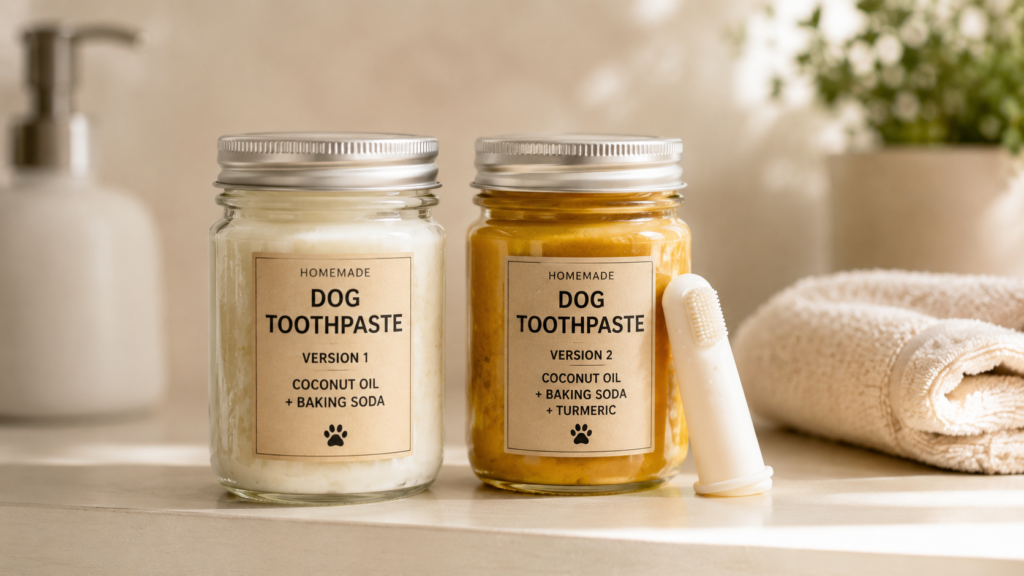
Brushing is still the gold standard for dog dental care — even twice a week makes a meaningful difference in plaque buildup. The problem is most dogs hate human toothpaste (and it would poison them anyway). These dog toothpaste recipes use ingredients that are safe, effective, and — crucially — taste like something your dog might actually accept.
Version 1: Coconut Oil Toothpaste (Easiest)
Ingredients:
- 2 tablespoons coconut oil (softened, not liquid)
- 1 teaspoon baking soda
- 1 tablespoon low-sodium chicken broth
- ½ teaspoon dried parsley powder (optional)
Method: Mix all ingredients into a paste. Store in a small sealed jar in the fridge for up to 2 weeks. Apply a pea-sized amount to a soft toothbrush or finger brush.
Why it works: Coconut oil disrupts bacterial cell membranes. Baking soda is mildly abrasive and neutralizes the acids that bacteria produce. The chicken broth just makes your dog willing to let you near their mouth.
Version 2: Turmeric Paste (Anti-Inflammatory Focus)
Ingredients:
- 2 tablespoons coconut oil
- 1 teaspoon turmeric powder
- ½ teaspoon baking soda
- 1–2 teaspoons water (to adjust consistency)
Method: Mix into a smooth paste. Refrigerate up to 2 weeks. Warning: turmeric stains — use an old toothbrush and don’t let it drip on light surfaces.
Why it works: Turmeric has demonstrated anti-inflammatory properties and may help reduce gum redness. It also has mild antimicrobial effects.
Note on brushing technique: Start with just letting your dog lick the paste off your finger. Once they’re comfortable, work up to a finger brush, then a soft-bristled toothbrush. Aim for the outer surfaces of the back teeth — that’s where plaque builds fastest.
If DIY toothpaste feels like too much, the Arm & Hammer Complete Care Enzymatic Dog Toothpaste is a solid ready-made option — enzymatic formula, chicken flavor, $6.99, and about 7,000 dogs’ owners buy it every month. No fluoride, no xylitol.
Other Natural Dog Bad Breath Remedies
Treats and toothpaste will handle most of the work, but these daily habits accelerate the results significantly.
Fresh parsley in their food: A small sprinkle of chopped fresh parsley in your dog’s bowl 3–4 times a week is one of the easiest dog bad breath remedies there is. Start with half a teaspoon for smaller dogs, a full teaspoon for larger breeds.
Raw carrots as a daily snack: One medium carrot per day gives medium-to-large dogs a mechanical scrub on their tooth surfaces. It’s also a great low-calorie treat. Nuggy gets one every afternoon and it keeps her occupied for a solid five minutes.
Water additive: A dental water additive is the lowest-effort tool in the toolkit — you add a capful to your dog’s water bowl daily, and it reduces bacteria in the mouth without any brushing required. We use TropiClean Fresh Breath Water Additive — no brushing needed, just add to the water, and the difference in breath becomes noticeable within a week or two.
Dental chews: For days when you’re not baking, commercial dental chews fill the gap. Greenies are a solid option — the chewy texture is designed specifically to clean as the dog chews. They’re not a replacement for brushing, but as a daily supplement they’re worth it.
How Often Should You Clean Your Dog’s Teeth?
Ideal: Brush daily, or at minimum 3× per week. Studies show that brushing less than 3× per week allows plaque to re-establish itself between sessions.
Realistic: For most of us, that means 2–3 brushing sessions per week + daily dental treats or chews + a water additive in the bowl. That combination gets you most of the benefit without turning dental care into a second job.
Vet dental cleaning: Even with excellent home care, most dogs benefit from a professional dental cleaning every 1–2 years. Your vet can check for tartar buildup, gum disease, and loose or damaged teeth that home care can’t address. It’s on our dog health checklist for good reason.
The Bottom Line
Dog bad breath is almost always a bacterial problem — and it’s one you can genuinely make a dent in at home. The parsley biscuits and carrot sticks above are a good starting point, the coconut oil toothpaste recipe is easier to make than it sounds, and the water additive is the laziest option that still works.
Nuggy’s breath isn’t something I dread anymore. Progress.
Which of these recipes are you going to try first? And if baking five batches feels like a lot for one week, start with our 10 No-Bake Dog Treats — zero oven time, and a few of them work just as well for breath freshening. For more ideas beyond dental, our full homemade dog treats collection has ten more recipes to rotate through.