
When dogs get bored indoors, the problem is rarely a lack of toys.
It’s a lack of meaningful mental work.
Chewing furniture, pacing, barking, or constant attention-seeking are often signs that a dog’s brain hasn’t had a real task to solve that day. Physical exercise helps—but mental stimulation is what actually settles dogs indoors.
This guide focuses on DIY dog games that work inside the house, require minimal materials, and are designed to reduce boredom, not just pass time.
Why Indoor Boredom Happens (Even With “Enough Toys”)
Many dogs spend hours surrounded by toys and still feel restless. That’s because:
- Toys without problem-solving value become predictable
- Fast games overstimulate instead of calming
- Repetitive activities stop engaging the brain
Dogs need controlled challenges—activities that require thinking, sniffing, waiting, and choosing.
The goal of indoor games isn’t excitement.
The goal is mental satisfaction.
What Makes a DIY Dog Game Actually Effective
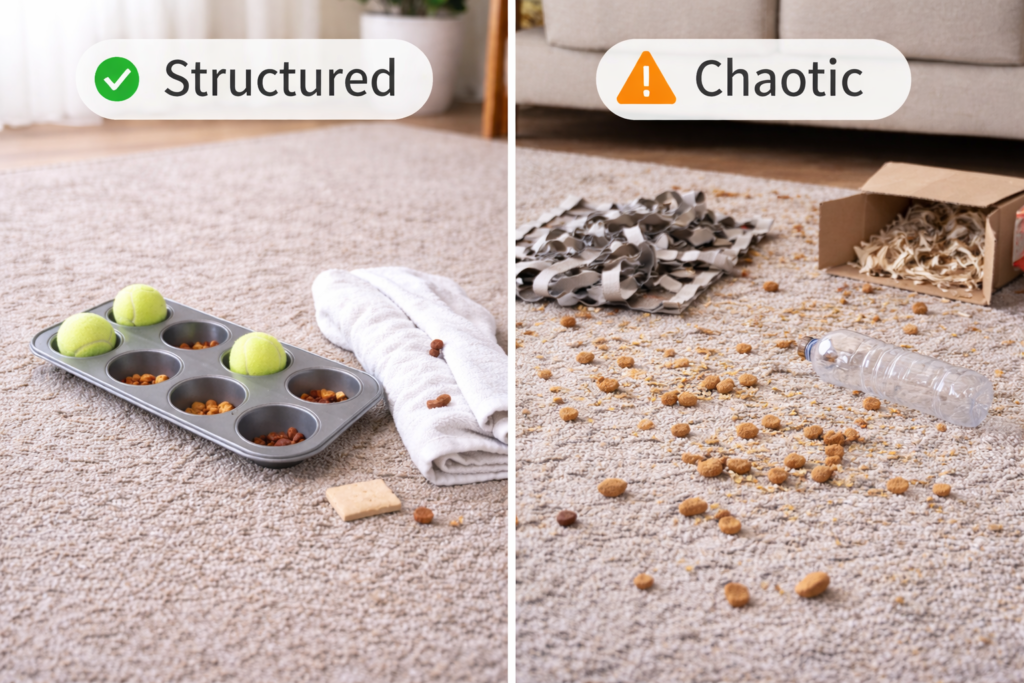
Before we look at specific games, it helps to understand what separates a useful activity from noise.
A good boredom-busting game should:
- Slow the dog down
- Require decision-making
- Have a clear objective (not endless repetition)
- End with visible mental fatigue
If a game makes your dog calmer afterward—not more hyped—it’s doing its job.
DIY Dog Games That Reduce Boredom Indoors
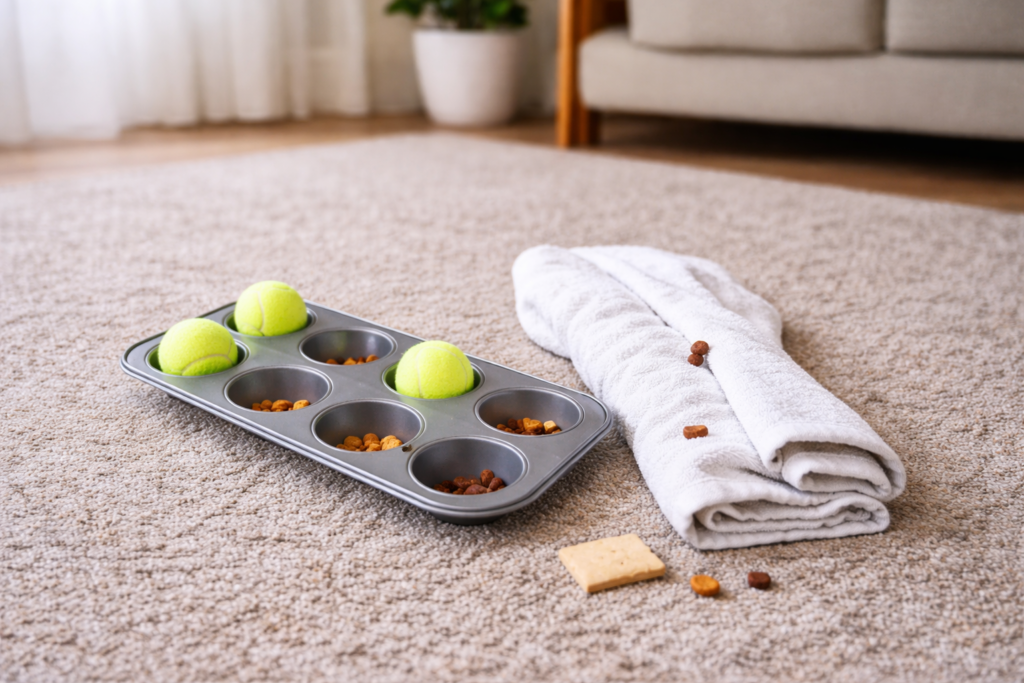
1. The Towel Puzzle (Problem-Solving + Patience)
This game turns a simple towel into a thinking task.
How it works:
- Lay a towel flat
- Scatter small treats along the length
- Roll it tightly, then loosely fold it
Your dog has to:
- Use their nose
- Figure out where to start
- Work through resistance instead of rushing
This is excellent for dogs that get frustrated easily or struggle to settle indoors.
2. Box Choice Game (Decision-Making Without Overstimulation)
Instead of hiding treats randomly, you create intentional choices.
How it works:
- Place 3–4 cardboard boxes upside down
- Hide treats under one or two boxes
- Let your dog investigate freely
Why it works:
- Encourages independent problem-solving
- Builds confidence
- Prevents frantic searching
This game mimics real-world scent decisions and works especially well indoors.
3. DIY Snuffle Zone (Nose Work Without Equipment)
You don’t need a snuffle mat to activate a dog’s strongest sense.
How it works:
- Scatter treats in a folded blanket, rug, or laundry pile
- Increase difficulty by layering fabric
- Let your dog search at their own pace
Sniffing lowers heart rate and naturally reduces stress.
This is one of the most effective indoor boredom busters you can do daily.
4. Muffin Tin Brain Game (Impulse Control + Focus)
This classic setup works because it forces dogs to slow down.
How it works:
- Place treats in a muffin tin
- Cover some holes with tennis balls or safe objects
- Let your dog uncover rewards
This game combines:
- Nose work
- Paw coordination
- Frustration tolerance
It’s ideal for high-energy dogs who struggle with indoor calm.
5. Treat Path Game (Calm Engagement)
Instead of hiding treats, you guide the experience.
How it works:
- Create a visible trail of treats across one room
- Vary spacing and direction
- Let your dog follow without rushing
This works well for:
- Puppies
- Anxious dogs
- Dogs learning to focus indoors
The visible structure makes it mentally satisfying without pressure.
Indoor Games vs Outdoor Play — Why These Work Better Inside
Outdoor play is unpredictable and stimulating.
Indoor games should be structured and calming.
DIY indoor games:
- Remove external distractions
- Encourage thoughtful behavior
- Help dogs transition into rest
This is why short indoor games often work better than long walks when your goal is calm behavior at home.
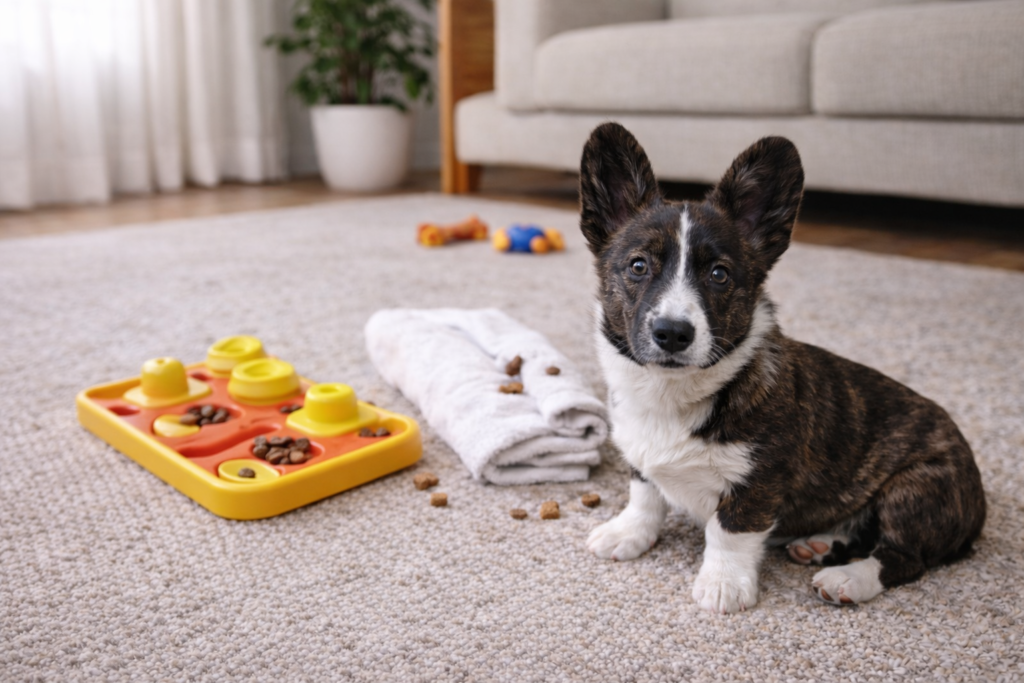
Puppy vs Adult Dog: Adjusting the Games
For puppies:
- Keep sessions short (2–5 minutes)
- Use easier setups
- Focus on confidence, not difficulty
For adult dogs:
- Increase complexity gradually
- Combine multiple steps
- Allow independent problem-solving
The goal at any age is the same:
A dog who feels mentally complete.
Common Mistakes That Make Boredom Worse
- Making games too hard too fast
- Over-exciting the dog before indoor play
- Repeating the same setup every day
- Turning games into performance or obedience drills
DIY enrichment should feel natural and optional, not demanding.
How Often Should You Do These Games?
You don’t need variety every day.
One well-designed mental game:
- Once or twice daily
- 5–15 minutes
- Followed by rest
That’s enough to significantly reduce indoor boredom for most dogs.
Final Thought
Dogs don’t need constant entertainment.
They need meaningful mental work.
DIY dog games are powerful not because they’re cheap or creative—but because they let dogs think, choose, and succeed on their own terms.
That’s what truly beats boredom indoors.