
This post contains affiliate links. I may earn a small commission if you buy through them, at no extra cost to you.
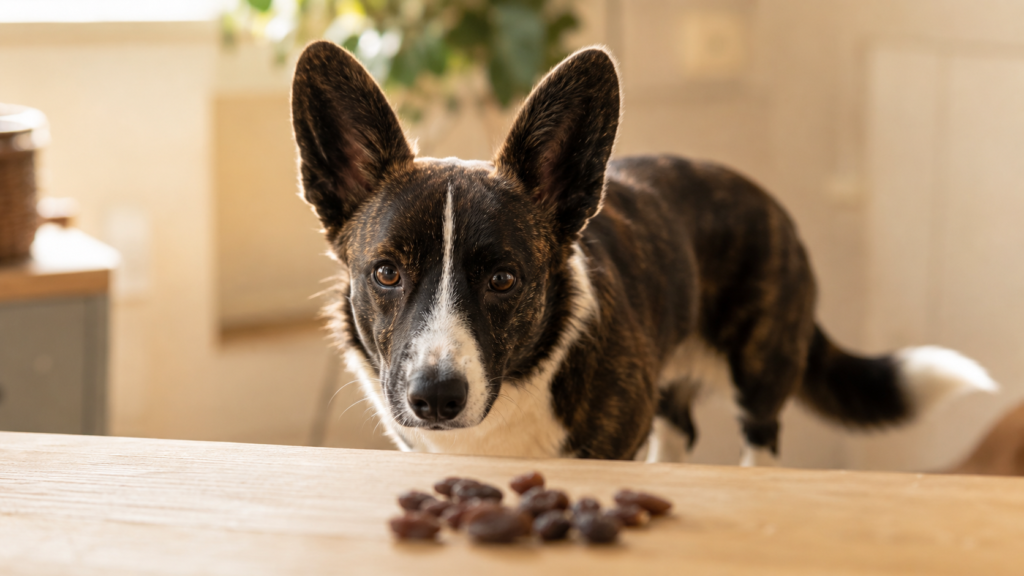
⚠️ No, dogs cannot eat raisins. Raisins — along with grapes, currants, and sultanas — can cause sudden acute kidney failure in dogs. They are more dangerous than grapes because the toxic compounds are more concentrated. Even a small amount can be fatal. If your dog ate raisins, treat it as an emergency.
Introduction
Raisins seem harmless. They’re a standard ingredient in oatmeal cookies, trail mix, fruit cake, and kids’ snacks. They’re just dried grapes, right?
For dogs, they’re one of the most dangerous foods that exist in an ordinary kitchen. More dangerous than grapes because drying concentrates the toxic compounds. And the scariest part: we still don’t fully know why they’re toxic.
Here’s what we do know — and what to do if your dog has already eaten some.
Are Raisins Safe for Dogs?
No — raisins, along with all grape products (grapes, sultanas, currants, raisin bran, grape juice), can cause acute kidney failure in dogs. This applies to all varieties — red, green, seedless, seeded, organic, conventionally grown.
What makes raisins more dangerous than grapes?
Drying a grape into a raisin removes most of the water content, concentrating the toxic compounds into a much smaller volume. A handful of raisins contains the toxic equivalent of a much larger quantity of fresh grapes. This means the danger threshold is lower and the toxic dose arrives faster.
The unsolved mystery: the exact toxic compound remains unknown.
Unlike onions or xylitol, where we know precisely what causes the damage, the specific compound in grapes and raisins that causes kidney failure has not been definitively identified despite decades of research. What this means practically: there is no established safe dose, no reliable threshold, and no way to predict how an individual dog will respond.
Some dogs have eaten grapes or raisins without apparent effect; others have gone into kidney failure after a small amount. This unpredictability is exactly why any exposure must be treated as a potential emergency. You cannot know in advance which category your dog falls into.
Symptoms of Raisin Toxicity in Dogs
Symptoms can appear within 6–24 hours of ingestion — sometimes faster.
Early signs (first few hours):
- Vomiting and/or diarrhea — often contains undigested raisins
- Lethargy and weakness
- Loss of appetite
- Abdominal pain (reluctance to be touched around the belly)
Signs of developing kidney failure (within 24–48 hours):
- Decreased or absent urination (kidneys shutting down)
- Increased thirst and urination (early kidney dysfunction paradoxically causes this before complete failure)
- Bad breath with a chemical odor
- Oral ulcers
- Tremors, seizures
- Collapse
Decreased urination combined with lethargy is a critical warning sign. If you see this, go to an emergency vet immediately — do not wait until morning.
What to Do If Your Dog Ate Raisins
Treat this as an emergency — even if your dog seems fine right now.
Step 1: Don’t wait for symptoms.
The absence of immediate symptoms does not mean your dog is safe. Kidney damage can progress significantly before visible signs appear.
Step 2: Call immediately.
- Your vet or emergency animal hospital
- ASPCA Animal Poison Control: 1-888-426-4435
- Pet Poison Helpline: 1-855-764-7661
Step 3: Bring information.
Tell them your dog’s weight, roughly how many raisins were eaten, and when. This helps them assess the risk level.
Step 4: Expect hospitalization.
For significant raisin ingestion, your vet will likely recommend IV fluids and monitoring for 48–72 hours to support kidney function and flush out the toxins before permanent damage can occur. Early intervention dramatically improves outcomes.
Having a dog first aid kit at home won’t treat raisin poisoning — that’s strictly a vet situation — but it’s invaluable for monitoring your dog’s condition while you make the call and get to the clinic.
Foods That Commonly Hide Raisins
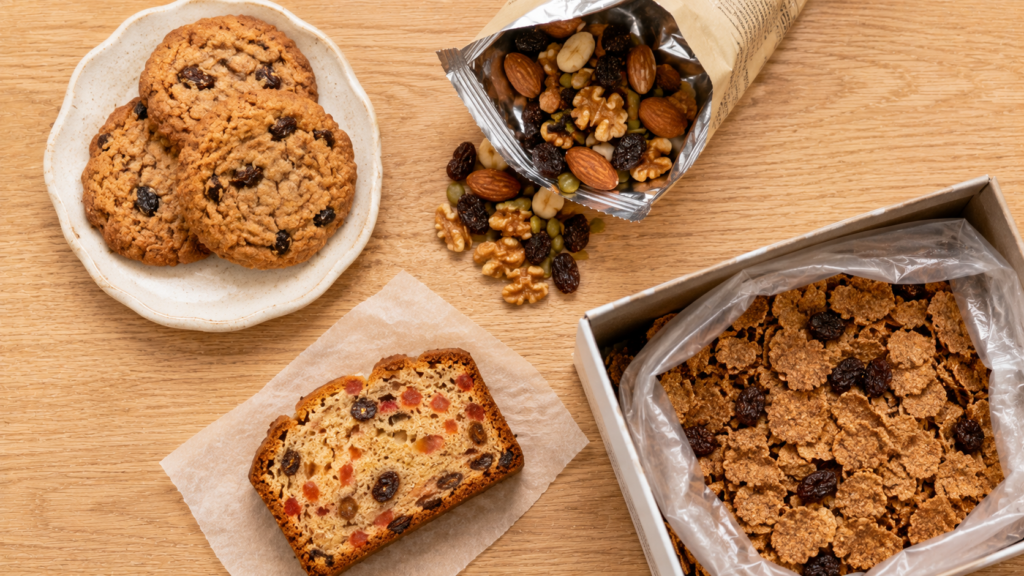
This is where accidental poisoning happens most often. Raisins are an ingredient in many everyday foods:
- Oatmeal raisin cookies — one of the most common sources
- Trail mix and granola bars — especially “fruit and nut” varieties
- Fruit cake and Christmas pudding
- Raisin bran and certain cereals
- Bagels with cinnamon raisin
- Some bread and stuffing recipes
- Certain muesli and oat products
Children’s snacks are a particularly common risk: raisins in small boxes are frequently left at dog height or dropped on the floor. If you have kids and a dog, keep snack raisins well out of reach.
Currants deserve a special mention. Dried currants (commonly used in hot cross buns and British baking) are often more toxic than raisins and sometimes not recognized as grape products by people who know to avoid raisins.
The Bottom Line
Raisins are one of the most dangerous foods in a typical kitchen for dogs. The concentrated toxicity, the unpredictable individual response, and the potentially fatal kidney failure make them an absolute no — regardless of how small the amount seems.
If your dog ate raisins, don’t wait and see. Call your vet now.
For the full guide on safe and unsafe human foods, see our Foods Dogs Can and Can’t Eat guide. And if this is why you’re here, you may also want to read our Can Dogs Eat Grapes? article — the same toxicity applies and the same emergency response is needed.
Frequently Asked Questions
Q: My dog ate one raisin. Should I go to the vet?
A: Yes — call your vet or ASPCA Poison Control immediately. While one raisin is a lower-risk scenario than a large amount, the unpredictable nature of grape/raisin toxicity means even a small exposure can affect some dogs seriously. Your vet can assess based on your dog’s size and guide you.
Q: Are raisins more toxic than grapes?
A: Yes — raisins are more concentrated, meaning the toxic dose arrives in a smaller volume. Grapes and raisins are both dangerous, but raisins are more so per gram.
Q: Can dogs eat cooked raisins (in bread or cake)?
A: No — the toxic compounds in raisins are not neutralized by cooking. Raisins baked into bread, cake, or cookies are just as dangerous as raw raisins.
Q: What about currants and sultanas?
A: Both are equally toxic to dogs — they’re all grape-derived products. Currants may actually be more toxic than raisins and are a common ingredient in hot cross buns, fruit cake, and British baking.
Q: Why are raisins toxic to dogs but not humans?
A: Dogs metabolize certain compounds differently from humans. The specific compound responsible for kidney failure in dogs from grape products has not been conclusively identified, but it clearly doesn’t affect human kidney function the same way.
Q: Can all dogs eat raisins safely if they’ve had them before with no reaction?
A: No. Past tolerance does not guarantee future safety. The mechanism is unpredictable, and a dog that survived previous exposure may react severely to the next. Do not use past experience as a safety benchmark.