
This post contains affiliate links. I may earn a small commission if you buy through them, at no extra cost to you.
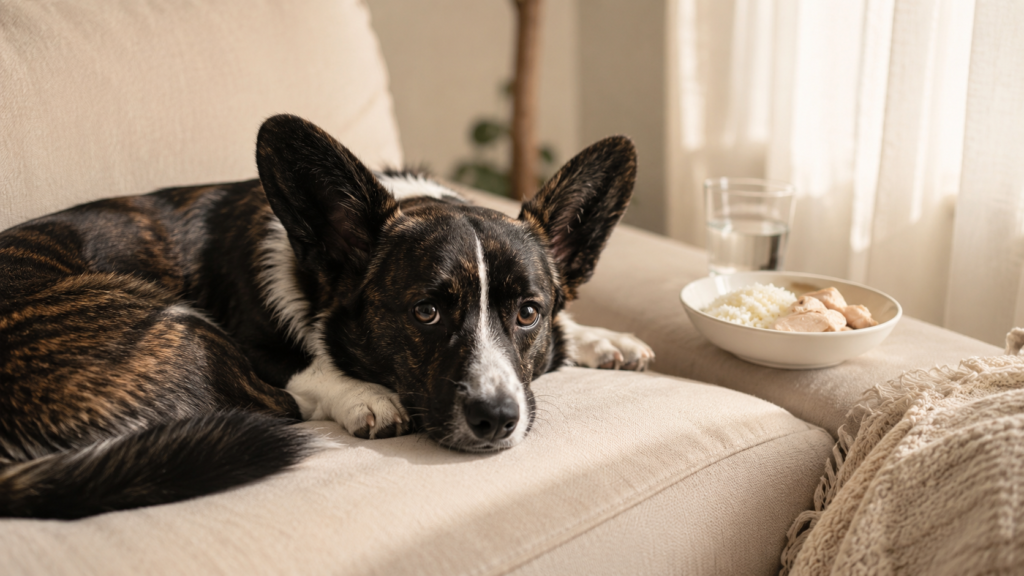
Dogs eat things they shouldn’t. It’s practically a hobby. Nuggy once found a corner of a stranger’s sandwich at the park and looked intensely pleased with herself — right up until about 11pm that night, when she woke me up to go outside three times.
An occasional upset stomach is a normal part of dog ownership. Most mild cases — loose stool, a vomit or two, lethargy, gas — resolve on their own within 12–24 hours with a little help from you. The home remedies below are the same ones most vets will suggest for mild gastrointestinal upset, and they’re straightforward to do at home.
That said, not every stomach issue is minor. Scroll down to the “When to See the Vet” section before you start — some symptoms look like an ordinary upset stomach but need immediate attention.
First: Is It Actually a Mild Upset Stomach?
Before any home remedy, do a quick check. Mild stomach upset typically looks like:
- One or two vomiting episodes
- Loose stool or diarrhea (without blood)
- Reduced appetite
- Mild lethargy — tired, but responsive and drinking water
- Stomach gurgling (borborygmi — completely normal and often audible)
If you’re seeing any of the warning signs listed at the end of this article, stop here and call your vet. Home remedies are for the mild end of the spectrum — not for anything that looks serious or worsening.
1. Fast for 12–24 Hours
This is the first thing most vets recommend, and the one most owners skip because it feels cruel. It isn’t. Giving your dog’s digestive system a complete rest is the most effective first step for mild stomach upset.
How to do it:
- Skip one full meal, or up to 24 hours of food (water is always available — hydration is non-negotiable)
- Puppies and small breeds should not fast for more than 12 hours without vet guidance — they’re more susceptible to low blood sugar
- Senior dogs or dogs with known health conditions — check with your vet before fasting
The gut needs time to recover. Continuing to feed during active vomiting or diarrhea often extends the problem rather than resolving it.
Works best for: vomiting or diarrhea that started suddenly, suspected dietary indiscretion (ate something they shouldn’t have).
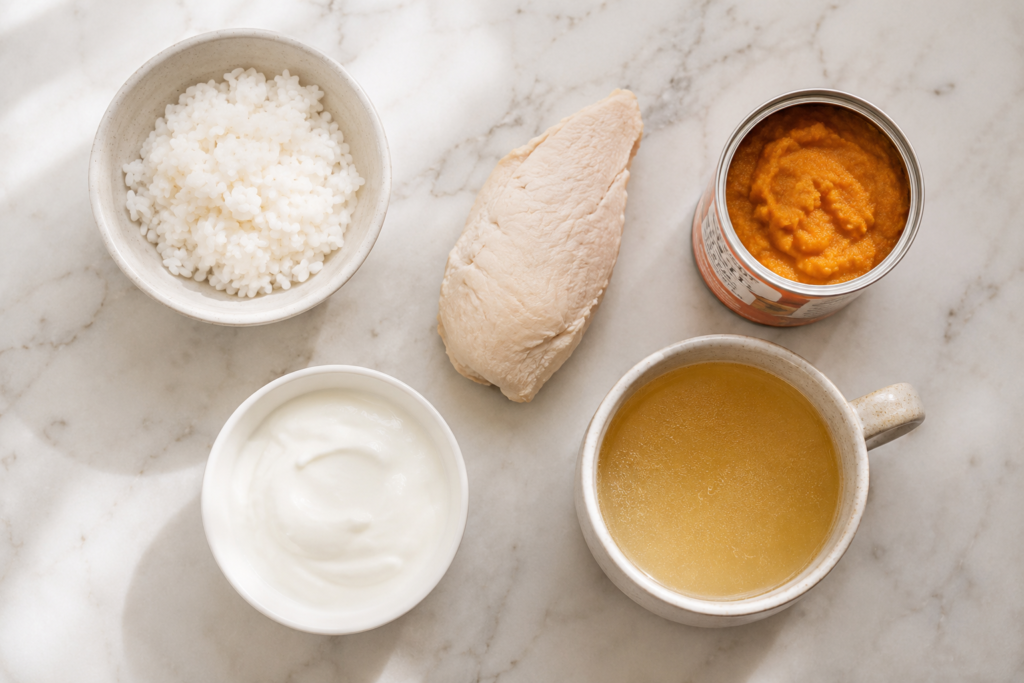
2. Bland Diet — Boiled Chicken and White Rice
The classic for a reason. Plain boiled chicken and white rice is easy on the digestive tract, provides some nutrition, and is almost universally accepted even by dogs with reduced appetite.
The ratio: approximately 1 part boiled chicken to 2 parts white rice.
How to prepare it:
- Boil boneless, skinless chicken breast — no oil, no salt, no seasoning whatsoever
- Cook plain white rice in water — nothing added
- Serve in small portions, 3–4 times throughout the day instead of one or two large meals
- Continue for 2–3 days, then gradually mix in regular food over another 2–3 days before returning fully to normal
Safety Note
Chicken must be fully cooked — no pink, no raw. And plain only: onion, garlic, and many common seasonings are toxic to dogs. If in doubt about what’s safe, see Foods Dogs Can Eat and Can’t: The Complete Safe Human Foods Guide.
Nuggy gets very little table food normally, so the first time I made her bland diet chicken she acted like she’d won something. She ate slowly but finished the whole bowl. That’s usually a good sign — a dog that’s willing to eat a small amount of bland food is recovering.
Works best for: the first meal after fasting, the 2–3 days following vomiting or diarrhea.
3. Plain Canned Pumpkin
This one surprises people, but it works — and it works for two opposite problems at once. The soluble fiber in pumpkin absorbs excess water in the gut (helping with diarrhea) and also adds bulk (helping with constipation). It’s one of the most versatile digestive tools in your dog-parent toolkit.
What to buy: 100% pure canned pumpkin — Libby’s is the most widely available. NOT pumpkin pie filling, which contains xylitol, nutmeg, and spices that are harmful to dogs.
Dosing guide:
- Small dogs (under 10 lbs): 1 teaspoon per day
- Medium dogs (10–35 lbs): 1–2 tablespoons per day
- Large dogs (35+ lbs): 2–4 tablespoons per day
Mix into the bland diet or offer plain. Most dogs eat it without complaint. Nuggy thinks it’s a treat, which is convenient.
Works best for: diarrhea, constipation, general digestive irregularity, adding fiber during the bland diet phase.
4. Plain Bone Broth
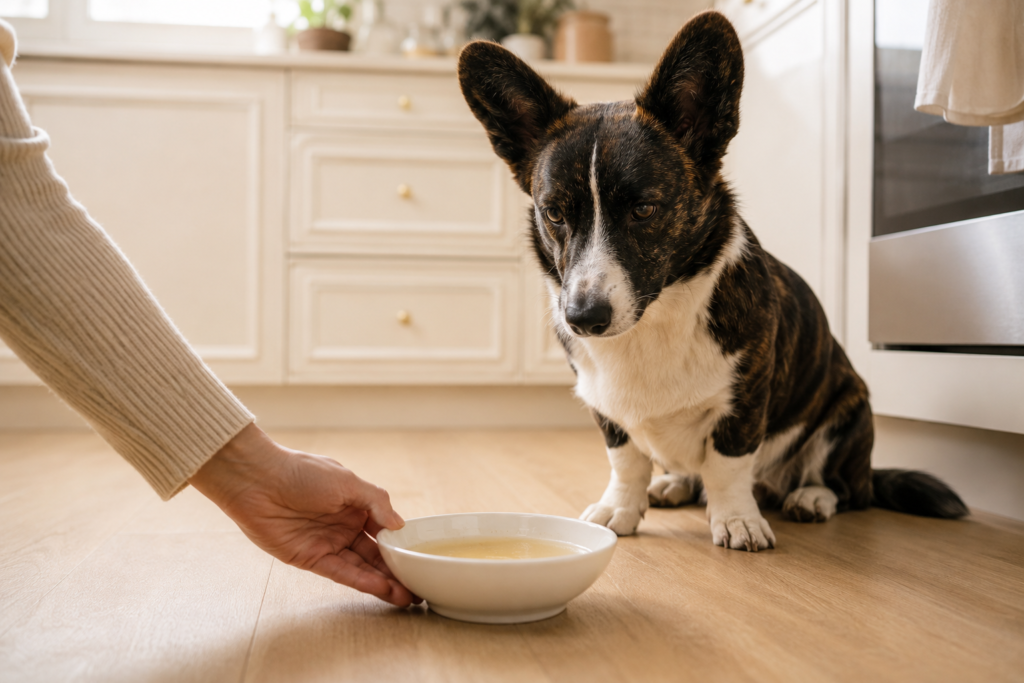
Bone broth serves two purposes during a stomach upset: hydration and palatability. Dogs with upset stomachs often drink less water than they should, and a small amount of warm bone broth encourages drinking while delivering easy-to-absorb nutrients.
What to use:
- Homemade is best — simmer beef or chicken bones in water for several hours, no salt, no onion, no garlic
- Commercial bone broth is fine if it’s low-sodium and free from onion/garlic (read the label)
- Never use regular store-bought chicken broth — most contain onion powder, which is toxic to dogs even in small amounts
Offer a small bowl alongside water, or drizzle a tablespoon or two over the bland diet to encourage eating.
Works best for: keeping a reluctant drinker hydrated, encouraging appetite during recovery.
5. Plain Yogurt or Probiotics
The gut microbiome — the community of beneficial bacteria in the digestive tract — takes a hit during stomach upset. Vomiting, diarrhea, and especially any antibiotic treatment can disrupt it significantly. Probiotics help restore balance.
Plain yogurt:
- Use plain, unsweetened yogurt with live active cultures (check the label for “live cultures”)
- Avoid yogurt with artificial sweeteners — especially xylitol, which is toxic to dogs
- 1 teaspoon for small dogs, 1 tablespoon for medium dogs, 2 tablespoons for large dogs
- Mix into the bland diet
Dog-specific probiotics:
If you want a more consistent, measured option, dog-formulated probiotic supplements provide specific bacterial strains at known doses. Purina Pro Plan FortiFlora comes in single-use sachets you mix into food, with a strain specifically studied in dogs. These are worth keeping in your first aid cabinet if your dog has a sensitive stomach.
Pro Tip
Probiotics work best as a regular supplement during and after antibiotic treatment, or as an ongoing support for dogs with chronic digestive sensitivity — not just as a one-off during upset.
Works best for: supporting recovery after diarrhea or vomiting, during and after antibiotic courses, dogs with generally sensitive stomachs.
6. Small, Frequent Meals
Once your dog is ready to eat again — usually 12–24 hours after symptoms start improving — resist the urge to return to normal portions right away. A stomach that’s been irritated needs time to rebuild capacity.
The recovery feeding schedule:
- Day 1 post-fast: 3–4 small bland diet meals (about ¼ of normal daily volume each)
- Day 2–3: 3 meals of bland diet at slightly larger portions
- Day 4–5: Begin mixing in regular food — 25% regular food, 75% bland
- Day 6–7: 50/50, then 75/25
- Day 8: Back to normal feeding schedule if stools are firm and appetite is good
Rushing this process is the most common reason dogs have a relapse. The gradual reintroduction lets the gut lining heal properly.
Works best for: the recovery phase, any time your dog has had significant vomiting or diarrhea.
7. Rest and Gentle Monitoring
This is the remedy that requires the least effort but the most patience — which is maybe why it’s easy to overlook.
A dog with an upset stomach needs rest, calm, and to be left largely alone to recover. Skip the walk, skip the play session, skip anything strenuous for 24–48 hours. Keep the environment calm and quiet.
More importantly: watch them. Check every few hours. A dog that’s improving will be more alert and interested in water by hour 6–8. A dog that’s getting worse — more lethargic, vomiting more frequently, showing signs of pain — needs veterinary attention, not more waiting.
Keep a simple note on your phone of when symptoms started, what you’ve observed, and what you’ve given them. This information is genuinely useful if you do end up calling the vet.
For a full checklist of symptoms worth monitoring in dogs, see The Ultimate Dog Health Care Checklist.
When to See the Vet — Don’t Wait on These
Home remedies are appropriate for mild, improving cases only. Go straight to the vet — do not wait for home remedies to work — if you see:
- Blood in vomit or stool — even a small amount
- Vomiting more than 3–4 times in a few hours, or retching without producing anything (this can indicate bloat, which is a life-threatening emergency)
- Distended, hard, or painful-looking belly
- Signs of extreme lethargy — can’t lift head, won’t respond to you, won’t stand
- Pale, white, or blue-tinged gums — always an emergency
- Known or suspected ingestion of a toxin — chocolate, xylitol, grapes, medications, cleaning products. Call the vet or ASPCA Animal Poison Control (888-426-4435) immediately
- Puppies or senior dogs who have been vomiting or have had diarrhea for more than a few hours — they dehydrate faster and need earlier intervention
When in doubt, call. Most vets would rather take a 3-minute call that ends in “sounds fine, watch them” than have you wait too long on something that needed treatment.
Recovery Is Usually Faster Than You Think
Most mild stomach upsets resolve within 24–48 hours with fasting, bland diet, and rest. By day two, you’ll usually see firmer stools, a returning appetite, and a dog that’s back to pestering you for walks.
The ingredients for the bland diet — chicken, rice, canned pumpkin — are worth keeping stocked if your dog has a history of sensitive digestion. Having them on hand means you can start the recovery protocol at 11pm without a grocery run.
What helps your dog most when their stomach is off? Let me know in the comments — I’m always curious whether the pumpkin remedy works as well for other dogs as it does for Nuggy.