
This post contains affiliate links. I may earn a small commission if you buy through them, at no extra cost to you.
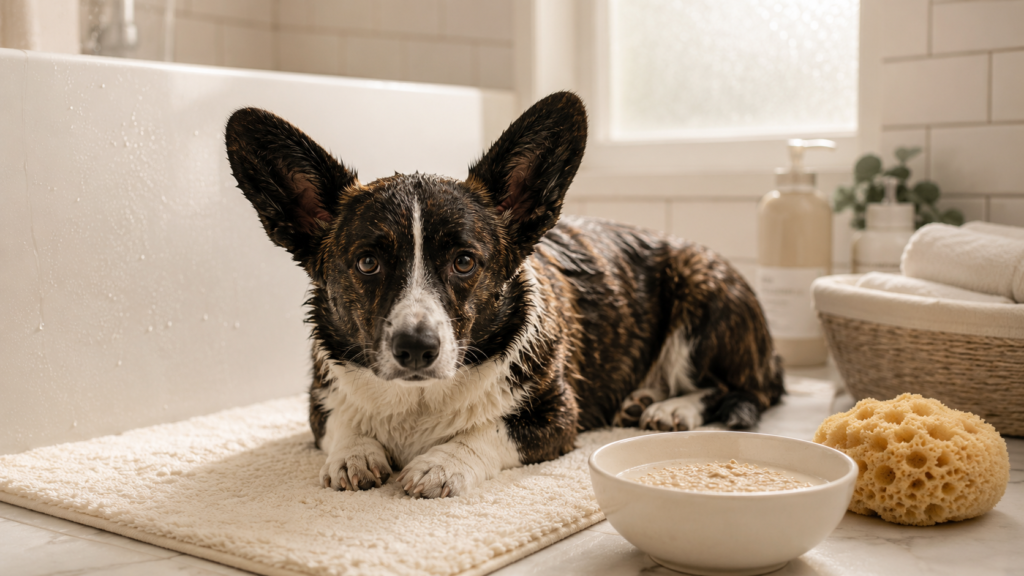
There’s a specific kind of exhaustion that comes from being woken up at 2am by your dog scratching. Nuggy went through a rough patch last spring — constant licking at her paws, scratching behind her ears, rubbing her face on the carpet. We tried switching foods, washing her bedding more often, and wondering whether we were terrible dog parents.
Turns out, itching and skin irritation are among the most common complaints in dogs. And while a vet visit is always the right call for anything persistent or severe, there are several natural remedies that genuinely help — especially for mild seasonal allergies, environmental irritants, and dry skin.
Here are 7 that actually work, with some notes on when each one applies and when you should skip straight to the vet.
First: Figure Out Why Your Dog Is Itching
Before reaching for any remedy, a quick triage saves you a lot of wasted effort.
Dog itching usually falls into one of four categories:
- Environmental allergies — pollen, grass, dust mites. Often seasonal. Affects paws, belly, ears, and face.
- Food allergies or intolerances — often shows up as year-round itching, ear infections, or gut issues alongside the scratching. (More on this in remedy #7.)
- Parasites — fleas, mites, or mange. If you see small black specks in the coat, or intense localized scratching, check for fleas before anything else.
- Dry skin or contact irritation — from harsh shampoos, certain floor cleaners, or just dry winter air.
Natural remedies work well for environmental allergies and dry skin. They’re not a fix for parasites or food allergies — those need a different approach. With that said, here’s what actually helps.
1. Oatmeal Bath
The most well-established natural remedy for dog itching — and for good reason. Colloidal oatmeal (finely ground oats) contains compounds called avenanthramides that actively reduce inflammation and soothe irritated skin. This isn’t folk medicine; it’s the same reason oatmeal lotions are used on humans with eczema.
How to do it:
- Use colloidal oatmeal (ground fine enough to dissolve in water) or a dedicated oatmeal dog shampoo
- Warm water — not hot. Hot water worsens inflammation.
- Let your dog soak for 10–15 minutes if possible, or work the lather in and leave it for a few minutes before rinsing
- Rinse thoroughly — oatmeal residue left in the coat can attract bacteria
For regular baths, Burt’s Bees Oatmeal Dog Shampoo is the cleanest option in this category — no sulfates, no artificial fragrance, made specifically for dogs. It’s what we switched to after Nuggy’s skin flare-up, and her coat condition improved noticeably within a few weeks.
Works best for: environmental allergies, dry skin, general itching after outdoor time in grass or pollen season.
2. Apple Cider Vinegar Rinse
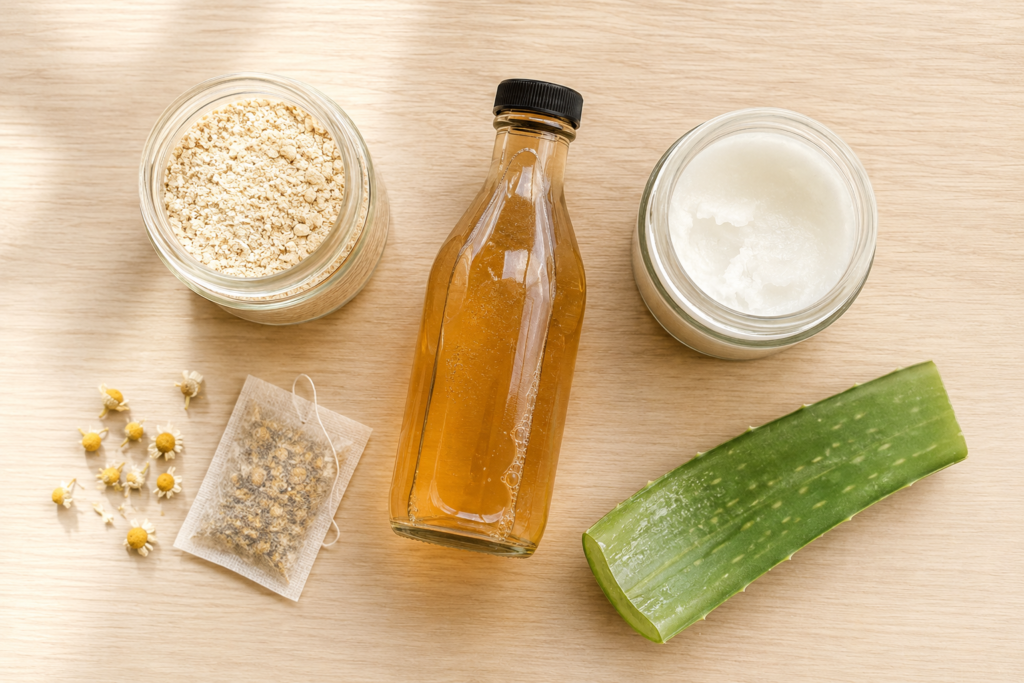
ACV has mild antifungal and antibacterial properties, which makes it useful for dogs whose itching has a yeast component — often showing up as a musty smell, dark discharge in the ears, or red-brown staining between the toes from licking.
How to use it:
- Dilute 50/50 with water — never apply undiluted ACV to a dog’s skin
- Use as a final rinse after bathing, or spray lightly onto affected areas (paws, belly)
- Avoid any broken skin, cuts, or raw hot spots — it stings on open skin
Safety Note
Never use ACV in or near your dog’s eyes or ears if there’s any active infection. If you suspect an ear infection (head shaking, dark discharge, odor), that’s a vet visit, not a home remedy situation.
Works best for: mild yeast-related itching, paw licking with a musty smell, occasional use as a skin rinse.
3. Coconut Oil
Coconut oil is one of those remedies that’s both overhyped and genuinely useful — depending on how you use it.
Applied topically, it acts as a mild moisturizer and has some antimicrobial properties. It’s particularly helpful for dry, flaky skin, cracked paws, and elbows in larger breeds.
How to use it:
- Use virgin, unrefined coconut oil
- Warm a small amount between your palms until it melts
- Massage gently into affected areas — paws, elbows, dry patches
- Best applied before bed so it has time to absorb before your dog licks it off
Small amounts are safe if ingested, but large quantities can cause stomach upset, so don’t go overboard.
Works best for: dry skin, cracked paw pads, localized patches of flaking or irritation.
For paw pads specifically, Musher’s Secret Paw Wax is a more durable option than coconut oil — it forms a breathable barrier that stays put during walks and protects against both dryness and surface irritants like road salt. We started using it on Nuggy in winter, but it’s equally good year-round for dogs with sensitive paw skin. See also: How to Protect Your Dog’s Paws in Winter.
Works best for: dry skin, paw pad irritation, rough elbows.
4. Chamomile or Green Tea Soak
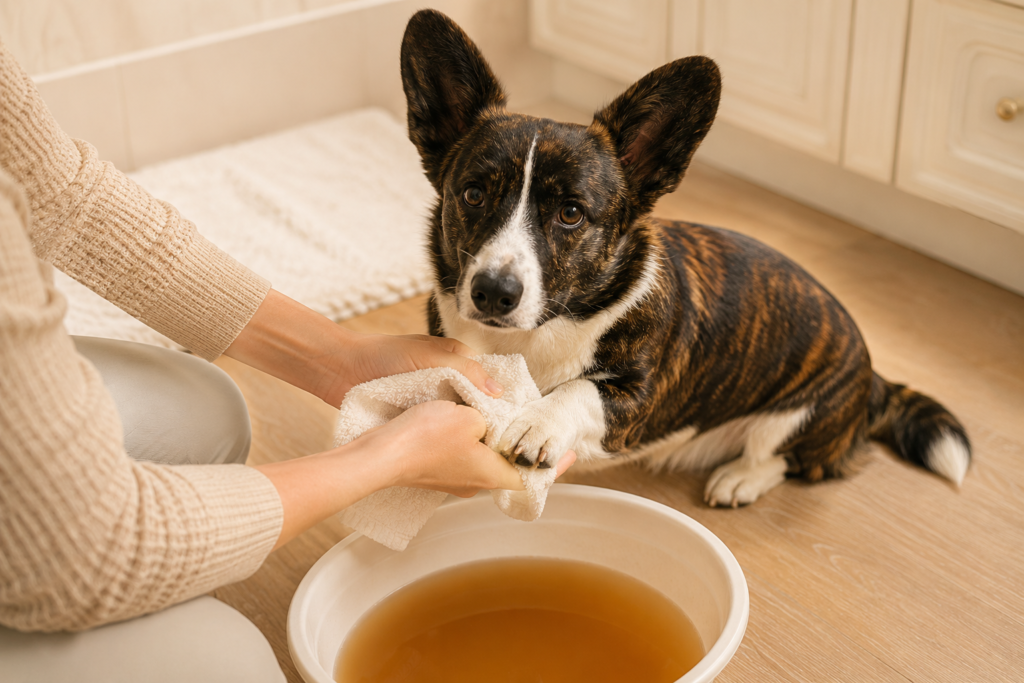
Both chamomile and green tea contain anti-inflammatory compounds that help calm irritated, hot, or rashy skin. This works especially well as a targeted soak for paws — which is where a lot of dogs carry their allergic reaction.
How to do it:
- Brew 3–4 chamomile or green tea bags in a quart of water
- Let it cool completely to room temperature (warm is fine; cold is fine; hot is not)
- Soak your dog’s paws for 5 minutes, or use a clean cloth to apply to irritated areas
- Pat dry — don’t rinse off
It’s simple, cheap, and genuinely soothing. Nuggy tolerated the paw soak surprisingly well once we made it part of the post-walk routine during high-pollen months.
Works best for: paw itching from grass or pollen contact, skin redness, mild hot spots.
5. Baking Soda Paste
Baking soda is alkaline, which helps neutralize the acidic compounds that cause itching and irritation on the skin surface. It’s a good spot treatment for localized itchy patches, insect bites, or contact reactions.
How to use it:
- Mix baking soda and water 1:1 into a thick paste
- Apply directly to the irritated area with your fingertips or a soft cloth
- Leave on for 15–20 minutes, then rinse thoroughly
- Do not leave on longer — baking soda can dry out skin if overused
Safety Note
Avoid open skin, wounds, or raw hot spots. The paste is for intact, irritated skin only — not for broken or weeping areas.
Works best for: insect bites, localized contact reactions, specific itchy patches.
6. Aloe Vera (Topical Only)
Pure aloe vera gel has cooling, anti-inflammatory, and wound-healing properties. For hot, red, irritated skin patches, it provides fast relief.
The catch: you must use pure aloe vera gel — not the bright green grocery store stuff loaded with alcohol and artificial dyes. Look for 100% pure aloe vera, or cut a leaf from an actual plant.
How to use it:
- Apply a thin layer of pure aloe vera gel to the affected area
- Allow to absorb — it dries to a light film
- Reapply 1–2 times daily
One important caution: aloe vera latex (the yellow layer just beneath the skin of the plant) is toxic to dogs. If you’re cutting from a plant, rinse the gel thoroughly before applying. The clear inner gel is safe; the yellow sap is not.
Works best for: hot skin, red patches, minor burns or contact irritation.
7. Look at the Diet
This is the one people try last, but it should often be tried earlier. Food allergies and intolerances are a significant driver of chronic itching in dogs — and they’re not always obvious.
Common dietary triggers in dogs:
- Chicken (the most common protein allergen in dogs)
- Beef
- Dairy
- Wheat / gluten
If your dog’s itching is year-round rather than seasonal, and you’ve ruled out parasites, an elimination diet trial is worth discussing with your vet. The standard protocol is 8–12 weeks on a novel protein (something your dog has never eaten — duck, venison, rabbit) with no other treats, then reintroduction to identify the trigger.
For a full guide to what dogs can and can’t safely eat — including which common human foods can cause reactions — see Foods Dogs Can Eat and Can’t: The Complete Safe Human Foods Guide.
Works best for: chronic year-round itching that doesn’t respond to topical treatments.
What to Expect: The First 48 Hours vs. The First Month
One of the most confusing things about treating itchy skin is that “it’s working” and “it’s fixed” happen on completely different timelines. People give up on a remedy at day three because the itching came back — when actually it was doing exactly what it was supposed to.
Here’s how it usually plays out.
The first 24–48 hours: comfort
This is what the soothing remedies are for. An oatmeal bath, a chamomile paw soak, or aloe on a hot patch works on inflammation that’s already at the skin surface. You should see a difference fast:
- less frantic scratching, especially at night
- less licking and chewing at paws
- redness starting to fade
- your dog able to settle and actually sleep
With Nuggy, the first oatmeal bath bought us a quiet night after about a week of 2am scratching. That was real relief — and it was also temporary.
What 48 hours does not do is remove the cause. The pollen is still outside. The yeast is still there. The chicken in the treats is still in the treats. Surface relief buys your dog comfort while you deal with the actual trigger.
Use 48 hours as a checkpoint, not a finish line. If a soothing bath or soak produces no improvement at all within two days, that’s useful information. It usually means you’re not dealing with simple surface irritation — think parasites, an infection, or a food trigger — and it’s worth moving to the vet sooner rather than cycling through more home remedies.
Week 1 to 2: the skin barrier starts repairing
Irritated skin is damaged skin, and damaged skin takes time to rebuild. In this window you’re looking for the baseline to drop — not perfect skin, just less of everything:
- fewer scratching episodes per day
- flaking and dryness easing off
- scabs and hot spots closing rather than spreading
- coat starting to look less dull
Progress here is bumpy. A high-pollen day or a long walk in tall grass can undo a couple of days of progress, and that’s normal, not failure.
Week 2 to 4: this is when you judge
Give any remedy a fair month before deciding whether it belongs in your routine. Four weeks is long enough to see through the day-to-day noise, and long enough for a dietary change to actually show up.
At the end of a month you want to be able to answer one question: is my dog scratching less than they were four weeks ago? Not “is it gone” — just, is the trend going the right way.
If the answer is no, the problem isn’t the remedy you picked. It’s the diagnosis.
When to See the Vet
Natural remedies are for mild cases. Skip them and go straight to the vet if you notice:
- Hot spots (red, weeping, rapidly spreading patches)
- Hair loss in localized areas
- Swelling, especially around the face, eyes, or muzzle — this can signal an allergic reaction requiring immediate treatment
- Ear infections — head shaking, dark discharge, strong odor
- Parasites — visible fleas, flea dirt, or skin that looks like it’s crawling
- Itching that’s severe enough to break the skin through scratching or biting
The remedies above help manage mild irritation and support skin health. They’re not a substitute for a diagnosis when something more serious is going on. See The Ultimate Dog Health Care Checklist for a full breakdown of symptoms worth monitoring.
A Little Patience Goes a Long Way
Skin issues in dogs rarely resolve overnight — but as the timeline above shows, comfort and resolution aren’t the same thing. You can buy your dog relief tonight and still need a month to know whether you’ve fixed the cause. The combination that helped Nuggy most was switching to an oatmeal shampoo, adding daily paw soaks during pollen season, and a dietary tweak (we cut out chicken treats for a while).
Every dog is different — what calms one dog’s skin might not do much for another. Start with one remedy, give it time, and pay attention to what’s actually helping rather than cycling through everything at once.
Which of these have you tried? Let me know in the comments if something worked (or didn’t) for your dog.