
This post contains affiliate links. I may earn a small commission if you buy through them, at no extra cost to you.
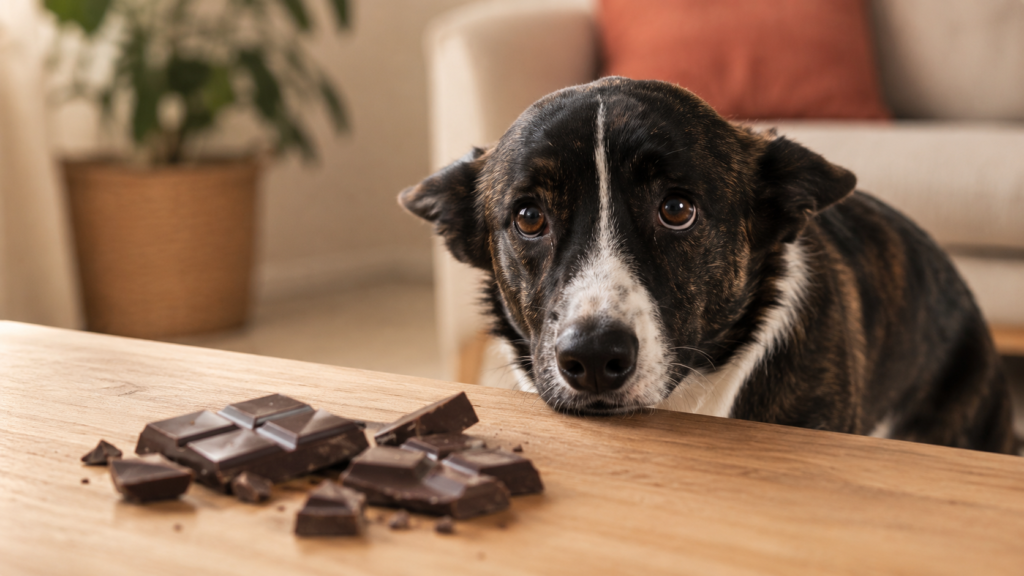
⛔ No, dogs cannot eat chocolate. Chocolate contains theobromine and caffeine — both toxic to dogs. Even small amounts can cause serious symptoms, and large amounts can be fatal. Dark chocolate and baking chocolate are the most dangerous.
Quick Answer Box
⛔ Chocolate is toxic to dogs — all types, all amounts.
The darker the chocolate, the more dangerous it is. White chocolate has the least theobromine, but it’s still not safe. If your dog ate chocolate, contact your vet immediately — don’t wait for symptoms.
Intro
It was Christmas Eve, and Nuggy had somehow gotten into a box of dark chocolate truffles left on the coffee table. I didn’t notice until half a truffle was gone and he was looking at me with that unmistakable guilty-but-pleased expression. Cue immediate panic, a frantic call to our vet, and a very stressful evening monitoring him for symptoms.
He was fine — the amount was small and he’s not a tiny dog. But it taught me more about chocolate toxicity than I ever wanted to know.
Here’s the thing: most dog owners know chocolate is bad. But fewer know why, how much is actually dangerous, or what to do in those ten terrifying minutes after you realise your dog just ate some. That’s exactly what this article covers — the science, the dose, the symptoms, and the steps to take.
Why Is Chocolate Toxic to Dogs?
Chocolate contains two compounds that dogs cannot metabolise the way humans can: theobromine and caffeine. Theobromine is the main culprit.
In humans, theobromine is broken down and cleared from the body relatively quickly. In dogs, the process is much slower — it can take up to 17.5 hours for a dog’s body to eliminate half the theobromine it ingested. This slow metabolism means it builds up in the system and causes toxic effects.
Theobromine affects the heart, central nervous system, and kidneys. At low doses it causes digestive upset. At higher doses it triggers heart arrhythmias, seizures, and can be fatal.
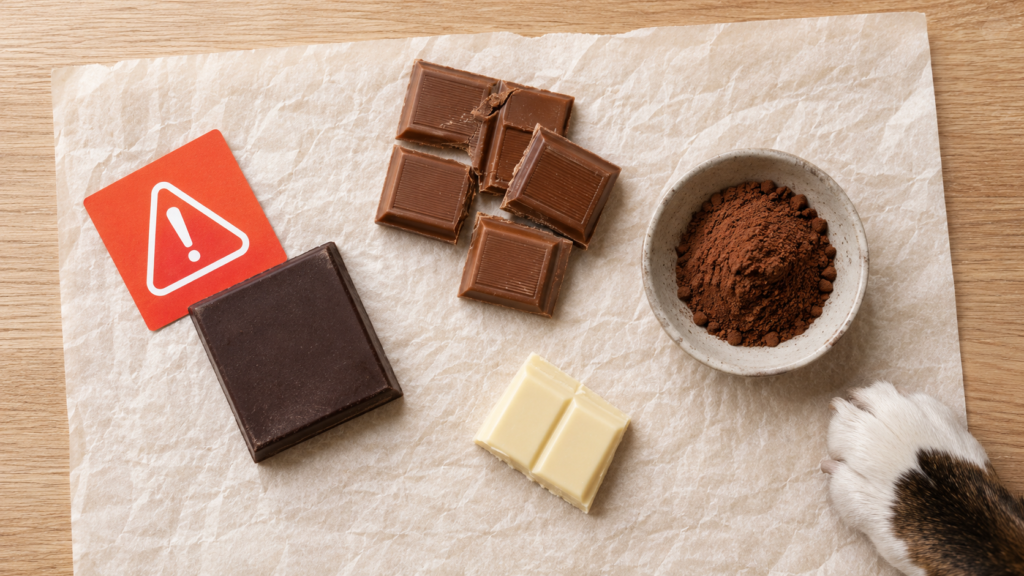
Not all chocolate is equally dangerous. The amount of theobromine varies significantly by type:
| Chocolate type | Theobromine per 100g | Risk level |
|---|---|---|
| Baking / unsweetened chocolate | ~400–450mg | ⛔ Extremely high |
| Dark chocolate (70%+) | ~200–300mg | ⛔ Very high |
| Milk chocolate | ~40–60mg | ⚠️ Moderate |
| White chocolate | ~0.1mg | ⚠️ Low (but still not safe) |
| Cocoa powder | ~600–800mg | ⛔ Highest of all |
A medium-sized dog (around 20kg) can show toxic symptoms after as little as 60g of milk chocolate — or just 7g of dark chocolate. Smaller dogs are at risk with even less.
Risks and What to Watch For
Symptoms typically appear within 6–12 hours of ingestion. In some cases they can show up within 1–2 hours, especially with dark or baking chocolate.
Signs of chocolate toxicity in dogs:
- Vomiting and diarrhoea (often the first signs)
- Excessive thirst and urination
- Restlessness, pacing, hyperactivity
- Muscle tremors
- Rapid or irregular heartbeat
- Seizures
- Collapse (in severe cases)
The severity depends on: the type of chocolate, the amount eaten, and your dog’s body weight. A small dog that eats a large bar of dark chocolate is in a very different situation than a large dog that licks a milk chocolate wrapper.
Safety Note
Cocoa powder and baking chocolate are the most dangerous forms — used in home baking and often left on kitchen counters. Keep them locked away, not just out of reach.
What to Do If Your Dog Ate Chocolate
The key is to act before serious symptoms develop. Here’s the step-by-step:
1. Stay calm and gather information.
You need to know: what type of chocolate, roughly how much (grams or squares), and your dog’s weight. Check the packaging if it’s still there.
2. Call your vet or poison control immediately.
- Your regular vet (call even outside hours — most have an emergency line)
- Pet Poison Helpline: 1-855-764-7661 (24/7)
- ASPCA Animal Poison Control: 888-426-4435 (24/7)
Give them the type of chocolate, amount, and your dog’s weight. They’ll tell you if it’s a dangerous dose or whether to monitor at home.
A dog first aid kit won’t treat chocolate toxicity, but having one at home means you’re always prepared for emergencies like this.
3. Do not induce vomiting without instruction.
Your vet may ask you to induce vomiting if the ingestion was recent (within 1–2 hours) — but only do this with their guidance and using the correct method. Doing it wrong can cause additional harm.
4. Monitor closely for 12–24 hours.
Even if your vet says the amount is low risk, watch for the symptoms listed above. Restlessness and vomiting are early warning signs that things are progressing.
5. At the vet: treatment may include activated charcoal (to reduce absorption), IV fluids, and medication to manage heart rate and seizures if needed.
Safe Chocolate Alternatives for Dogs
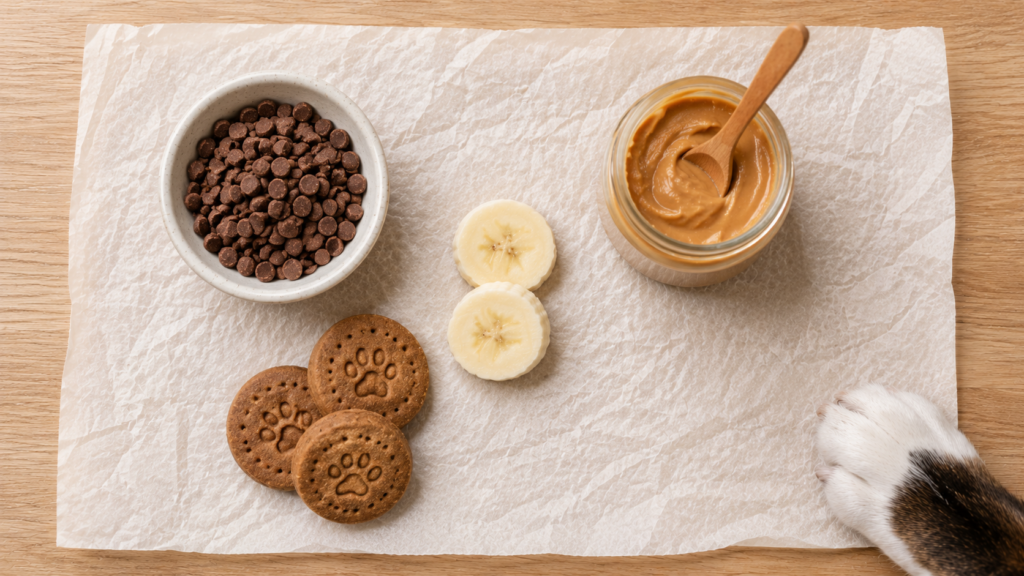
If your dog loves the smell of chocolate (and most do — it’s the fat and sugar they’re attracted to, not the theobromine), there are dog-safe alternatives that scratch the same itch.
- Carob — the most popular chocolate substitute for dogs. Naturally sweet, caffeine-free, theobromine-free. Widely available as carob chips or carob powder.
- Peanut butter — satisfies that rich, indulgent craving. Great in Kongs or as a treat topping. Always check it’s xylitol-free.
- Banana — naturally sweet and soft, great for stuffing or freezing.
- Dog-safe treat chews — many brands make chocolate-flavoured dog treats using carob. Nuggy goes absolutely wild for carob biscuits.
If you want to bake something special for your dog, our Safe Homemade Dog Treats guide has plenty of ideas — and none of them involve anything toxic.
You can also check our full Foods Dogs Can Eat and Can’t — Safe Human Foods Guide for a complete overview of what’s safe and what isn’t.
The Bottom Line
Can dogs eat chocolate? No — never, in any form or amount. Chocolate is one of the most common causes of dog poisoning, and it’s entirely preventable. The darker the chocolate, the more dangerous it is, but even milk chocolate can cause serious symptoms in smaller dogs.
Keep all chocolate out of reach — including baking chocolate, cocoa powder, and anything containing chocolate as an ingredient (think Christmas cake, brownies, protein bars, hot chocolate powder). It’s not just about leaving a bar on the counter; it’s about thinking about every form it comes in.
Nuggy’s chocolate incident ended well, but it was a reminder that I needed to be a lot more vigilant. Now, anything with chocolate in it goes in a cupboard with a proper latch — not just out of reach, but out of the question.
For more on keeping your dog safe around human foods, bookmark our Foods Dogs Can Eat and Can’t guide and check out The Ultimate Dog Health Care Checklist for a broader overview of everyday dog safety.
Has your dog ever gotten into chocolate? What happened? Share in the comments — it might help another owner act faster.
FAQ
Q: How much chocolate is toxic to dogs?
A: It depends on the type of chocolate and your dog’s weight. As a rough guide: for a 10kg dog, around 20g of dark chocolate or 200g of milk chocolate can cause symptoms. Baking chocolate is dangerous in much smaller amounts. When in doubt, call your vet.
Q: My dog ate a tiny bit of chocolate — should I be worried?
A: It depends on the type. A large dog licking a milk chocolate wrapper is unlikely to be seriously harmed. A small dog eating even a small piece of dark chocolate should be seen by a vet. When in doubt, call your vet or poison control — they can do the maths for you.
Q: Is white chocolate toxic to dogs?
A: White chocolate contains almost no theobromine, so it’s far less toxic than dark or milk chocolate. However, it’s still high in fat and sugar and can cause vomiting, diarrhoea, and pancreatitis. It’s not safe for dogs.
Q: Can dogs eat carob?
A: Yes — carob is a safe, dog-friendly alternative to chocolate. It contains no theobromine or caffeine and is naturally sweet. Many dog treats and recipes use carob as a chocolate substitute.
Q: Can puppies eat chocolate?
A: No. Puppies are even more vulnerable than adult dogs due to their smaller size and developing systems. Any chocolate ingestion by a puppy should be treated as an emergency.
Q: What if my dog ate chocolate hours ago and seems fine?
A: Some dogs show delayed symptoms. Contact your vet anyway and describe what type and how much was eaten — they can advise whether monitoring at home is safe or whether your dog should be seen.