
This post contains affiliate links. I may earn a small commission if you buy through them, at no extra cost to you.
Some dogs are just wired to worry. Thunderstorms, fireworks, a stranger at the door, a change in routine — and suddenly you’ve got a panting, pacing, restless dog on your hands. It’s hard to watch, and the instinct is to want to fix it fast.
The good news: there are natural calming remedies for anxious dogs that genuinely help. Not magic, not overnight fixes — but real tools that take the edge off and support your dog’s nervous system. Here are seven that are actually backed by evidence (and used by dog owners who’ve been through it).
1. Calming Music and Sound Therapy
This one sounds almost too simple — but the research is surprisingly solid. Studies from the Scottish SPCA and Queen’s University Belfast found that dogs in shelters showed significantly lower stress responses when played classical music compared to silence or heavy metal.
The key is the type of music. Through a Dog’s Ear is a research-designed series of classical music specifically composed and arranged to reduce canine anxiety — available on Spotify and YouTube. Regular radio or playlists work too, but simple, slow, single-instrument music (piano, harp) tends to be most effective.
How to use it: Start playing calming music 15–20 minutes before a known trigger (like your departure routine or a coming storm). Leave it on while your dog is alone. Keep the volume low — think background, not concert.
Pro tip: White noise machines also work well for dogs stressed by outdoor sounds (traffic, neighbor dogs, fireworks). The consistent sound masks the triggering noises.
2. Lavender Aromatherapy
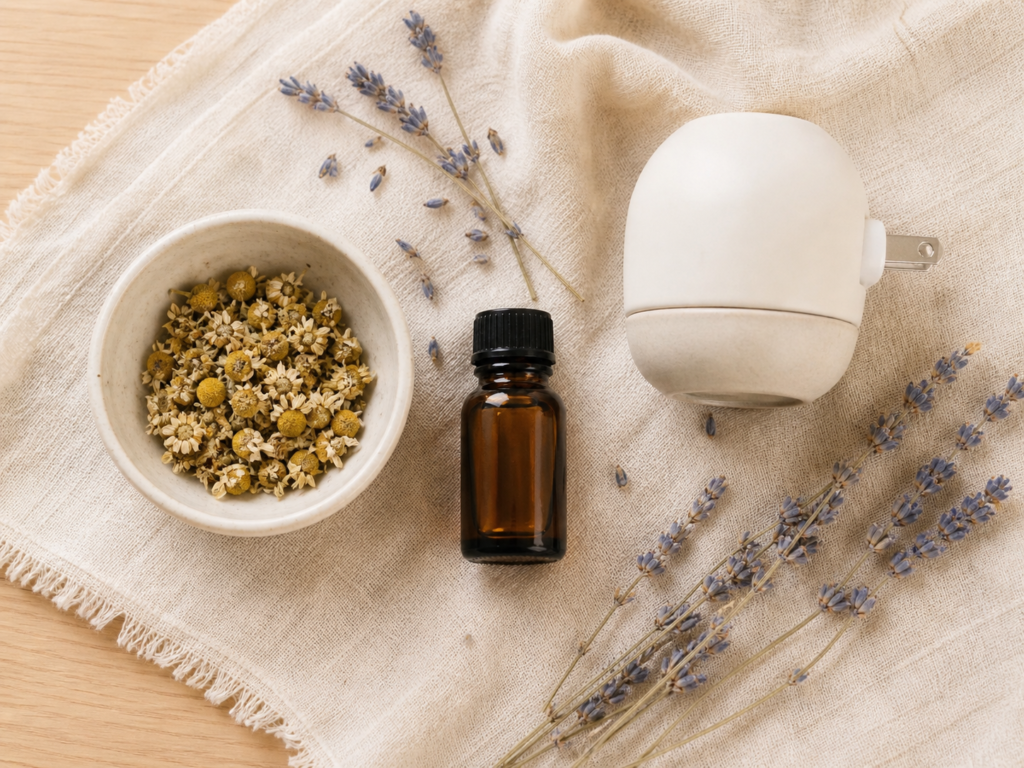
Lavender has a well-documented calming effect on the mammalian nervous system — including dogs. A study published in Applied Animal Behaviour Science found that shelter dogs exposed to lavender scent spent significantly more time resting and less time moving.
How to use it safely:
- Use a diffuser in the room where your dog spends the most time — run it for 30–60 minutes at a time
- Never apply essential oils directly to your dog’s skin or coat — their skin absorbs compounds quickly and some can be toxic
- Keep the room ventilated — your dog’s nose is exponentially more sensitive than yours
- Avoid eucalyptus, tea tree, and peppermint oils near dogs — these are toxic
Chamomile is a close second to lavender and has similar mild sedative properties.
3. Pressure Wraps (ThunderShirt)
Pressure therapy works on the same principle as a weighted blanket for humans — gentle, constant pressure on the body activates the parasympathetic nervous system and signals “calm” to the brain.
A ThunderShirt is the most widely used pressure wrap for dogs. It applies firm but comfortable pressure across the torso, and the manufacturer reports an ~80% success rate across anxiety types — separation anxiety, thunderstorms, fireworks, car travel, and vet visits.
How to use it:
- Put it on 15–20 minutes before the trigger, not after your dog is already panicking
- Make sure the fit is snug but not restrictive — you should be able to slip two fingers underneath
- Use it consistently during training sessions so your dog builds positive associations
It’s not a cure, but for many dogs it’s a reliable way to reduce the intensity of anxiety enough that other remedies can do their job.
4. Dog-Appeasing Pheromone (DAP) Diffuser
When a mother dog nurses her puppies, she releases a chemical signal — a pheromone — that communicates safety and calm. Scientists identified this compound and synthesized it into a product called Dog-Appeasing Pheromone (DAP).
A ThunderEase Calming Diffuser plugs into a wall outlet and continuously releases this synthetic pheromone into the room. Dogs detect it through their vomeronasal organ (a separate scent processor from the nose), and many respond with noticeably reduced anxiety.
Multiple clinical studies have shown DAP to be effective for noise phobias, separation anxiety, and general nervousness — and unlike medication, it has no systemic side effects.
How to use it: Plug it in where your dog spends the most time — living room, bedroom, or near their crate. Give it 2–4 weeks of consistent use before judging effectiveness. Replace the refill every 30 days.
5. Calming Supplements
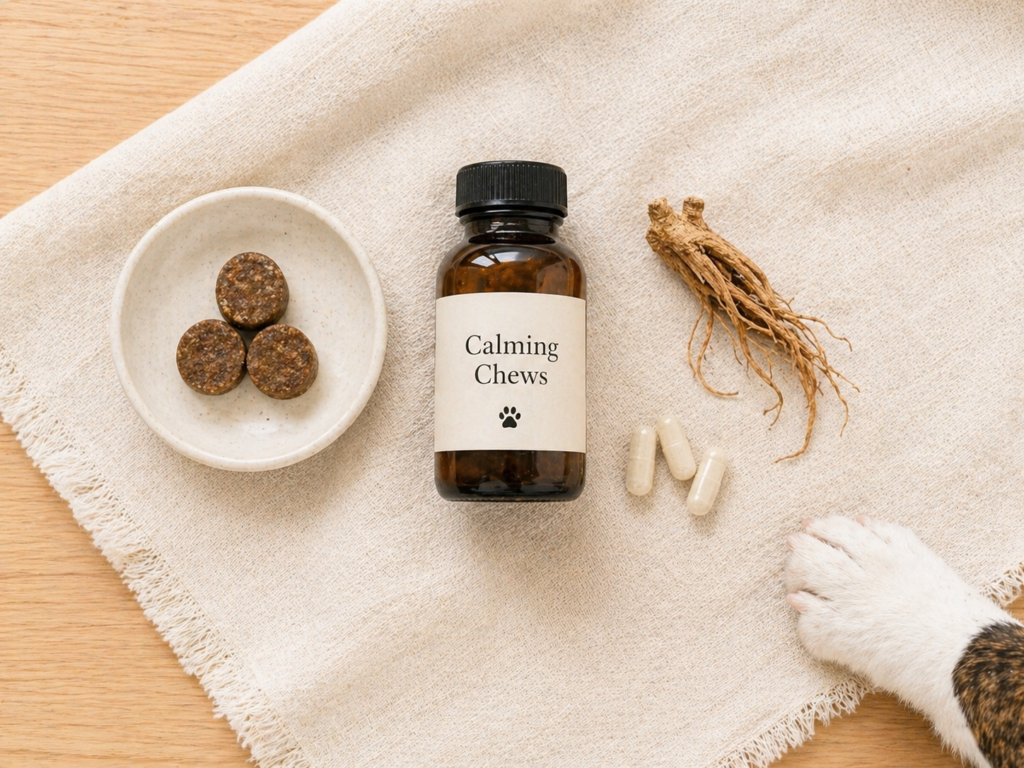
The supplement world for dog anxiety is noisy, but a few ingredients are genuinely supported by evidence:
L-Theanine — an amino acid found naturally in green tea, L-Theanine promotes alpha brain wave activity (the relaxed-but-alert state). It’s fast-acting (30–60 minutes) and well-tolerated. Many calming chews use it as the active ingredient.
Melatonin — helps regulate the sleep-wake cycle and has a mild anxiety-reducing effect, particularly useful for noise phobias and nighttime anxiety. Dose depends on your dog’s weight — check with your vet.
Valerian root — a traditional herbal sedative with mild effectiveness in dogs. Available in capsule or liquid form. Works best for mild anxiety.
CBD oil (dog-specific) — emerging research is promising, particularly for situational anxiety. Use only pet-formulated CBD — human products may contain xylitol or other ingredients that are toxic to dogs.
A few ground rules for supplements: always check with your vet before adding anything new, especially if your dog is on other medications. Start with the lowest effective dose. And give any supplement at least 4–6 weeks before drawing conclusions about effectiveness.
6. TTouch Massage
Tellington TTouch (TTouch) is a specific form of gentle bodywork developed by Linda Tellington-Jones. It uses small, circular touches across the dog’s body to help release tension and promote calm. It’s used by veterinary professionals, trainers, and dog owners worldwide.
You don’t need to master the technique to get results. Even simple, slow massage in the right spots can significantly reduce anxiety:
- Ear work: Using your thumb and fingers, gently stroke your dog’s ear from base to tip in slow, deliberate sweeps. The ear has acupressure points linked to the vagus nerve — stimulating them triggers a calming response. This works fast and visibly.
- Long strokes: Long, slow strokes from head to tail with gentle but firm pressure — not light tickling, which can be stimulating rather than calming.
- Circular touches: Small clockwise circles using the pads of your fingers, moving slowly across the back, neck, and hindquarters.
The key word is slow. Fast, excited touching stimulates. Slow, deliberate contact calms.
7. Enrichment and Sniff Work
This one often gets overlooked in the “calming remedies” conversation — but it’s one of the most powerful tools you have.
A dog’s nose is their primary way of experiencing the world. Sniffing activates the parasympathetic nervous system (the “rest and digest” state) and lowers heart rate. This is measurable: studies show that sniff-focused activities reduce cortisol levels in dogs more effectively than vigorous exercise.
Simple sniff work ideas:
- Scatter kibble in grass and let your dog hunt for it
- Stuff a KONG Classic with peanut butter or wet food and freeze it — 30 minutes of focused licking and sniffing
- Use a snuffle mat to hide treats for your dog to find
- Try a “sniff walk” — instead of a brisk 30-minute walk, let your dog lead at a slow pace and sniff everything they want
For anxious dogs, sniff work before a triggering event (like your departure) is a game-changer. A mentally tired, sniff-satisfied dog is a calmer dog.
For more enrichment ideas that help with anxiety: 12 Easy Enrichment Ideas That Actually Calm Your Dog
How to Choose the Right Remedy for Your Dog
Not every remedy works for every dog. A few guidelines:
For general daily anxiety: Start with pheromone diffuser + calming music. Both are passive, low-effort, and build up over time.
For event-based anxiety (thunderstorms, fireworks, vet visits): ThunderShirt + lavender diffuser, put on 20 minutes before the trigger.
For separation anxiety: Combine enrichment (KONG before departure) + calming music + gradual desensitization training. For the full step-by-step approach, see our guide: How to Calm a Dog with Separation Anxiety
For highly anxious dogs with no improvement: Natural remedies work best for mild to moderate anxiety. If your dog is injuring themselves or unable to function, talk to your vet — a short course of anxiety medication alongside behavioral training can make the difference.
Final Thoughts
Anxiety in dogs is real, and it’s manageable. The most effective approach combines a few of these remedies rather than relying on just one — calming music + pheromone diffuser + enrichment before stressful events is a combination that works for a lot of dogs.
Start with what’s easiest to implement, observe your dog’s response, and build from there. And remember: calm owner, calmer dog. Your energy matters too.
Related reading: 10 Simple Daily Habits That Keep Dogs Happy and Balanced
🧰 Products Mentioned in This Article
| Product | Why It Helps | Link |
|---|---|---|
| ThunderShirt | Pressure wrap — reduces anxiety in ~80% of dogs | View on Amazon |
| ThunderEase Diffuser | DAP pheromone diffuser for continuous calm | View on Amazon |
| KONG Classic | Freeze-stuffed enrichment for 30–40 min of calm focus | View on Amazon |