
This post contains affiliate links. I may earn a small commission if you buy through them, at no extra cost to you.
✅ Yes, dogs can eat peanut butter — but only if it does NOT contain xylitol. Xylitol is an artificial sweetener that is extremely toxic to dogs and can cause rapid, life-threatening hypoglycemia. Always read the label before every jar. Plain peanut butter with no added sweeteners is safe in moderation.
Introduction
Peanut butter might be the most universally used dog treat ingredient in existence. It fills Kongs, hides pills, distracts dogs during baths and nail trims, and sends most dogs into a state of focused ecstasy that makes all other training rewards irrelevant.
Nuggy goes absolutely still the moment he hears a peanut butter jar being opened. It’s impressive, really.
The good news: peanut butter is safe for dogs. The important news: you need to check the label every single time for one ingredient that can kill a dog in hours. Here’s everything you need to know.
Is Peanut Butter Safe for Dogs?
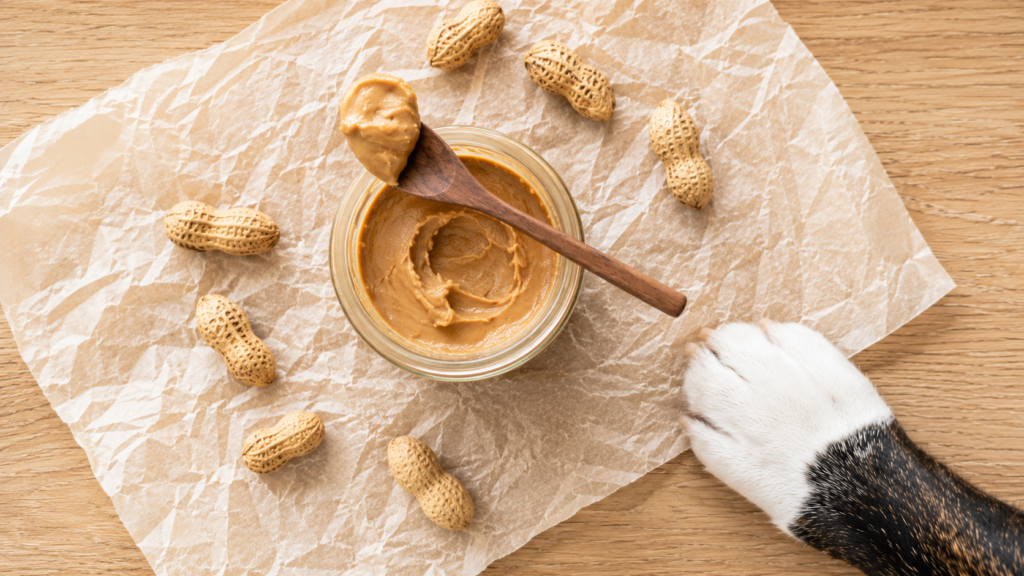
Yes — plain peanut butter made with just peanuts (and possibly salt and oil) is safe for dogs in moderate amounts. Peanut butter is a good source of protein and healthy fats, and most dogs love the flavor and texture.
The danger comes from one specific ingredient: xylitol.
The Xylitol Problem
Xylitol is a sugar alcohol used as a low-calorie sweetener in many human foods, particularly “reduced sugar” or “natural” products. In humans, it’s harmless. In dogs, it causes a rapid and massive release of insulin, leading to severe hypoglycemia (dangerously low blood sugar). At higher doses, it can cause acute liver failure.
Symptoms of xylitol poisoning can appear within 15–30 minutes of ingestion:
- Sudden weakness and lethargy
- Vomiting
- Loss of coordination (stumbling, inability to stand)
- Tremors or seizures
- Collapse
This is a veterinary emergency. If your dog has eaten peanut butter containing xylitol, call your vet or the ASPCA Animal Poison Control (1-888-426-4435) immediately.
Which Peanut Butter Brands Contain Xylitol?
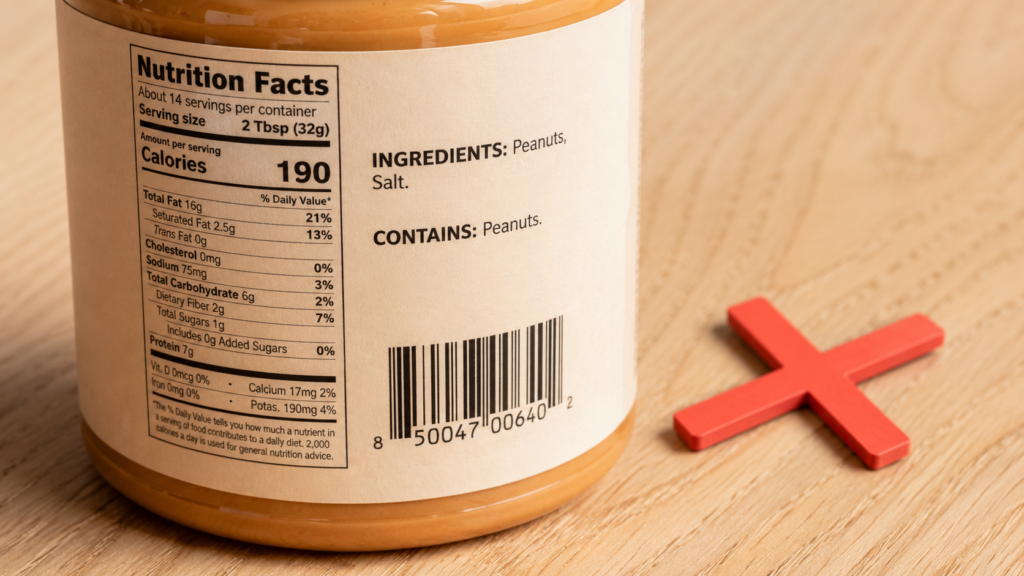
Several brands have used xylitol in “natural” or “reduced sugar” peanut butter formulations. Brand formulas also change without notice, which is why you must check every new jar, even a brand you’ve used before. Look for “xylitol,” “birch sugar,” or “sugar alcohol” on the ingredient label.
The safe rule: ingredients should read “peanuts” and optionally “salt” and/or “palm oil” — nothing else.
How to Use Peanut Butter Safely
Once you’ve confirmed your peanut butter is xylitol-free, here are the best ways to use it:
Kong stuffing — The classic. Fill a KONG with peanut butter and freeze for 2–4 hours. Gives your dog 15–30 minutes of focused enrichment. Works for crate training, separation anxiety, post-surgery recovery, and keeping dogs occupied during grooming.
Pill hiding — A small dollop of peanut butter wrapped around a pill is one of the most reliable methods. Most dogs swallow it without investigating.
Bath and nail trim distraction — Spread a thin layer on a lick mat or the side of the tub. Your dog stays focused on licking while you work.
Training treats — A small amount on a spoon or your fingertip works as a high-value reward for difficult tasks.
How much per day:
| Dog size | Max peanut butter |
|---|---|
| Small (< 10 kg) | ½ teaspoon |
| Medium (10–25 kg) | 1 teaspoon |
| Large (> 25 kg) | 1–2 teaspoons |
Peanut butter is calorie-dense (about 100 calories per tablespoon), so keep portions small — especially for dogs prone to weight gain.
The Easiest Solution: Dog-Specific Peanut Butter
If you want to skip the label-reading anxiety entirely, Buddy Budder (available on Amazon) is made specifically for dogs with no xylitol, no added sugar, and a safe ingredient list. It comes in several flavor varieties and the consistency is designed for Kong stuffing and lick mats. This is what we keep at home — no second-guessing, no label checks on every jar.
Other Nut Butters: Safe or Not?
| Nut butter | Safe for dogs? |
|---|---|
| Peanut butter (xylitol-free) | ✅ Yes |
| Almond butter (plain, no xylitol) | ✅ In small amounts |
| Cashew butter (plain, no xylitol) | ✅ In very small amounts (high fat) |
| Macadamia nut butter | ❌ No — macadamia nuts are toxic to dogs |
| Any nut butter with xylitol | ❌ Absolutely not |
When in doubt, stick to plain peanut butter or dog-specific options.
The Bottom Line
Peanut butter is one of the most dog-friendly treats available — a great tool for training, enrichment, and medication. The only rule that matters: no xylitol. Read the label on every jar, every time. Or eliminate the uncertainty entirely and use a dog-formulated peanut butter.
Nuggy’s Kong gets stuffed with Buddy Budder a few times a week, and it’s been his most reliable “settle down and focus” tool since puppyhood. For more ideas on what to stuff in a Kong, check our 9 Best Homemade Peanut Butter Dog Treatsarticle.
See the full guide to Foods Dogs Can and Can’t Eat for more safe and unsafe foods.
Frequently Asked Questions
Q: What peanut butter brands are safe for dogs?
A: Any brand where the only ingredients are peanuts (and possibly salt and palm/palm oil) is safe. Currently, Jif Natural, Skippy Natural, and store-brand peanut butters without sweeteners are generally safe — but always verify the current label since formulas change.
Q: Can dogs eat chunky peanut butter?
A: Yes — chunky peanut butter is fine as long as it’s xylitol-free. The peanut pieces are not a hazard for most dogs.
Q: Can puppies eat peanut butter?
A: Yes, in tiny amounts. Check for xylitol, keep the portion very small (just a lick or a pea-sized amount), and introduce it gradually. High fat content means puppies especially shouldn’t have much.
Q: Can dogs eat peanuts?
A: Plain, unsalted, unroasted peanuts without shells are technically safe for dogs in small amounts. Salted or flavored peanuts are not recommended due to sodium content. Peanut butter is generally the better choice.
Q: What are the signs of xylitol poisoning?
A: Weakness, vomiting, loss of coordination, tremors, and collapse — often within 15–30 minutes of eating xylitol. This is a medical emergency. Call ASPCA Poison Control (1-888-426-4435) or your vet immediately.
Q: Can I put peanut butter in a Kong every day?
A: Yes, with moderation. A small amount daily is fine for most dogs. Keep portion sizes within the guidelines above, and account for the calories in your dog’s daily total.