
This post contains affiliate links. I may earn a small commission if you buy through them, at no extra cost to you.
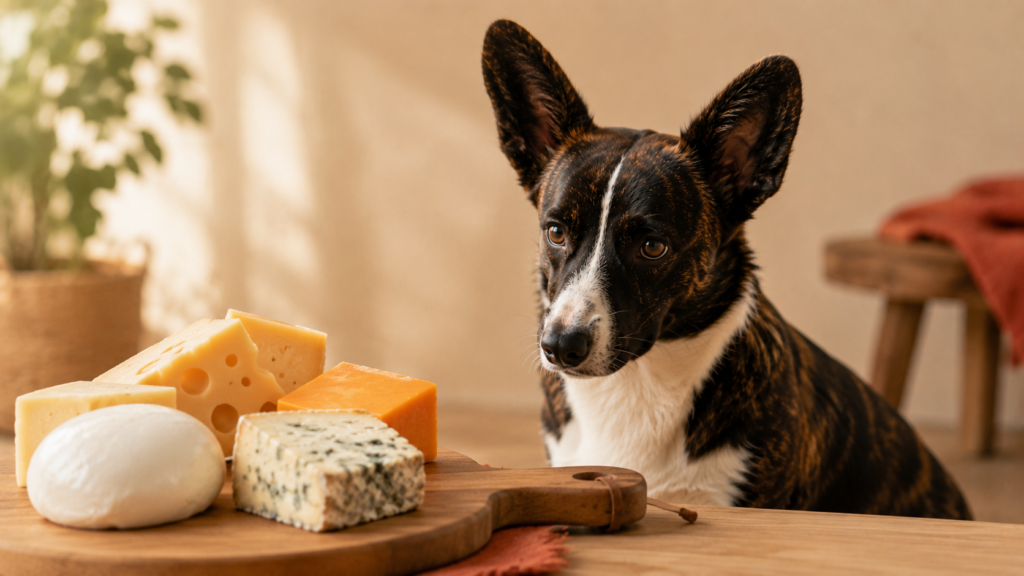
🟡 Most dogs can eat cheese in small amounts. Plain, low-fat varieties like mozzarella or cottage cheese are the safest choices. But some dogs are lactose intolerant, high-fat cheeses can trigger pancreatitis, and a few types — especially blue cheese — are genuinely toxic. Know which type you’re reaching for before you share.
Introduction
Cheese is one of those training treats that works on almost every dog. Nuggy will do anything for a tiny cube of mozzarella — things he normally pretends not to understand, suddenly he understands perfectly.
But there’s more nuance to cheese than “yes” or “no.” I checked with our vet and dug into the research, and the answer depends heavily on what kind of cheese, how much, and your individual dog’s tolerance. Here’s everything you need to know.
Is Cheese Safe for Dogs?
Yes — with important caveats. Cheese is not toxic to dogs the way onions or grapes are. Most dogs can eat small amounts without any problem. But a few factors make cheese more complicated than a simple “yes”:
Lactose intolerance. Dogs are not designed to digest dairy well. Most dogs produce less lactase (the enzyme that breaks down lactose) than humans do, which means dairy can cause digestive upset — gas, loose stools, or vomiting — in sensitive individuals. Puppies tolerate lactose better than adult dogs because they still produce it for nursing. Adult dogs vary widely; some handle cheese fine, others don’t.
Fat content. Cheese is high in fat, and regularly feeding high-fat foods to dogs increases the risk of obesity and more seriously, pancreatitis — a painful and potentially dangerous inflammation of the pancreas. This is why cheese should always be a treat, not a food group.
Sodium. Many cheeses are quite salty. Too much sodium over time contributes to high blood pressure and kidney strain in dogs.
The key principle: low fat, plain, in small quantities = generally fine. High fat, flavored, or moldy = proceed with caution or avoid entirely.
Which Cheeses Are Safest?
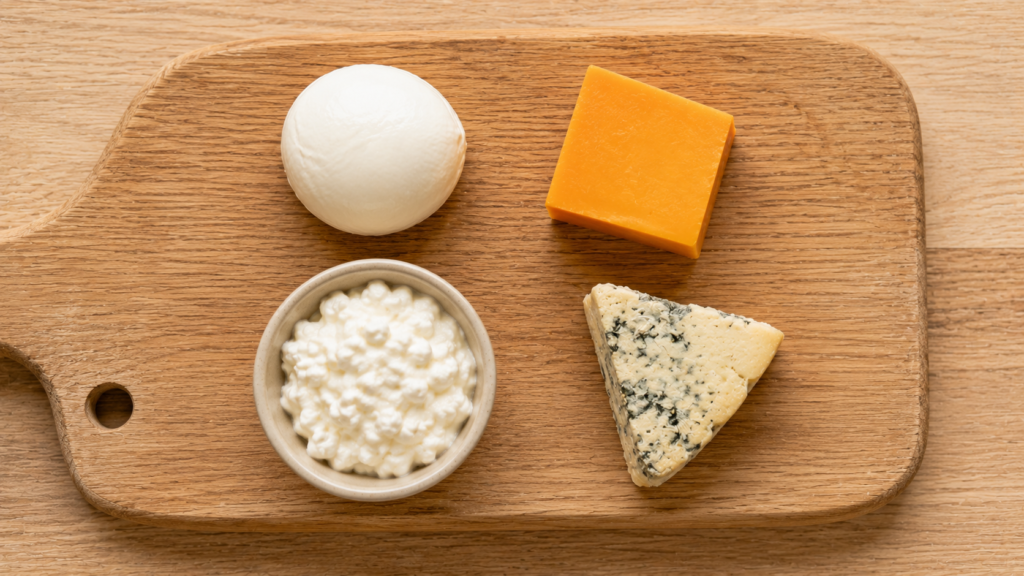
Good choices (low fat, low sodium, plain):
- Mozzarella — low fat, mild flavor, most dogs tolerate it well. Our go-to for training treats.
- Cottage cheese — soft, low fat, easy to digest. Can be mixed into food as a topper.
- Ricotta — similar to cottage cheese, works well as a Kong stuffing.
- String cheese / mozzarella sticks — convenient for cutting into small training treat pieces.
Use sparingly (higher fat):
- Cheddar — fine in very small amounts, but higher fat than mozzarella.
- Swiss / Gouda — moderate fat, occasional treat is okay.
Avoid entirely:
- Blue cheese (Roquefort, Gorgonzola, Stilton) — these contain roquefortine C, a mycotoxin produced by the mold used in their production. Even a small amount can cause vomiting, diarrhea, tremors, and in severe cases, seizures. This is genuinely toxic, not just “too rich.”
- Flavored cheeses — anything with garlic, onion, chives, or herbs. Garlic and onion are toxic to dogs; don’t risk it.
- Brie and Camembert — very high fat, and the rind can cause digestive problems.
Cheese as a Training Treat
This is where cheese genuinely earns its place in a dog owner’s toolkit. Small, smelly, high-value — cheese is one of the most effective training rewards, especially for reluctant learners or new situations that require a stronger motivator.
Tips for using cheese as a training treat:
- Cut into pea-sized pieces — dogs don’t need a lot to get the reward signal
- Use low-fat mozzarella or string cheese to keep the fat intake manageable
- Keep a handful in your pocket for recall training or working on difficult commands
- If your dog is getting a lot of cheese during an intensive training session, reduce their regular meal slightly that day
If you prefer a lower-fat alternative with a similar training reward value, Zuke’s Mini Naturals are what we use when we want all the convenience of cheese without the fat concern — they’re small, smelly, and soft enough that Nuggy can eat them quickly without breaking focus. More training tips in our Basic Obedience Commands guide.
How Much Cheese Can Dogs Have?
Treats — including cheese — should make up no more than 10% of your dog’s daily calorie intake.
As a rough guide:
| Dog size | Max cheese per day |
|---|---|
| Small (< 10 kg) | 1–2 small cubes (~10g) |
| Medium (10–25 kg) | 2–3 cubes (~20g) |
| Large (> 25 kg) | 3–4 cubes (~30g) |
If you’re using cheese heavily in a training session, pull back on other treats that day.
Signs Your Dog Doesn’t Tolerate Cheese
Some dogs are more lactose intolerant than others. Signs usually appear within a few hours of eating dairy:
- Loose stools or diarrhea
- Gas and bloating
- Vomiting
- General stomach discomfort (your dog seems uncomfortable, restless, or off)
If you see these signs consistently after giving cheese, it’s a signal to switch to a non-dairy training treat. One reaction doesn’t automatically mean lifelong intolerance — but repeated reactions do.
The Bottom Line
Cheese is a “yes” — but a conditional one. Plain, low-fat mozzarella or cottage cheese in small amounts is perfectly fine for most dogs and makes an excellent training treat. The cheeses to avoid are blue cheese (genuinely toxic due to mold compounds) and anything flavored with garlic or onion.
Start small with any new cheese variety, watch for digestive reactions, and keep portions modest. Nuggy gets mozzarella as a high-value training reward a few times a week with no issues — just don’t let him see you eating brie.
For a full breakdown of safe and unsafe human foods, see our Foods Dogs Can and Can’t Eat guide.
Frequently Asked Questions
Q: Can dogs eat cheese every day?
A: Small amounts of low-fat cheese daily are unlikely to cause harm in a healthy adult dog with no lactose sensitivity. That said, the high fat content means daily feeding can contribute to weight gain over time. Better as a training treat a few times a week than a daily routine.
Q: Can puppies eat cheese?
A: Yes, in small amounts. Puppies actually digest lactose better than adult dogs, but their stomachs are still sensitive to new foods. Start with a small piece of plain mozzarella and see how they respond.
Q: Is cream cheese safe for dogs?
A: Plain cream cheese in a tiny amount (like stuffed in a Kong) is technically okay but very high in fat. Use sparingly and not regularly. Flavored cream cheese with herbs, garlic, or chives is unsafe.
Q: My dog ate a piece of blue cheese. What should I do?
A: A small accidental nibble is unlikely to cause serious harm, but monitor closely for vomiting, diarrhea, or tremors. If your dog ate a significant amount or shows any neurological symptoms (shaking, muscle twitching), contact your vet.
Q: Is string cheese safe for dogs?
A: Yes — plain mozzarella string cheese is one of the safest options. It’s low fat and easy to tear into small training treat-sized pieces. Just check that it’s plain with no added seasonings.
Q: Can cheese help give a dog medicine?
A: Yes — this is one of the best uses of cheese. A small amount of cream cheese or soft mozzarella can effectively hide a pill. Most dogs swallow it without thinking. Just make sure the cheese doesn’t interact with the medication (your vet can advise if unsure).