
How to Know When to Observe, When to Act, and When to Call the Vet
Most dog parents don’t miss health problems because they don’t care.
They miss them because they don’t know what changes actually matter.
Dogs rarely show pain clearly.
Health issues usually start quietly — small shifts that are easy to explain away.
This article solves one clear problem:
How to recognize early warning signs in your dog — and know exactly what to do next.
Not panic.
Not overreact.
Not ignore it either.
The Real Problem With Most Dog Care Checklists
Most pet care checklists tell you what to check.
They don’t tell you how to decide.
So dog parents are left wondering:
- “Is this normal?”
- “Should I wait?”
- “Am I overreacting?”
This guide gives you a decision framework, not just a list.
For every check, you’ll learn:
- what’s usually normal
- what’s worth monitoring
- when to take action
Daily Dog Health Checklist

Daily checks aren’t about perfection.
They’re about noticing changes over time.
Eating & Drinking
Usually normal:
- skipping one meal but acting normal
- eating slower on hot days
- brief pickiness after treats
Worth monitoring:
- reduced appetite for 24–48 hours
- drinking noticeably more or less than usual
Take action if:
- appetite loss lasts over 48 hours
- appetite change + low energy or vomiting
Call your vet
Movement & Energy
Usually normal:
- slightly lower energy after busy days
- brief stiffness after intense play
Worth monitoring:
- reluctance to jump or climb stairs
- moving slower than usual for more than a day
Take action if:
- limping
- stiffness worsening
- movement changes + behavior change
Vet evaluation recommended
Bathroom Habits
Usually normal:
- slightly softer stool for one day
- brief changes after diet variation
Worth monitoring:
- loose stool lasting more than 24 hours
- mild constipation
Take action if:
- diarrhea persists over 48 hours
- blood in stool
- straining or pain
Contact your vet
Mood & Behavior
Usually normal:
- quieter days after stimulation
- temporary clinginess during routine changes
Worth monitoring:
- increased irritability
- withdrawal
- unusual restlessness
Take action if:
- sudden personality changes
- aggression or confusion
Seek professional guidance
Behavior is often the earliest health signal.
Weekly Dog Care Checklist — Preventive Awareness
Weekly checks help catch slow-building issues.
Full Body Scan
Usually normal:
- small muscle sensitivity after exercise
Worth monitoring:
- new lumps
- tenderness
- swelling
Take action if:
- lump grows
- area is painful or warm
Vet check advised
Eyes, Ears & Nose
Usually normal:
- minimal clear eye discharge
- clean ears without odor
Worth monitoring:
- redness
- mild odor
- head shaking
Take action if:
- strong smell
- discharge
- head tilt
Vet visit needed
Teeth & Mouth
Usually normal:
- mild dog breath
Worth monitoring:
- worsening odor
- red gums
Take action if:
- bleeding gums
- refusal to chew
Dental exam recommended
Skin & Coat
Usually normal:
- seasonal shedding
Worth monitoring:
- dandruff
- increased scratching
Take action if:
- hot spots
- hair loss
Professional assessment
Monthly Dog Health Essentials Checklist
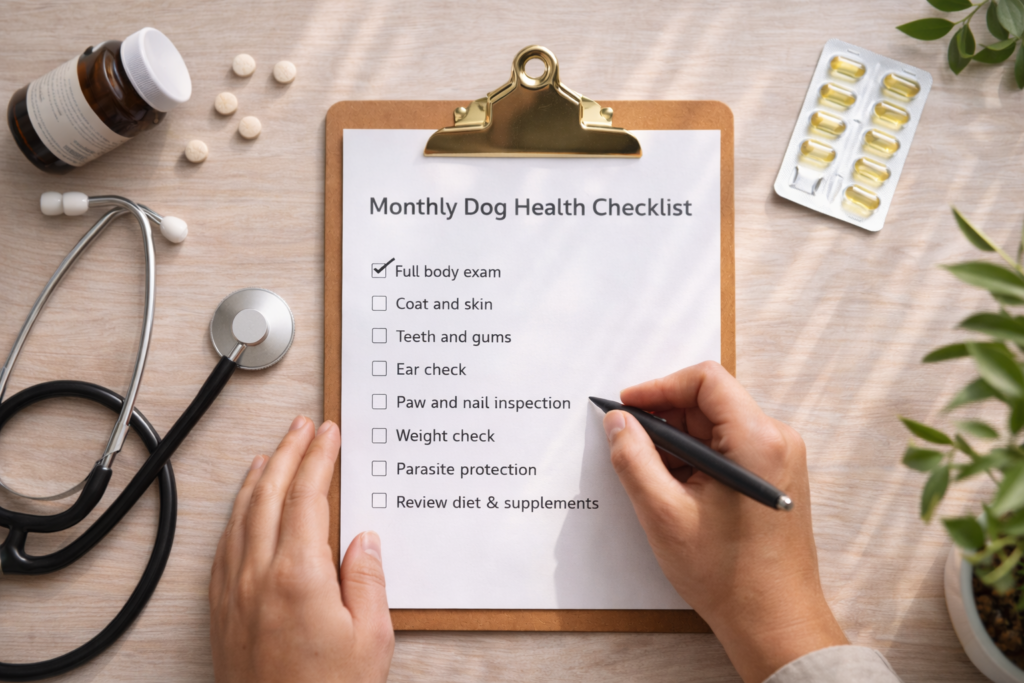
Monthly checks protect you from long-term issues.
Weight & Body Condition
Usually normal:
- minor fluctuations
Worth monitoring:
- gradual weight gain or loss
Take action if:
- rapid weight change
Vet consultation
Preventive Care Review
Ask yourself:
- Are medications consistent?
- Are supplements still needed?
- Has lifestyle changed?
When routines change, health needs change too.
Puppy Care Checklist — Extra Sensitivity Required
Puppies change quickly.
Observe closely if you notice:
- appetite inconsistency
- frequent digestive upset
- sudden fear responses
- energy crashes
Take action sooner rather than later.
Puppy issues escalate faster than adult dog issues.
About Dog Remedies, Meds & Supplements
Dog remedies should solve specific problems, not vague fears.
Before adding anything new:
- what symptom am I addressing?
- what outcome am I expecting?
- how long will I evaluate results?
Never introduce multiple new supplements at once.
The Rule That Simplifies Dog Health Decisions
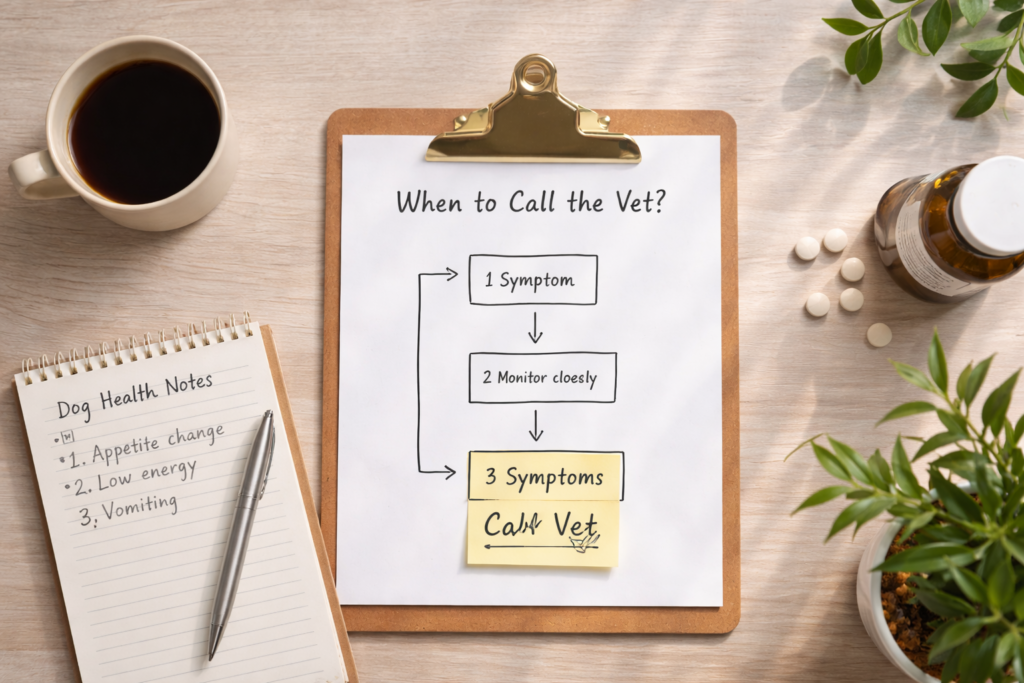
Here’s the single most important principle:
One symptom = observe.
Two symptoms = monitor closely.
Three symptoms = call the vet.
This rule alone prevents:
- unnecessary panic
- dangerous delays
FAQ
How often should I do health checks?
Daily observation, weekly hands-on checks, monthly reviews.
Can this replace veterinary care?
No. It helps you know when veterinary care is needed.
Is this checklist suitable for new dog parents?
Yes. It’s designed to reduce uncertainty.
Should senior dogs follow this checklist?
Absolutely — with closer monitoring.
What if I’m unsure?
When in doubt, consult your vet. Early action is always safer.
Final Thoughts
You don’t need to catch everything.
You need to notice changes and respond appropriately.
A good dog health checklist doesn’t create anxiety.
It creates confidence.
And confident, observant dog parents catch problems earlier — when solutions are easier.