
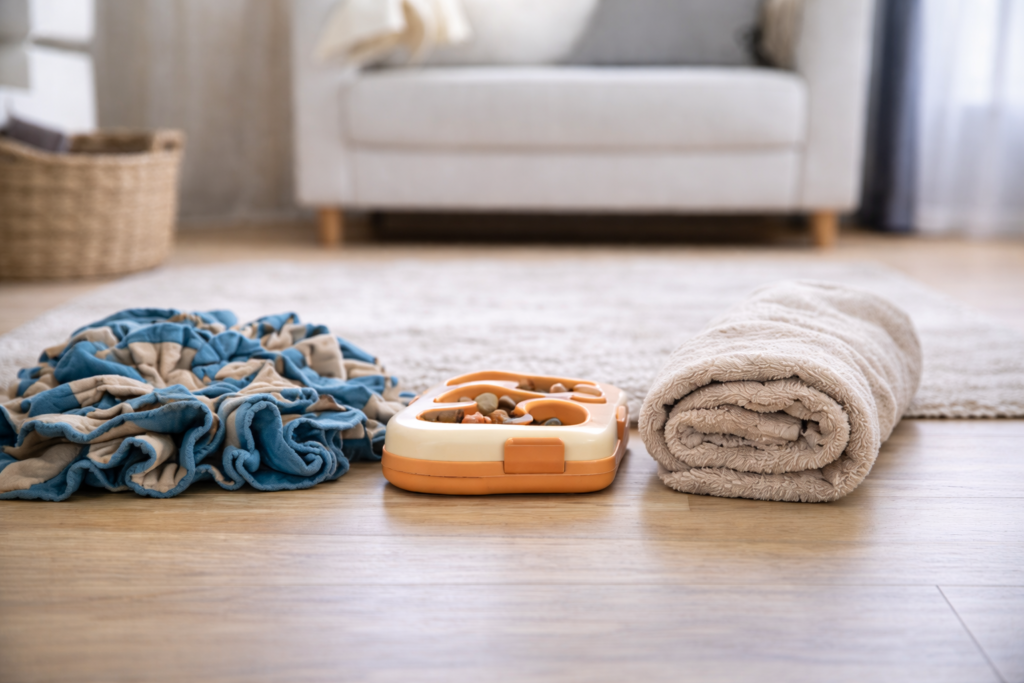
When people look for stimulation for dogs, they usually mean one thing:
“My dog is bored, restless, or destructive — and I don’t know what to do, especially indoors.”
Most advice online focuses on more activity.
But real enrichment isn’t about doing more.
It’s about doing the right kind of stimulation — especially inside the home.
This guide walks you through clear, step-by-step indoor enrichment games you can start today.
What Dog Stimulation Really Means (And What It Doesn’t)
Dog stimulation is not constant entertainment.
Proper stimulation:
- engages the brain
- activates the nose
- satisfies natural instincts
- leads to calm behavior afterward
Poor stimulation:
- creates over-arousal
- leads to zoomies indoors
- makes settling harder, not easier
A well-stimulated dog doesn’t bounce off the walls.
They relax.
Puppy Stimulation vs Adult Dog Stimulation
Puppies
- need short, frequent sessions
- benefit most from nose work and calm problem-solving
- get overstimulated easily
Adult dogs
- can handle longer challenges
- still need balance between activity and decompression
If you’re unsure:
always choose calmer enrichment. You can add difficulty later.
Calm Indoor Enrichment Games (Step-by-Step)
These games work in apartments, small homes, and on low-energy days.
1. “Find It” – The Foundation Scent Game
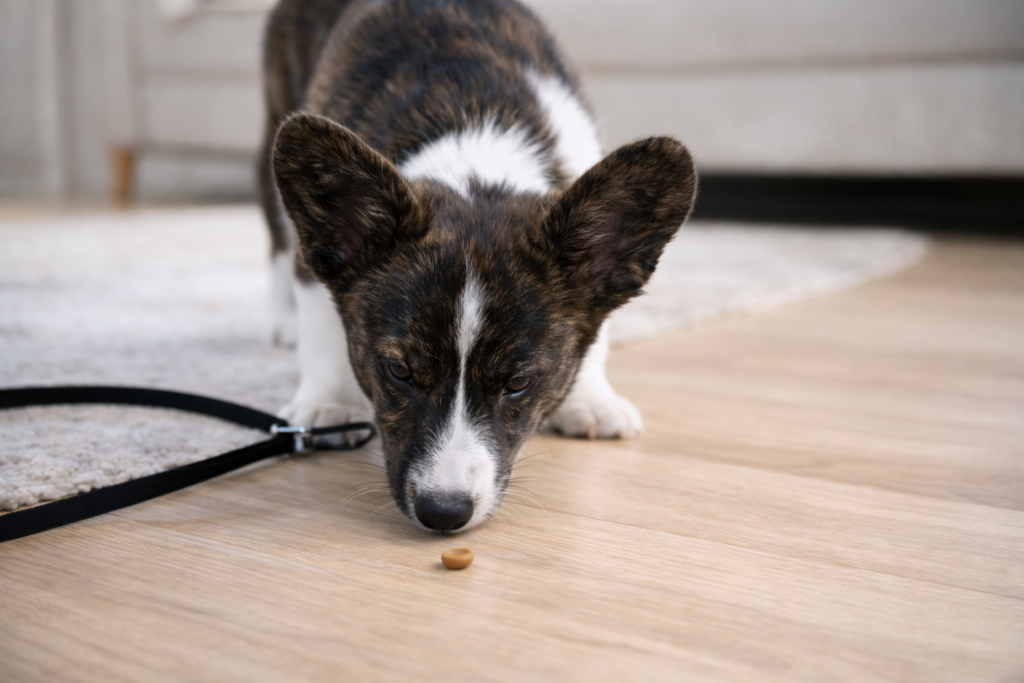
This is one of the most powerful mental stimulation games for dogs and puppies.
What you need
- small treats or kibble
- quiet indoor space
How to do it
- Start with your dog near you.
- Say “Find it” in a calm voice.
- Drop a treat in plain sight on the floor.
- Let your dog walk over and eat it.
- Repeat 3–5 times.
Progression
- Toss the treat a little farther away.
- Place it near furniture legs.
- Hide it lightly behind an object (still easy).
Session length
- 2–5 minutes.
Why it works
Sniffing naturally lowers arousal and engages the brain without hype.
Stop when
Your dog speeds up, loses focus, or starts scanning frantically.
2. Towel Puzzle Game (DIY Mental Stimulation)
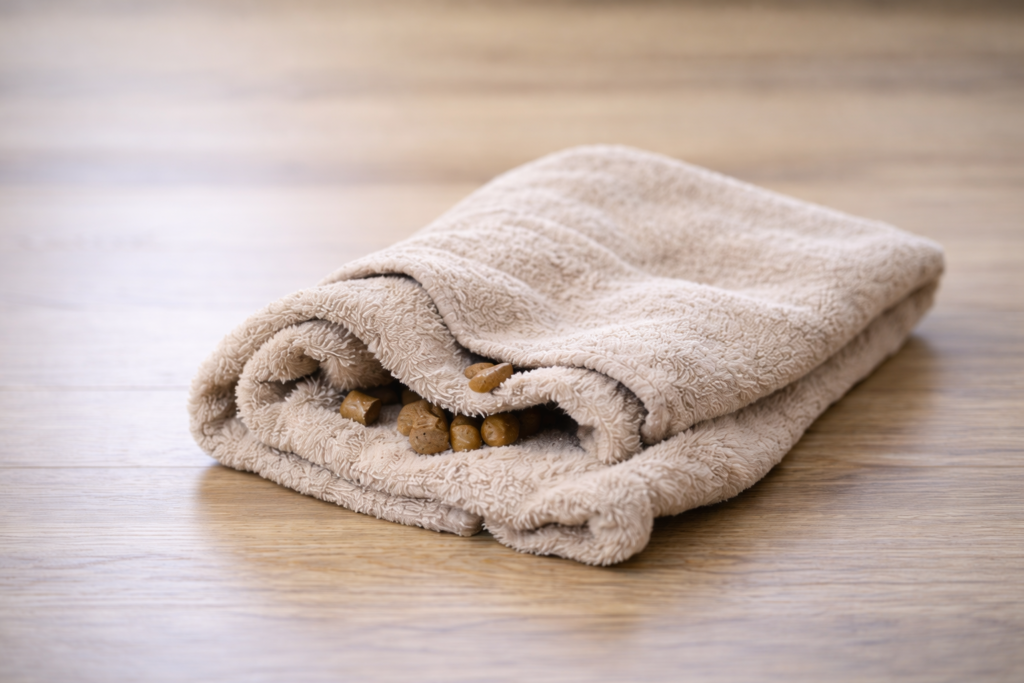
This is simple, effective, and perfect for puppies.
What you need
- one towel
- a few treats
How to do it
- Lay the towel flat.
- Sprinkle treats across it.
- Fold or loosely roll the towel.
- Place it on the floor and step back.
Important
Do not tighten or knot the towel for beginners.
Session length
- 5–10 minutes max.
Why it works
Your dog uses nose, paws, and problem-solving together — a very satisfying combo.
Common mistake
Making it too hard too fast. Frustration defeats enrichment.
3. Muffin Tin Puzzle Game
A classic DIY dog puzzle that encourages thinking, not speed.
What you need
- muffin tin
- tennis balls or dog toys
- treats
How to do it
- Place treats in a few muffin cups.
- Cover them with balls or toys.
- Put the tin on the floor.
- Let your dog figure it out without help.
Session length
- 3–7 minutes.
Why it works
Your dog learns patience, problem-solving, and persistence.
Trainer tip
If your dog gives up immediately, remove some covers and simplify.
4. Calm Settle Game (Teach Your Dog to Relax)
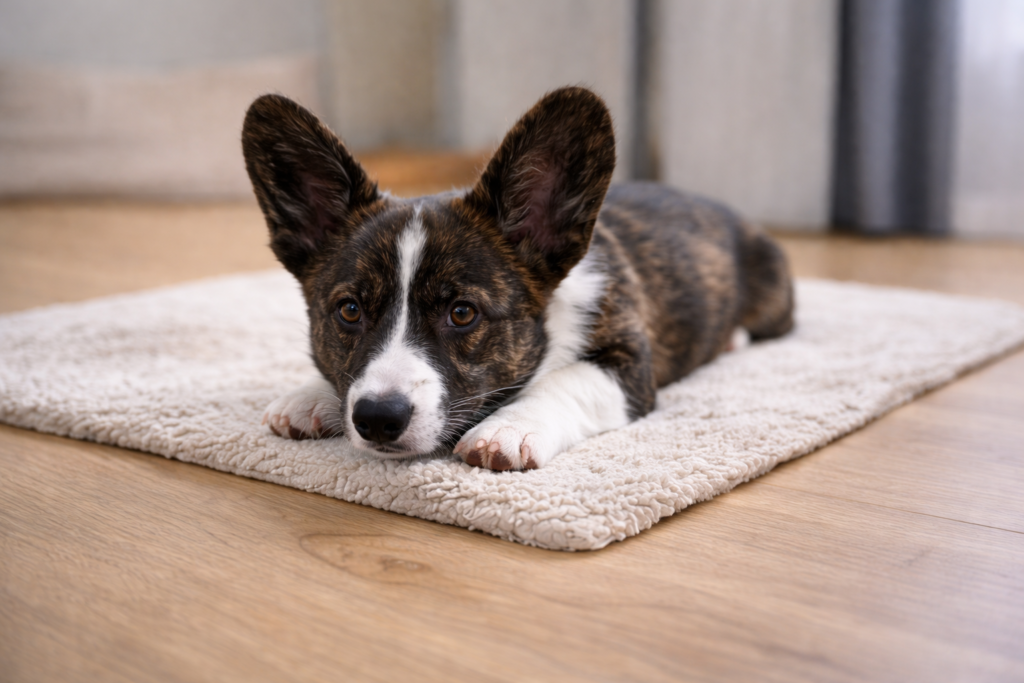
This is not a command. It’s a mindset exercise.
What you need
- a mat, blanket, or bed
- soft treats
How to do it
- Place the mat on the floor.
- Wait silently.
- The moment your dog steps onto it — reward.
- Reward again for:
- sitting
- lying down
- relaxing
- Say nothing. Let calm speak for itself.
Session length
- 2–4 minutes.
Why it works
Dogs learn that calm behavior brings rewards, not chaos.
This is one of the best enrichment games for overstimulated puppies.
Sensory Enrichment Indoors (Often Overlooked)
Dogs experience the world primarily through smell.
Easy sensory ideas:
- rotate safe household scents (cardboard, fabric, wood)
- let your dog sniff new objects calmly
- vary textures under paws (rug, mat, tile)
These activities tire dogs mentally, not physically — which is exactly what most indoor dogs need.
How to Tire Out Your Dog Without Overstimulating Them
A tired dog is not one that ran the longest.
A tired dog is one that used their brain intentionally.
The best routine includes:
- short physical movement
- focused mental work
- calm decompression afterward
Especially important for:
- puppies
- herding breeds
- apartment dogs
- working dogs without a job
Common Indoor Stimulation Mistakes
Avoid these if you want a calm dog:
- constant high-energy games
- chasing toys indoors
- too many toys at once
- sugary treats for enrichment
- overstimulation before bedtime
More stimulation isn’t better.
Better stimulation is better.
FAQ
How long should enrichment sessions be?
Short and focused. Most dogs benefit from 5–15 minutes total.
Is indoor enrichment enough without walks?
It complements walks but doesn’t replace outdoor exploration.
Are DIY dog puzzles safe?
Yes, when supervised and made from safe materials.
What’s the best enrichment for puppies?
Scent games, gentle puzzles, and calm settle exercises.
Can enrichment reduce destructive behavior?
Yes — boredom and frustration are common root causes.
Final Thoughts
Dog enrichment isn’t about filling every minute of your dog’s day.
It’s about meeting their needs in a way that creates balance, not chaos.
When enrichment is done right:
- dogs settle faster
- training improves
- destructive behavior decreases
- life indoors becomes easier
A fulfilled dog doesn’t need nonstop entertainment —
they need intentional, calming stimulation.