
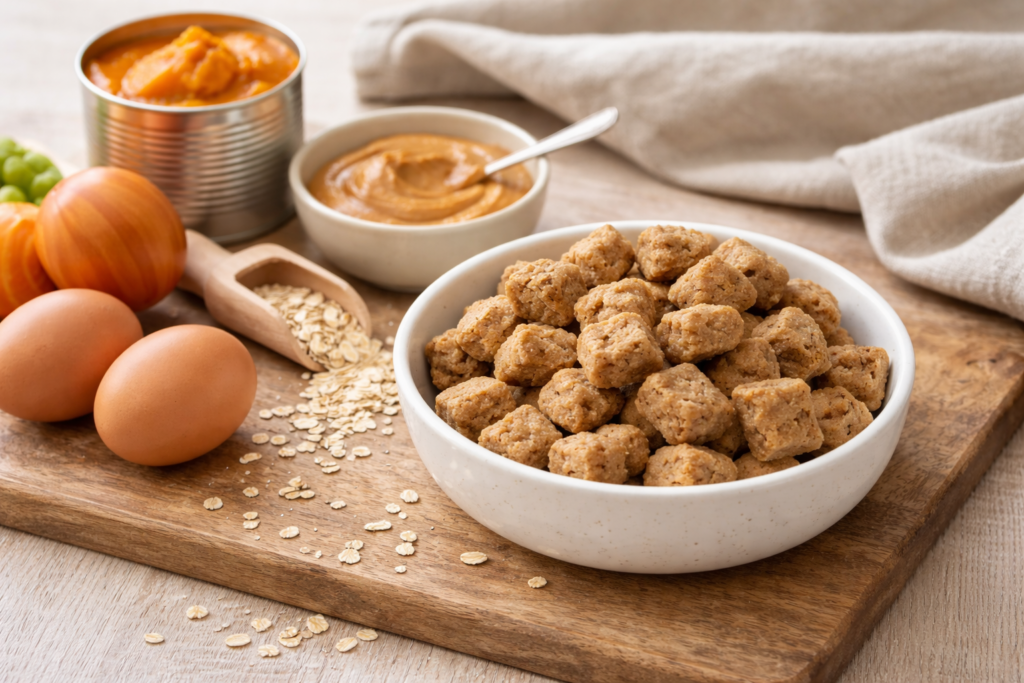
Homemade dog treats can be one of the healthiest and most rewarding choices you make for your dog — if they’re done right.
The problem?
Many “easy dog treat recipes” online skip over ingredient safety, texture, portion control, and purpose. That’s how well-meaning dog parents accidentally create treats that are too hard, too rich, or simply not appropriate for puppies.
This guide focuses on safe homemade dog treats that are:
- easy to make at home
- puppy-friendly
- nutritionally gentle
- perfect for training or daily snacking
No gimmicks. No questionable ingredients. Just recipes that actually make sense.
Why Homemade Dog Treats Are Often Better Than Store-Bought
When done thoughtfully, homemade treats give you full control over what your dog eats.
Key benefits:
- No artificial preservatives or fillers
- Clear ingredient sourcing
- Adjustable texture (soft vs baked)
- Better portion control for training
- Easier digestion for sensitive dogs
Especially for puppies, simple edible dog treats made at home are often easier on the stomach than heavily processed snacks.
What Makes a Dog Treat Truly “Safe”?
Before we talk recipes, safety matters more than flavor.
A safe dog treat should be:
- Made with dog-friendly ingredients only
- Low in sugar, salt, and fat
- Soft enough for puppies (or easy to break)
- Free from xylitol, chocolate, onions, grapes, and artificial sweeteners
Many “dog cookie recipes” fail not because they’re toxic — but because they’re too hard, too rich, or too large.
Easy At-Home Dog Treats: Core Ingredients That Work
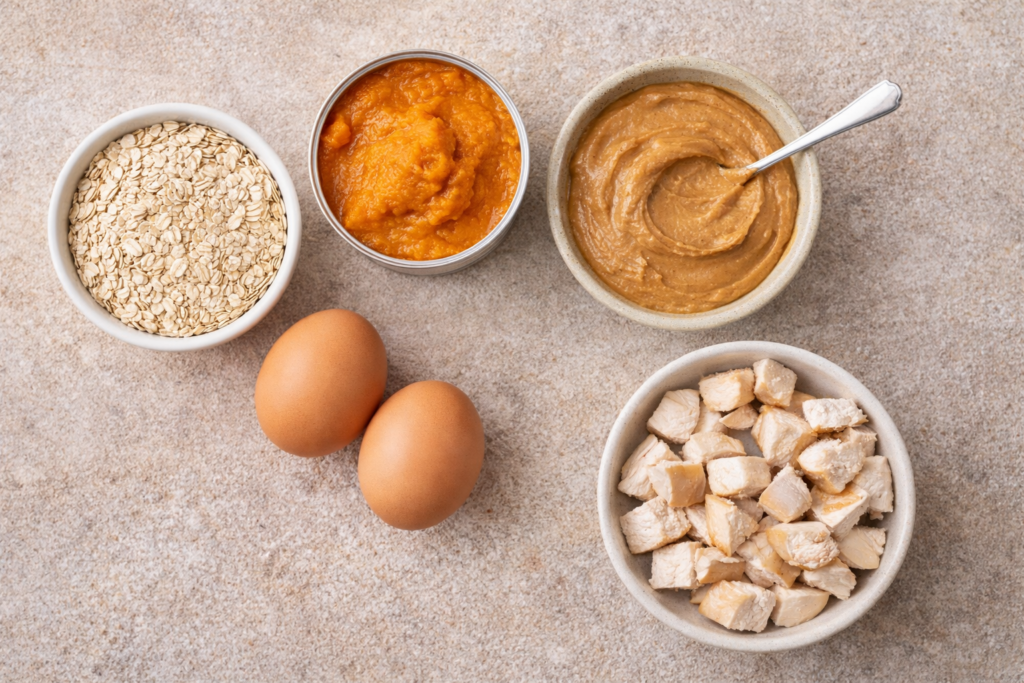
These ingredients appear across the best easy dog snacks and are widely accepted by veterinarians and trainers.
Oats & Oatmeal
Perfect base for oatmeal dog treats (easy & gentle).
Supports digestion and provides slow energy.
Pumpkin (Plain, Unsweetened)
Ideal for healthy pumpkin dog snacks.
Supports gut health and firms stools.
Peanut Butter (Xylitol-Free Only)
Best for soft dog treats homemade peanut butter.
Highly motivating for training sessions.
Plain Chicken (Cooked, Unseasoned)
Great protein source for peanut butter and chicken dog treats.
Avoid skin, seasoning, or oils.
Easy Dog Treat Recipes You Can Make Today
These recipes focus on simplicity, safety, and purpose — not decoration.
Peanut butter treats deserve a closer look.
Peanut butter is one of the most effective ingredients for homemade dog treats — but only when used correctly. Texture, ratios, and ingredient pairing make a huge difference, especially for puppies and training sessions.
If you want specific, proven peanut butter dog treat recipes (including soft treats, baked options, and ultra-simple 3-ingredient versions), we break everything down step by step here:
9 Best Homemade Peanut Butter Dog Treats (Easy, Healthy & 3-Ingredient Friendly)
Looking for more everyday treat ideas?
Not every dog treat needs to be baked or saved for special occasions. Some of the best homemade dog treats are simple, flexible, and easy to make with ingredients you already have at home.
If you’re building a regular routine and want more simple, safe, everyday dog treat recipes, you’ll find a full collection here:
10 Simple Homemade Dog Treats You Can Make Any Day
Soft Peanut Butter Training Treats
Perfect for puppies and focused training
Why this works:
Soft texture, high motivation, easy to portion.
Best for:
- Puppy training
- Short reward cycles
- Dogs with sensitive teeth
This style of peanut butter dog training treats is especially effective when broken into pea-sized rewards.
Oat & Pumpkin Dog Treats
Gentle, baked treats for everyday use
Why this works:
Pumpkin + oats = digestion-friendly and filling.
Best for:
- Daily snacks
- Sensitive stomachs
- Dogs prone to loose stools
These are classic baked dog treats recipes pumpkin lovers trust.
Homemade Puppy Treats (Extra Soft)
Designed specifically for young dogs
Why this matters:
Puppies need soft, low-impact treats that don’t interrupt learning.
Best for:
- Puppies under 1 year
- Early obedience training
- Teething stages
Most homemade puppy treats recipes should prioritize texture over crunch.
Baked vs Soft Dog Treats: Which Is Better?
| Treat Type | Best For | Notes |
|---|---|---|
| Soft treats | Training | Easy to chew, high engagement |
| Baked treats | Snacking | Longer shelf life |
| Very hard cookies | Avoid | Risky for puppies |
Many dog cookie recipes easy versions online bake treats too long. Slightly under-baked is usually safer.
Common Homemade Dog Treat Mistakes
Even healthy recipes can backfire.
Avoid these pitfalls:
- Treats that are too large
- Overusing peanut butter
- Baking until rock-hard
- Feeding human-sized portions
- Ignoring calorie intake during training
Healthy treats still count as calories.
How to Store Homemade Dog Treats Safely
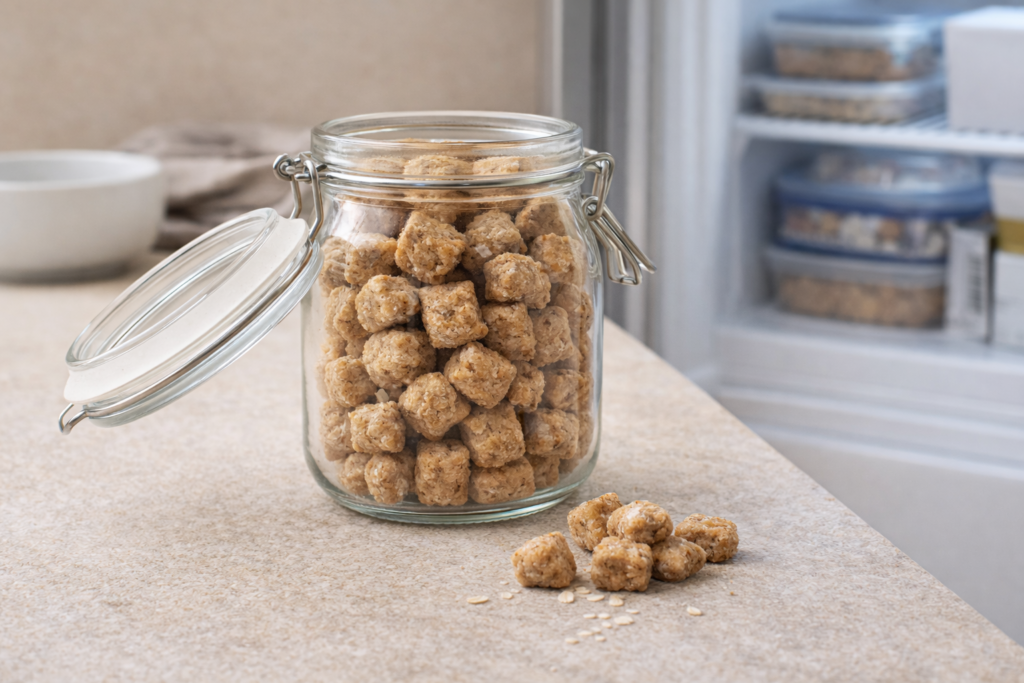
Homemade dog treats don’t contain preservatives, which means proper storage matters just as much as the ingredients themselves.
Soft treats should be stored in an airtight container in the refrigerator and used within a few days. Baked treats last longer but should still be kept sealed and checked regularly for freshness.
For longer storage, most homemade dog treats freeze very well and can be portioned ahead of time to support a consistent daily treat routine.
How Often Should Dogs Get Homemade Treats?
Treats — even healthy ones — should remain supplemental.
A good rule:
- Treats = no more than 10% of daily calories
- Training treats should be tiny and frequent
- Snacks should never replace balanced meals
FAQ
Are homemade dog treats safer than store-bought?
Often yes, if ingredients are chosen carefully and portions are controlled.
Can puppies eat baked dog treats?
Yes, if they are soft enough and not over-baked.
Is peanut butter safe for dogs?
Yes — only if it is xylitol-free.
How long do homemade treats last?
Soft treats: 3–5 days refrigerated.
Baked treats: up to 2 weeks in airtight storage.
Can I freeze homemade dog treats?
Absolutely — freezing works well for pumpkin-based recipes.
Final Thoughts: Simple Treats, Better Results
Homemade dog treats don’t need to be fancy to be effective.
The best dog treats homemade easy recipes share three traits:
- simple ingredients
- clear purpose
- respectful portions
When treats support training, digestion, and trust — they stop being “extras” and become part of a healthy routine.