
Introduction
Winter walks can be magical — crisp air, quiet streets, fresh snow. But for your dog’s paws, winter can be surprisingly harsh. Ice, road salt, and freezing temperatures can cause dryness, cracking, burns, and discomfort.
In this guide, you’ll learn exactly how winter affects dog paws, what to watch for, and simple, effective ways to protect them — without overcomplicating your routine.
Why Winter Is Hard on Your Dog’s Paws
Dogs don’t wear shoes — and their paws are in direct contact with winter hazards.
The biggest winter paw threats:
- Road salt & de-icers → chemical burns and irritation
- Ice & compact snow → cuts, cracks, and ice balls between toes
- Cold air → dryness, chapping, reduced circulation
Even healthy paws can suffer after repeated exposure.
How Road Salt Affects Dog Paws
Road salt doesn’t just dry paws — it can burn them.
Common symptoms:
- Excessive licking after walks
- Redness or swelling
- Cracked pads
- Limping or stopping mid-walk
Some de-icers are also toxic if licked off later.
How Cold Temperatures Damage Paw Pads
Cold weather reduces natural moisture and elasticity.
Dogs may experience:
- Dry, brittle pads
- Small surface cracks that deepen over time
- Increased sensitivity on rough or icy ground
This is especially common in puppies, seniors, and indoor dogs.
How to Protect Your Dog’s Paws in Winter (Step-by-Step)
1. Use a Paw Balm Before Walks
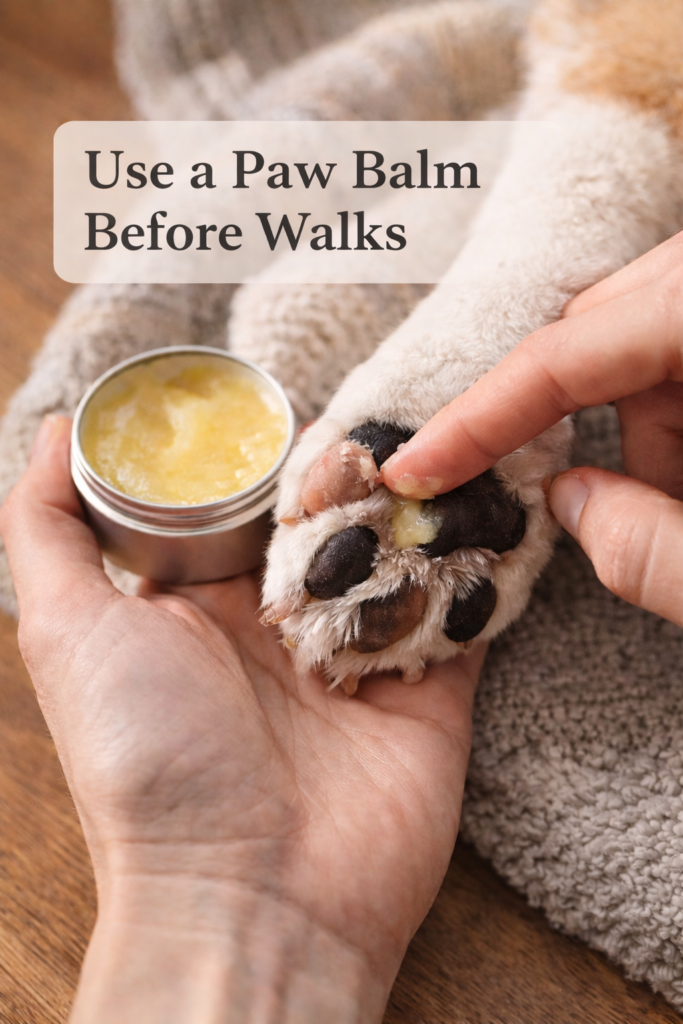
A quality paw balm creates a breathable barrier against salt and ice.
How to use:
Focus on pads and between toes
Apply a thin layer before walks
Best for daily walkers and dogs who hate boots
2. Wipe Paws After Every Walk
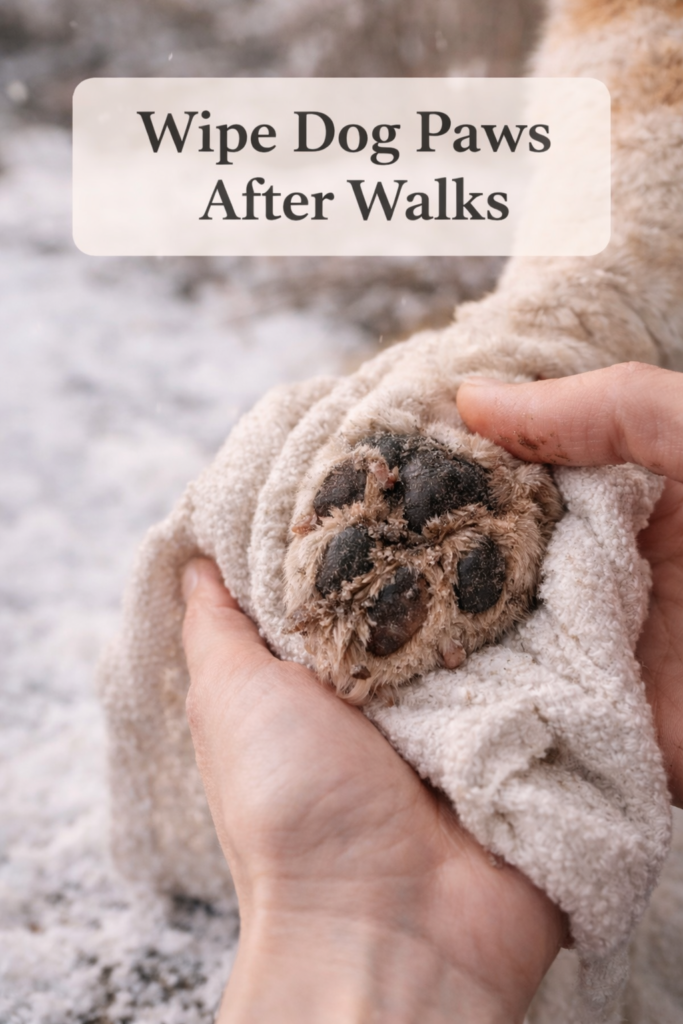
Never let salt sit on paws.
Use:
- Warm water + soft towel
- Or gentle, dog-safe paw wipes
This prevents irritation and stops your dog from licking chemicals indoors.
3. Trim Fur Between Paw Pads
Long fur traps snow and ice.
- Keep fur level with pads
- Prevent painful ice balls
- Improve traction on slippery ground
This is one of the most underrated winter paw-care steps.
4. Consider Dog Boots (When Needed)
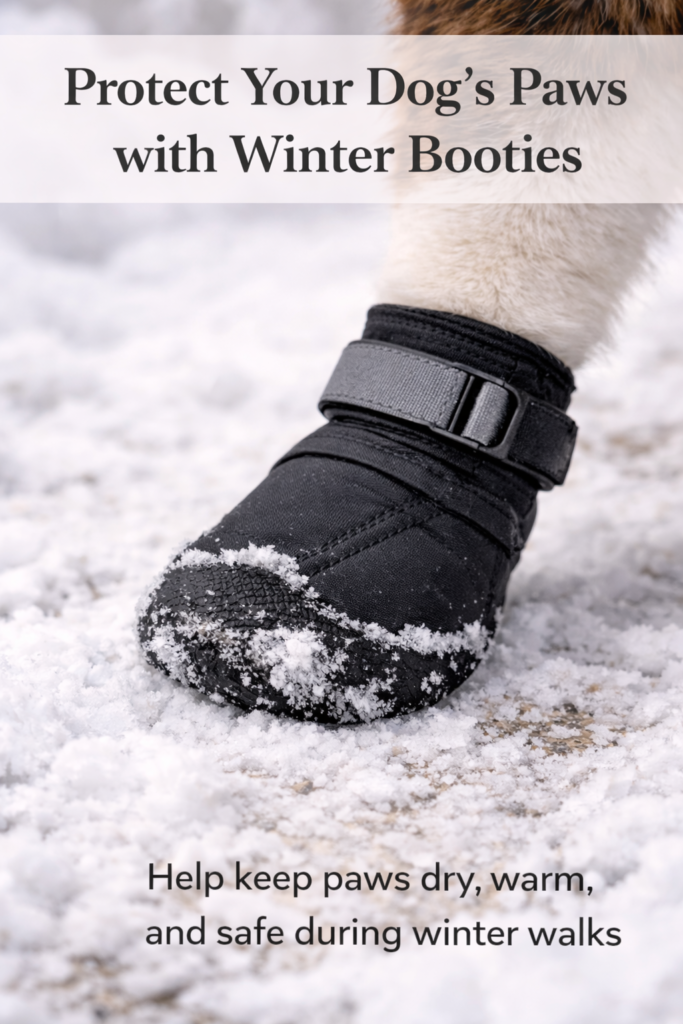
Boots are ideal for:
- Urban areas with heavy salting
- Long winter hikes
- Dogs with sensitive or injured paws
Tip: Practice indoors first to avoid stress.
Signs Your Dog’s Paws Need More Protection
Watch closely if you notice:
- Limping or slowing down
- Licking paws excessively
- Cracks or bleeding
- Refusing to walk on cold surfaces
Early action prevents bigger problems.
Nuggy’s Tips for Raising a Confident Puppy
Consistency matters more than perfection. A quick wipe and balm routine after walks protects paws better than occasional heavy treatments.
FAQ
Do dogs really need paw protection in winter?
Yes — especially in cities or icy conditions.
Is road salt dangerous for dogs?
Yes. It can burn paws and be toxic if ingested.
Can I use human lotion on dog paws?
No. Always use dog-safe products.
How often should I apply paw balm?
Daily during winter walks, especially in cold or salted areas.
Are boots better than balm?
Neither is “better” — they serve different needs and dogs.
Final Thoughts
Winter doesn’t have to mean painful walks or damaged paws. With a little awareness and a few simple habits, you can protect your dog’s paws from salt, ice, and cold all season long. Small steps like wiping paws after walks, using a paw balm, or choosing boots when conditions are harsh can make a real difference in your dog’s comfort and long-term paw health.
Every dog is different, so pay attention to what your dog needs most — and adjust your routine as the weather changes. A few extra minutes of care can help keep winter walks safe, enjoyable, and stress-free for both of you.