
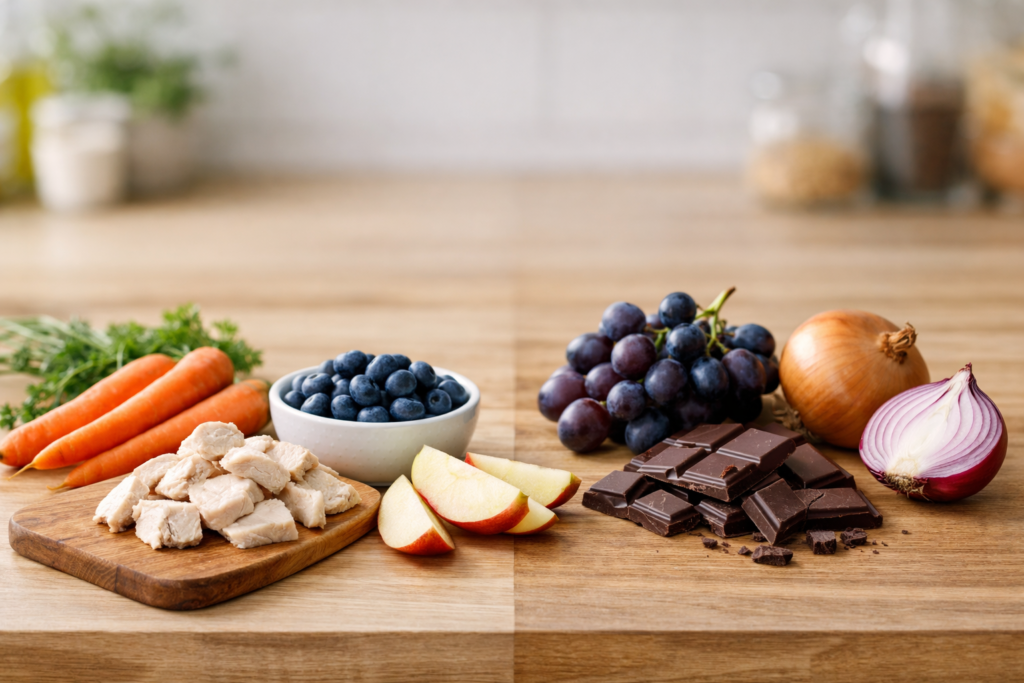
Sharing food is one of the simplest ways we bond with our dogs.
A piece of apple while cooking. A bite of chicken at dinner. A blueberry dropped on the floor.
But when it comes to human food, good intentions don’t always equal safe choices.
Some foods that feel harmless can upset digestion.
Others are dangerous even in small amounts.
You’ll learn:
- which foods dogs can eat safely
- which foods to avoid completely
- and how to make smarter, stress-free decisions when food is involved
Why Human Food Can Be Tricky for Dogs
Dogs digest food differently than we do.
Their bodies aren’t designed for:
- heavy seasoning
- excess fat
- sugar or artificial sweeteners
Even healthy foods can become a problem if served raw, cooked the wrong way, or in large amounts.
The rule isn’t “human food is bad.”
The rule is context, preparation, and portion size matter.
Foods Dogs Can Eat Safely (In Moderation)
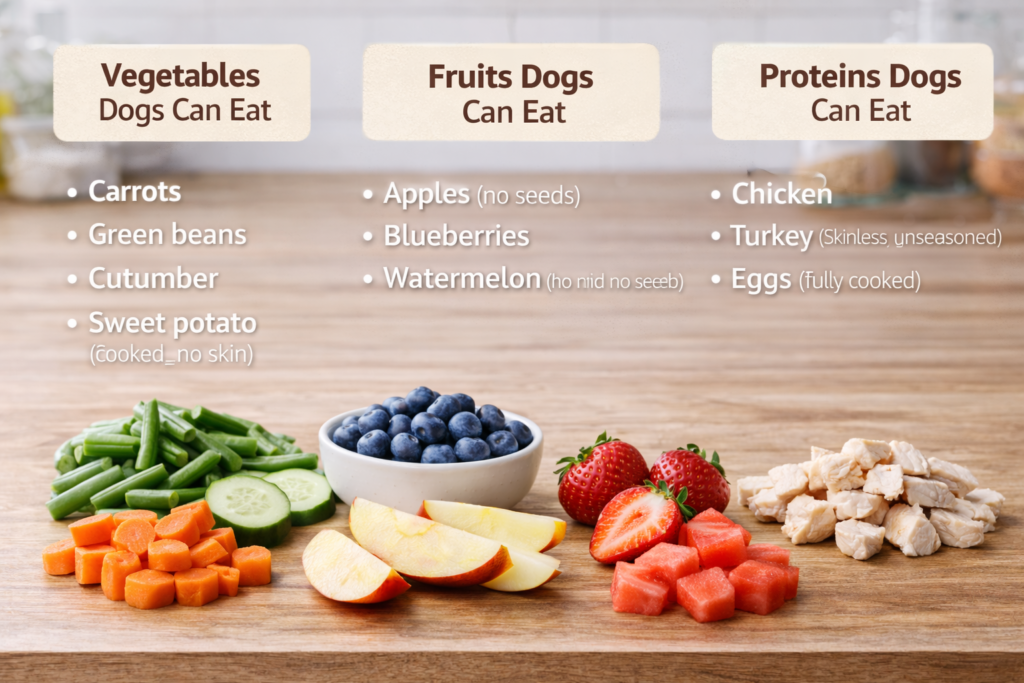
These foods are generally safe when:
- plain
- unseasoned
- served in small portions
Vegetables Dogs Can Eat
- Carrots
- Green beans
- Cucumber
- Sweet potato (cooked, no skin)
Vegetables are great as low-calorie snacks and gentle digestion helpers.
Fruits Dogs Can Eat
- Apples (no seeds)
- Blueberries
- Strawberries
- Watermelon (no rind, no seeds)
Fruit works best as an occasional treat, not a daily habit.
Proteins Dogs Can Eat
- Plain cooked chicken
- Turkey (skinless, unseasoned)
- Eggs (fully cooked)
Protein supports muscles and energy, but fat and seasoning are the real risks.
Foods Dogs Can Eat — With Caution
These foods aren’t toxic, but portion control matters.
- Cheese (lactose sensitivity is common)
- Peanut butter (must be xylitol-free)
- Plain yogurt
- White rice
If your dog has:
- sensitive digestion
- allergies
- recurring stomach issues
these foods may still cause problems.
Foods Dogs Can’t Eat (Avoid Completely)
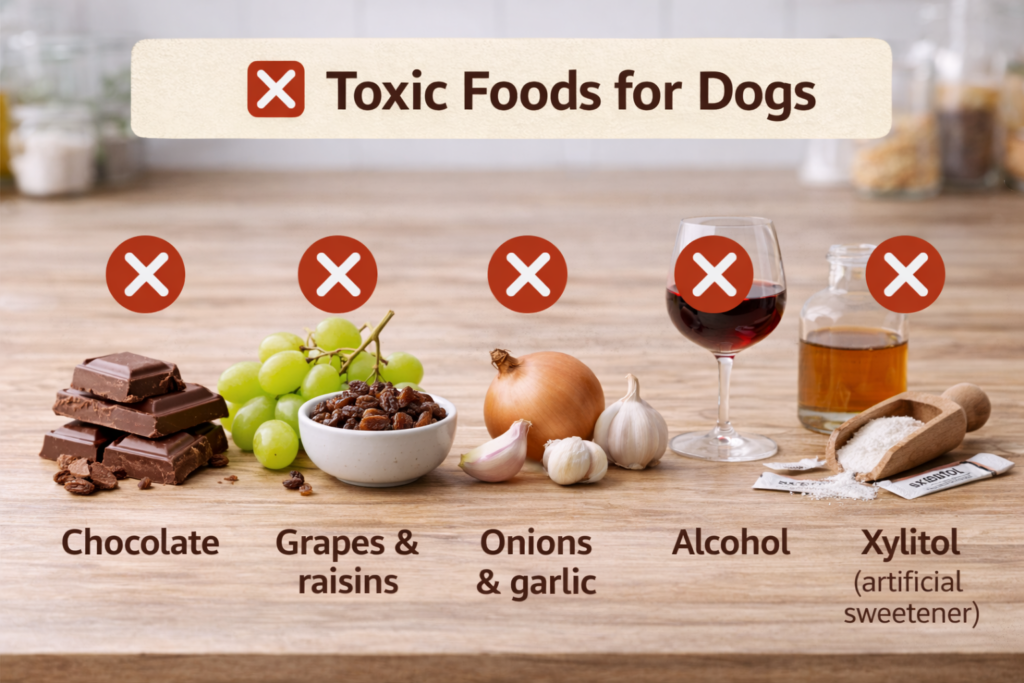
Some foods are dangerous regardless of portion size.
Toxic Foods for Dogs
- Chocolate
- Grapes & raisins
- Onions & garlic
- Alcohol
- Xylitol (artificial sweetener)
Even small amounts can lead to:
- vomiting
- organ damage
- emergency vet visits
If you’re ever unsure — don’t risk it.
Foods Dogs Can’t Eat Chart (Quick Reference)
Safe:
carrots · blueberries · plain chicken · eggs
Unsafe:
chocolate · grapes · onions · garlic · alcohol
This kind of list is worth saving and revisiting — especially in busy households.
Can Dogs Eat Fruit Every Day?
Not usually recommended.
Fruit contains natural sugar, and while it’s healthier than processed treats, too much can still disrupt digestion.
A good guideline:
- small dogs → 1–2 small fruit pieces
- medium dogs → 2–3 pieces
- large dogs → a small handful
Fruit should never replace balanced meals.
What About Puppies?
Puppies have:
- more sensitive stomachs
- developing immune systems
For puppies:
- stick to very small portions
- introduce only one new food at a time
- watch stool consistency carefully
When in doubt, wait until adulthood.
A Calm Rule of Thumb
Before sharing food, ask yourself:
Is it plain?
Is it unseasoned?
Is it necessary?
If the answer isn’t a confident yes — skip it.
Dogs don’t measure love in bites of food.
They feel it in routine, safety, and consistency.
FAQ
Can dogs eat bread?
Plain bread in small amounts is usually safe, but offers little nutritional value.
Can dogs eat rice?
Yes, plain cooked white rice is often used for sensitive stomachs.
Can dogs eat peanut butter?
Only if it’s xylitol-free and given in moderation.
Can dogs eat cheese?
Some dogs tolerate it, others don’t. Start very small.
Can dogs eat leftovers?
Generally not recommended due to seasoning, fat, and unknown ingredients.
Final Thought
Human food doesn’t have to be scary.
It just needs to be intentional.
When you know what’s safe — and what isn’t —
you protect your dog’s health without overthinking every meal.