
Most dog owners don’t hate grooming.
They hate the stress that comes with it.
The stiff body.
The pulling away.
The feeling that one wrong move ruins everything.
What almost no one tells you is this:
Grooming doesn’t fail because of bad tools.
It fails because the dog’s nervous system isn’t ready.
This article will change how you think about grooming — and give you a calm, repeatable routine that actually works at home, even if your dog has struggled before.
The Grooming Myth That Creates Stress
Most grooming advice focuses on:
- tools
- steps
- schedules
- charts
But grooming resistance almost never starts with the brush.
It starts with how grooming feels to the dog’s body.
Here’s the uncomfortable truth:
Dogs don’t resist grooming because it’s uncomfortable.
They resist because they don’t trust how long it will last.
Uncertainty is the real stressor.
The One Concept That Changes Everything: Grooming Threshold
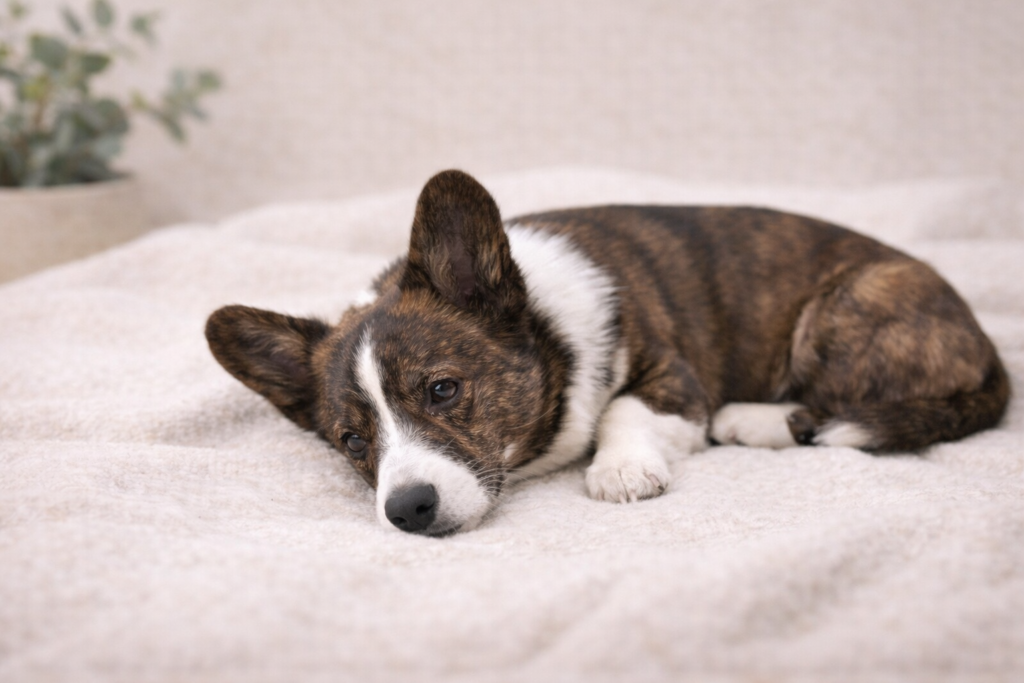
Every dog has a grooming threshold.
This is the invisible line between:
- I’m okay
- I need this to stop
Most owners accidentally cross that line — and then wonder why grooming gets harder next time.
The rule professional trainers use:
Never groom past the threshold. Ever.
Not once.
Not “just to finish this spot.”
Not “because we’re almost done.”
Why?
Because dogs don’t remember how grooming started.
They remember how it ended.
Why Ending Early Builds More Tolerance (Counterintuitive but Proven)
Here’s something most grooming guides never explain:
Ending grooming early builds more tolerance than pushing through discomfort.
Why this works:
- The dog learns grooming is predictable
- The nervous system stays regulated
- Trust compounds instead of resets
You’re not training grooming skills.
You’re training emotional safety.
The Calm Grooming Formula (What to Actually Do)
This routine works for beginners, anxious dogs, puppies, and adults.
Step 1: Groom Only When the Nervous System Is Low
The best grooming moments are:
- after a walk
- after play
- after rest
- when your dog is already calm
Avoid grooming:
- before walks
- when excited
- when hungry
- when overstimulated
Timing matters more than technique.
Step 2: Micro-Sessions Beat Full Sessions
Forget full grooming sessions.
Start with:
- 2–4 minutes
- one area only
- stop before resistance
Your goal is not “finish grooming.”
Your goal is finish calm.
This is the difference between:
- grooming that improves over weeks
- grooming that resets every time
Step 3: Use a Predictable Order (Dogs Love Patterns)
Dogs relax faster when they know what’s coming.
Use the same order every time:
- Brush
- Quick visual check
- Stop
No surprises.
No switching tools mid-session.
No extending “just a bit more.”
Predictability = safety.
The Hidden Mistake: Grooming Too Perfectly
Many owners groom too thoroughly.
They aim for:
- every tangle
- every paw
- every spot
This creates:
- longer sessions
- loss of trust
- future resistance
Partial grooming done calmly is always better than perfect grooming done stressfully.
Always.
How Often Should You Groom at Home?
This surprises most people.
Better than one long session:
- several short, boring sessions
General guideline:
- brushing: 2–4× per week
- nails: small trims every 2–3 weeks
- bathing: every 4–8 weeks (or as needed)
Frequency builds familiarity.
Length builds resistance.
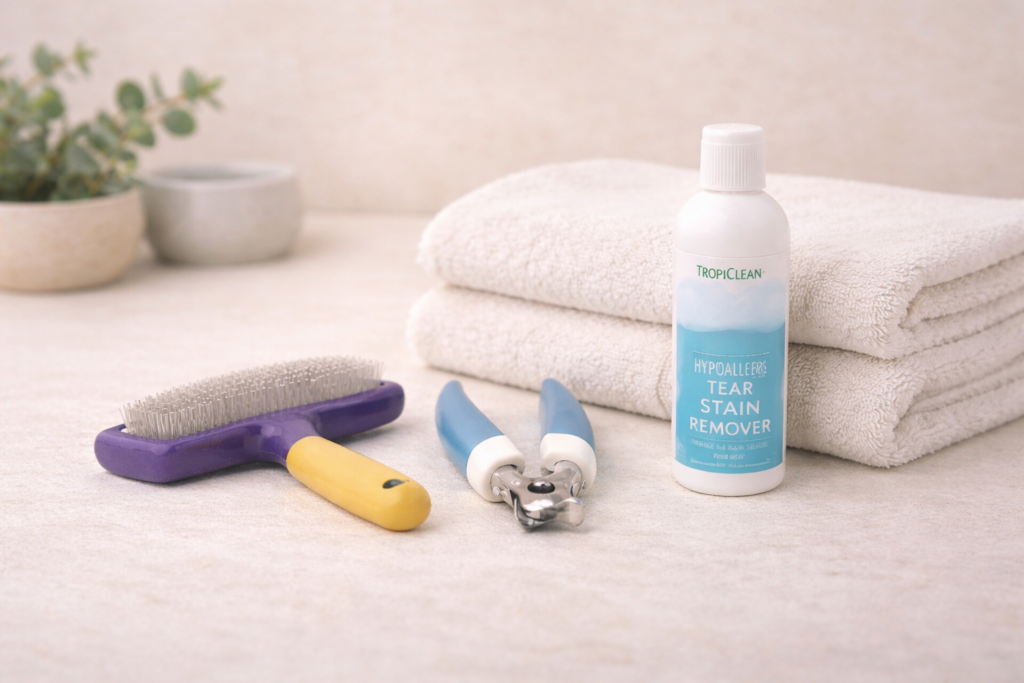
Grooming Tools for Beginners (Less Is More)
You do not need a full DIY grooming station.
Start with:
- one gentle brush matched to coat type
- a towel or non-slip surface
- dog-safe shampoo (only for baths)
Add tools only after your dog is calm with the routine.
Buying tools before trust is built almost always backfires.
When Home Grooming Isn’t the Right Choice
Home grooming is great for:
- maintenance
- routine
- trust-building
A professional groomer is better for:
- severe matting
- breed-specific cuts
- dogs with deep grooming trauma
Choosing help is responsible — not a failure.
The Shift That Changes Grooming Forever
Most owners ask:
“How do I get my dog to tolerate grooming?”
The better question is:
“How do I make grooming emotionally safe?”
Once grooming feels safe, tolerance grows naturally.
No force.
No battles.
No dread.
FAQ
How do I groom my dog at home for the first time?
Start with brushing only. Keep it under five minutes. Stop early.
What if my dog hates grooming?
You’re likely crossing the threshold. Shorten sessions and end sooner.
Is DIY dog grooming safe?
Yes — when done calmly, gradually, and without pressure.
Do puppies need grooming routines?
Absolutely. Early, calm exposure prevents future stress.
How long before grooming gets easier?
Most dogs show improvement within 2–3 weeks of calm consistency.
Final Thought
Dog grooming at home isn’t about control.
It’s about trust, predictability, and restraint.
When you respect the dog’s nervous system, grooming stops being a fight — and becomes just another calm part of life.