
If your dog seems restless, destructive, or glued to you for attention, boredom is often the real issue.
The good news? You don’t need expensive gadgets or constant entertainment.
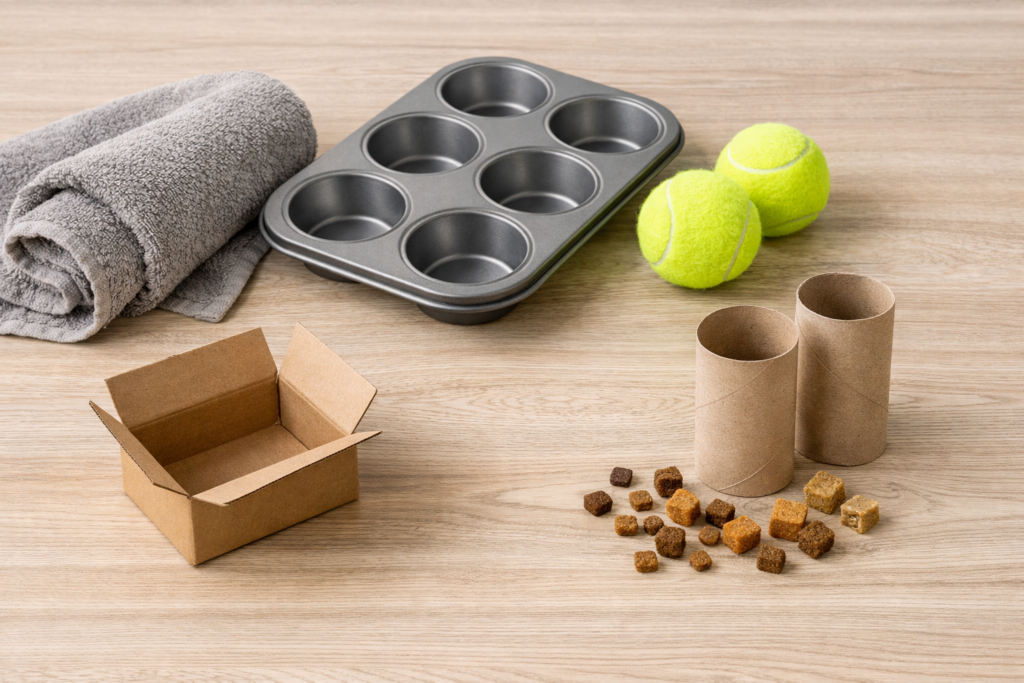
With a few household items and a bit of intention, you can create interactive dog toys that challenge your dog’s brain, slow down eating, and turn quiet time into meaningful enrichment.
This guide breaks down why boredom happens, how interactive toys help, and exactly how to make safe, effective DIY dog toys at home—step by step.
Some links in this article may be affiliate links. This means we may earn a small commission if you choose to make a purchase — at no extra cost to you. We only recommend products we believe genuinely support calm, safe, and enriching experiences for dogs.
Why Boredom Is a Bigger Problem Than Most Owners Realize
Dogs were bred to do things:
track, problem-solve, forage, observe, and interact with their environment.
When those needs aren’t met, boredom shows up as:
- chewing furniture or shoes
- excessive barking or whining
- pacing or restlessness
- attention-seeking behaviors
- sudden “bad behavior” indoors
Physical exercise alone isn’t enough.
Mental stimulation is what truly tires a dog out.
What Makes a Dog Toy “Interactive”?
An interactive dog toy does at least one of these:
- requires problem-solving
- rewards patience and persistence
- slows down fast eaters
- mimics natural foraging behavior
DIY toys work especially well because:
- they’re novel
- they engage smell + touch
- you can adjust difficulty easily
Safety First (Please Read Before Starting)
Before any DIY toy session:
- Supervise the first few uses
- Remove toys once treats are gone
- Avoid materials that splinter or tear easily
- Skip rubber bands, string, or sharp edges
- If your dog is a heavy chewer, use these toys only under supervision
Enrichment should reduce stress, not create risk.
8 DIY Interactive Dog Toys You Can Make Today
1. The Towel Treat Roll (Beginner Favorite)
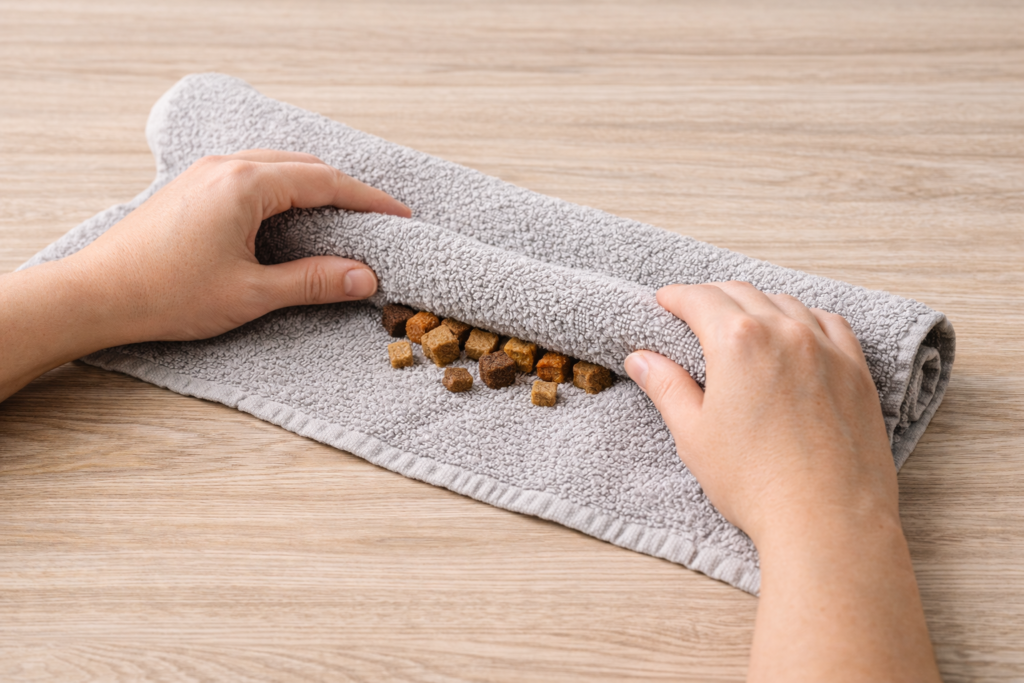
Best for: puppies, seniors, first-time enrichment
How to make it:
- Lay a towel flat
- Sprinkle treats along the length
- Roll tightly
- Twist ends or loosely knot
Why it works:
Encourages sniffing and gentle problem-solving.
Difficulty: ★☆☆☆☆
2. Muffin Tin Puzzle
Best for: fast eaters, food-motivated dogs
What you need:
- muffin tin
- tennis balls or dog-safe balls
How to use:
- Place treats in some cups
- Cover each cup with a ball
- Let your dog figure it out
Why it works:
Forces your dog to slow down and use paws + nose.
Difficulty: ★★☆☆☆
3. Cardboard Box Treasure Hunt
Best for: curious dogs, rainy days
How to make it:
- Put treats in small boxes
- Place boxes inside a larger one
- Close loosely (no tape required)
Why it works:
Simulates natural foraging and shredding instincts.
Difficulty: ★★☆☆☆
4. Frozen Enrichment Block
Best for: hot days, anxious dogs
What to freeze:
- water or low-sodium broth
- kibble or treats
- safe fruits or veggies
Freeze in a bowl or silicone mold.
Why it works:
Long-lasting, calming, and highly engaging.
Difficulty: ★★★☆☆
5. Snuffle-Style Sock Puzzle
Best for: scent-driven dogs
How to make it:
- Hide treats in socks
- Roll or loosely knot
- Place in a basket or box
Why it works:
Encourages focused sniffing and calm engagement.
Difficulty: ★★★☆☆
6. Bottle Puzzle (Supervised Only)
Best for: confident problem-solvers
How to make it:
- Remove cap and ring
- Cut small holes
- Add kibble
Important:
Use only under supervision and remove once empty.
Difficulty: ★★★☆☆
7. DIY Puzzle Board (Advanced)
Best for: dogs who master basics quickly
Materials:
- cardboard base
- paper cups
- toilet paper rolls
Create layers your dog must move, tip, or lift.
Difficulty: ★★★★☆
8. “Find It” Indoor Game (Zero Materials)
Best for: all dogs
Hide treats around one room and release your dog to search.
Why it works:
Pure mental stimulation with no setup.
Difficulty: Adjustable
How Often Should You Use Interactive Toys?
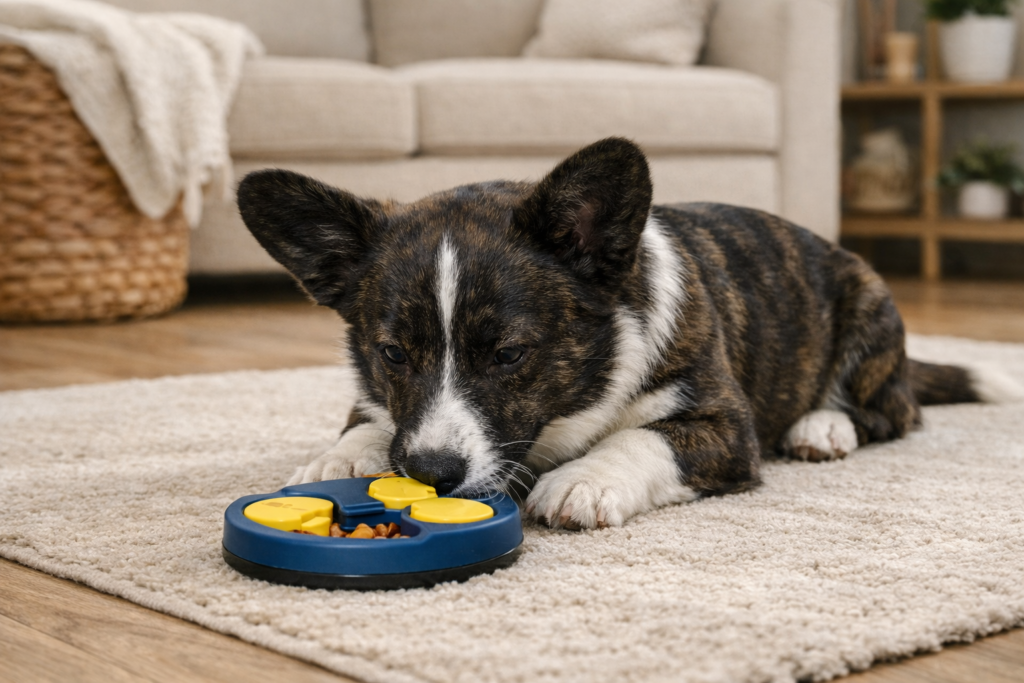
Short and intentional beats long and chaotic.
Ideal rhythm:
- 10–20 minutes per session
- 1–2 times daily
- Rotate toys to keep novelty high
If your dog seems frustrated, lower the difficulty.
If they solve it instantly, increase the challenge.
When DIY Isn’t Enough (And That’s Okay)
DIY enrichment is powerful—but not indestructible.
If your dog:
- destroys toys quickly
- needs longer-lasting challenges
- eats enrichment items too fast
…it may be time to upgrade to purpose-built interactive toys that last longer and offer adjustable difficulty.
DIY enrichment helps you understand how your dog thinks. Once you see whether your dog prefers sniffing, licking, chewing, or layered problem-solving, choosing longer-lasting enrichment tools becomes easier — and far more intentional.
For dogs who move through DIY toys very quickly, durable enrichment toys designed for scent work or slow licking can provide the same mental benefits with more consistency and longevity. To give an example, you can choose from one of there: Snuffle mats or Lick Mats.
FAQ
Are DIY dog toys safe?
Yes, when supervised and made from dog-safe materials.
How long should enrichment sessions last?
10–20 minutes is ideal for most dogs.
Can puppies use these toys?
Yes—start with low difficulty and supervise closely.
Do interactive toys replace walks?
No. They complement physical exercise, not replace it.
What if my dog gets frustrated?
Lower difficulty immediately and help them succeed.
Final Thoughts
A bored dog isn’t a bad dog.
They’re simply under-stimulated.
Interactive play doesn’t need to be expensive or complicated.
With a little creativity, you can turn everyday items into meaningful mental workouts—and a calmer, happier dog at home.