
Short answer
Yes — cheap homemade dog food can be healthy, but only when it’s done with intention and basic nutritional structure.
Many low-cost recipes online focus only on price.
This guide focuses on safety first, then affordability.
You’ll learn:
- when homemade food truly saves money
- what must be included to avoid deficiencies
- how to feed small dogs and puppies safely
- when homemade food is not the right choice
This is not a recipe blog.
It’s a decision and safety guide for real dog owners.
Why people look for cheap homemade dog food
Most owners arrive here for honest reasons:
- rising cost of commercial dog food
- digestive issues or food sensitivities
- desire to control ingredients
- distrust of low-quality kibble
- tighter monthly budgets
All of these are valid.
The problem starts when saving money becomes more important than nutritional completeness.
The real risk of cheap homemade dog food
The biggest danger isn’t using affordable ingredients.
The danger is nutrient imbalance.
Dogs require specific ratios of:
- calcium and phosphorus
- essential vitamins and minerals
- protein, fat, and energy
Most budget recipes online fail because they:
- omit calcium entirely
- rely on vegetables as “complete nutrition”
- rotate ingredients randomly without balance
A dog may appear fine for months — until symptoms show:
- dull coat or hair loss
- low energy
- digestive problems
- joint or bone issues
- growth problems in puppies
Food that leads to health problems later is never truly cheap.
When homemade dog food actually saves money
Homemade food is cost-effective only when structured.
It works best when:
- meals are cooked in batches (3–7 days)
- ingredient lists stay simple and repeatable
- novelty ingredients are avoided
- supplementation replaces guesswork
If you cook daily, constantly change recipes, or skip supplements, costs rise quickly.
Typical monthly cost for a small dog (approximate)
- Low-end kibble: $30–50
- Quality commercial food: $60–90
- Homemade (done correctly): $35–60
Savings come from consistency, not shortcuts.
The 5 non-negotiable rules of cheap but healthy homemade dog food
1. Protein must be the foundation
Affordable, reliable protein sources include:
- ground turkey
- chicken thighs
- lean beef
Protein should form the base of every meal, not a small portion.
2. Carbohydrates are acceptable — with limits
Low-cost carbs can support energy and affordability:
- rice
- oats
- potatoes
They should support protein, not replace it.
3. Vegetables add support, not completeness
Vegetables provide fiber and some micronutrients:
- carrots
- green beans
- zucchini
They do not make a meal nutritionally complete on their own.
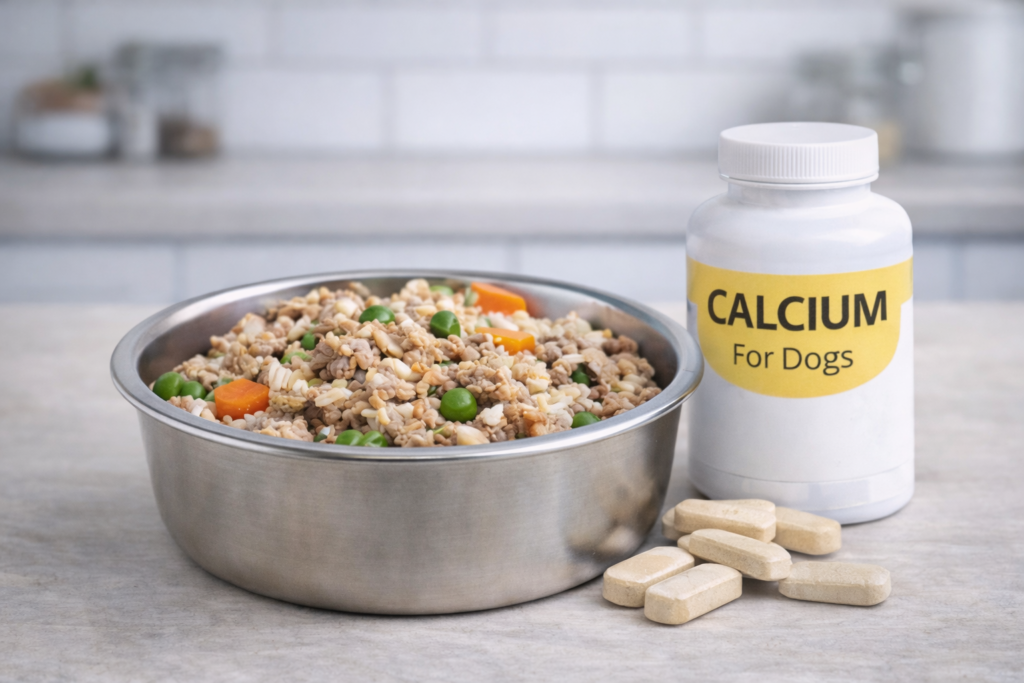
4. Calcium is mandatory — no exceptions
This is the most common and most dangerous mistake.
Meat-based homemade diets must include a calcium source to balance phosphorus.
Without proper calcium:
- bone density suffers
- teeth weaken
- long-term skeletal damage can occur
If you are unsure how calcium is being added, the diet is incomplete.
5. Supplements are cheaper than health problems
A basic, well-chosen supplement is far less expensive than:
- treating deficiencies
- joint problems
- chronic skin or digestive issues
Homemade dog food without supplementation is a gamble — not a plan.
Feeding puppies homemade food: extra responsibility
Puppies are still developing.
Their bones, joints, and organs are highly sensitive to imbalance.
If feeding a puppy homemade food:
- calcium ratios must be precise
- growth must be monitored
- consistency matters more than variety
If budget or confidence is limited, a quality commercial puppy food may be safer.
There is no shame in choosing safety over experimentation.
Signs your homemade diet is working
Positive indicators include:
- steady energy levels
- healthy stool
- shiny coat
- stable weight
Warning signs to stop and reassess:
- persistent diarrhea
- lethargy
- weight loss
- changes in coat or behavior
When in doubt, pause and consult a professional.
Final Thoughts: Is Cheap Homemade Dog Food Worth It?

Cheap homemade dog food can be a responsible, healthy choice —
but only when it’s treated as a system, not a shortcut.
If you’re willing to:
- keep ingredients simple
- cook in batches
- respect nutritional rules
- supplement intentionally
then homemade food can be:
- healthier than low-quality kibble
- easier on digestion
- affordable over time
If you try to:
- skip supplements
- rely on random online recipes
- constantly improvise
you risk harming the very dog you’re trying to help.
The goal isn’t perfection.
The goal is consistency, balance, and safety.
When done right, cheap homemade dog food isn’t about saving money —
it’s about feeding with control, responsibility, and confidence.