Bringing a puppy home often comes with one big question:
“How do I stop bad behavior before it starts?”
The answer is rarely more training, more toys, or more exercise.
In most cases, it’s a calm, predictable daily routine that supports a puppy’s developing nervous system.
This guide walks you through a simple, realistic daily puppy routine that prevents the most common behavior problems — biting, whining, overstimulation, anxiety, and poor sleep — before they become habits.
Why Routine Matters More Than Training
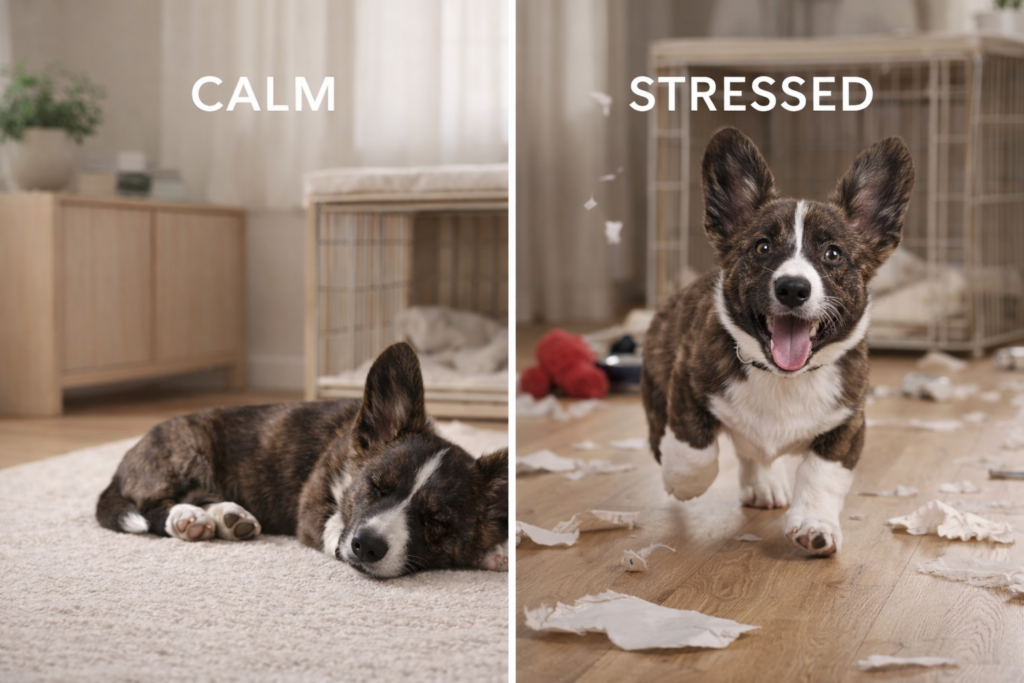
Most puppy behavior issues aren’t disobedience. They’re signs of overload.
Puppies are:
- neurologically immature
- easily overstimulated
- unable to regulate their own arousal or rest
Without structure, they stay “on” for too long. That’s when problems appear.
A well-designed routine provides:
- predictability
- safety
- clear transitions between activity and rest
In short: routine regulates the puppy so behavior can improve naturally.
The Most Common Puppy Behavior Problems (and the Real Cause)
| Behavior | What it looks like | Often caused by |
|---|---|---|
| Biting & nipping | Grabbing hands, clothes | Overtired nervous system |
| Hyperactivity | Zoomies, barking, chaos | Too much stimulation |
| Whining | Especially evenings/nights | Poor rest rhythm |
| Destructive chewing | Shoes, furniture | Unmet rest or chewing needs |
| Separation stress | Crying when alone | Inconsistent daily pattern |
A routine doesn’t suppress behavior — it prevents the internal state that creates it.
A Simple Daily Puppy Routine (That Actually Works)
This routine is intentionally minimal.
It works for:
- first-time puppy owners
- working-from-home households
- apartment or house living
Morning: Start Calm, Not Excited
Goal: Set the emotional tone for the day.
What to do
- Short potty break
- Calm sniff walk (5–10 minutes, no rushing)
- Breakfast through enrichment:
- scatter feeding
- snuffle mat
- gentle hand-feeding with cues
Then:
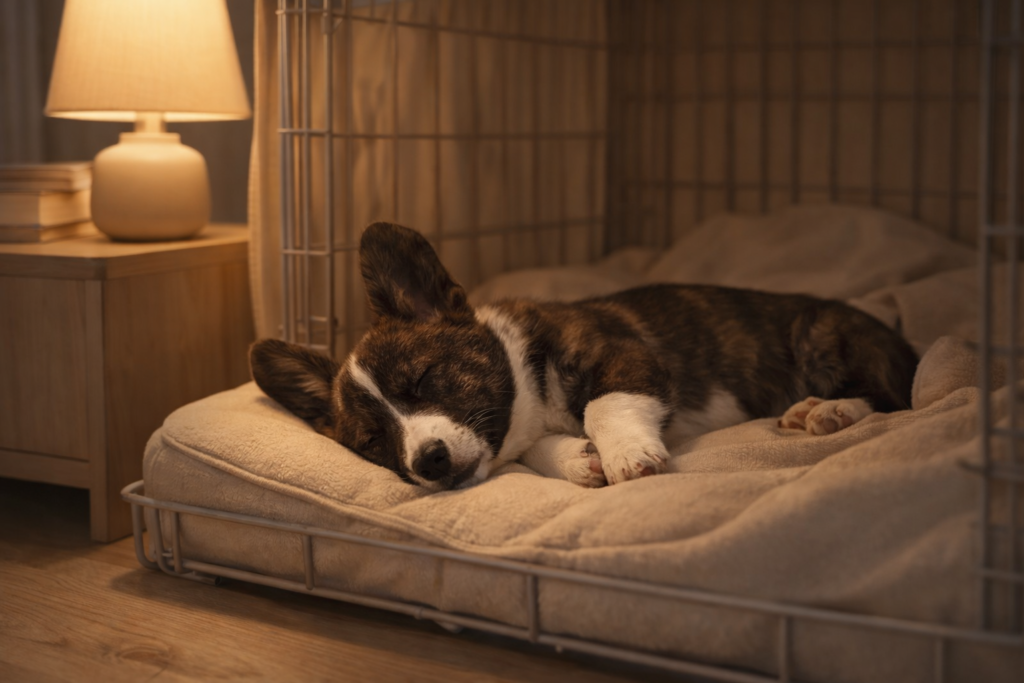
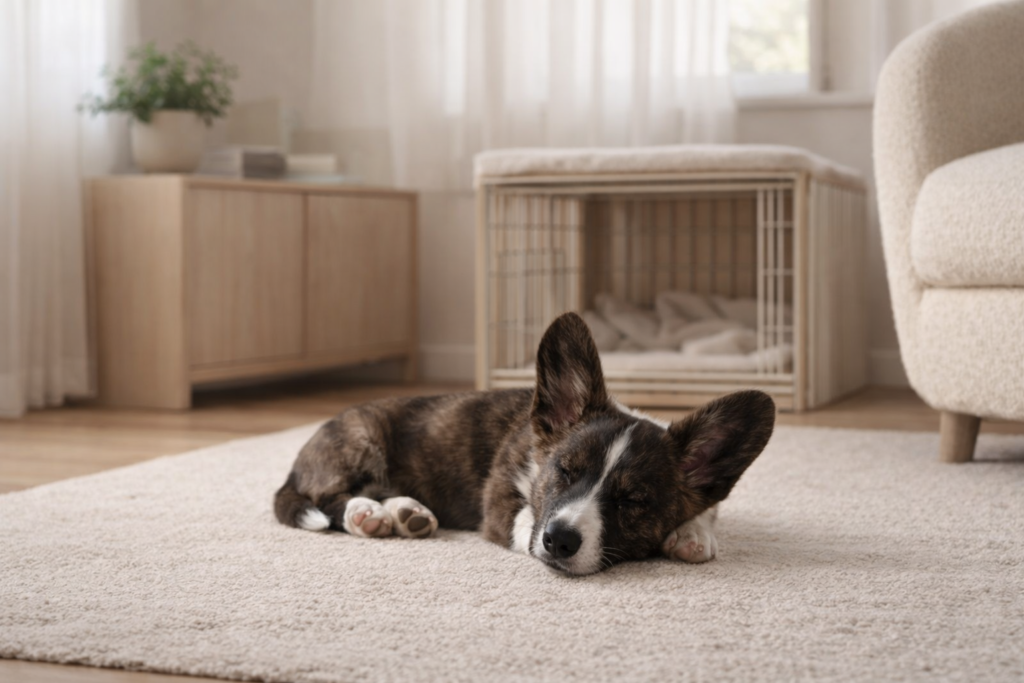
Enforced nap (crate or quiet resting area)
Why this works
Calm input first thing prevents morning overstimulation and sets the nervous system into balance.
Midday: Engage the Brain, Then Rest
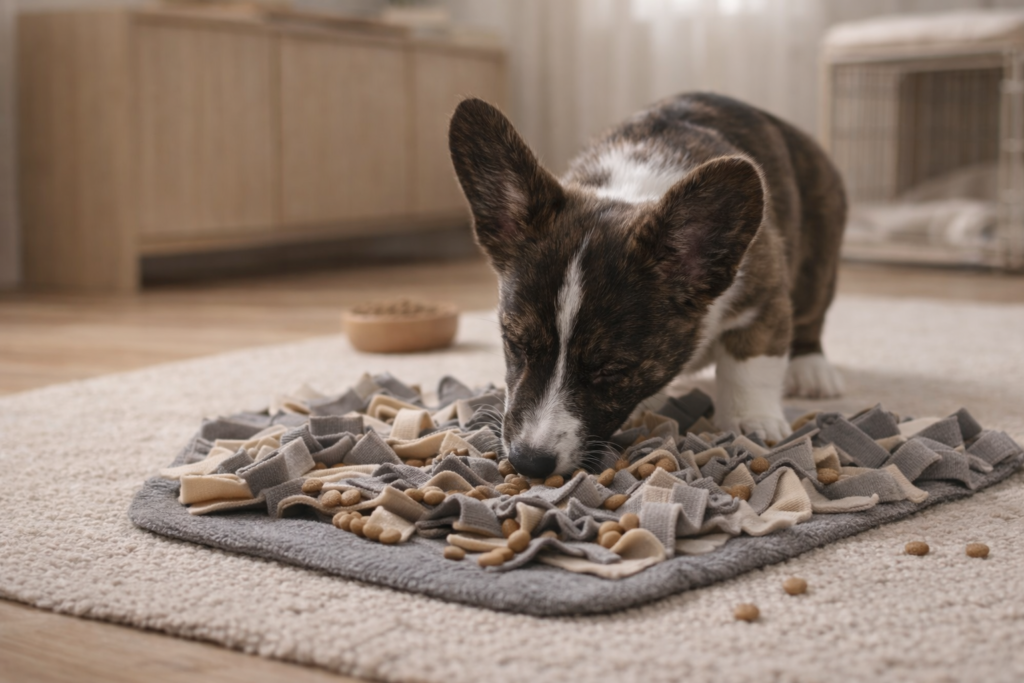
Goal: Fulfill needs without tipping into chaos.
What to do
- Potty break
- 5 minutes of mental work:
- lick mat
- simple puzzle
- basic cues like touch or sit
- Very short play (tug or toy)
Then:
Another nap
Why this works
Mental stimulation satisfies puppies faster than physical exhaustion — and keeps arousal lower.
Afternoon: Protect the Overtired Window
Goal: Avoid the classic “witching hour.”
What to do
- Calm sniff time (yard or slow walk)
- Long-lasting chew (natural chew, frozen Kong)
- Minimal excitement
Then:
Nap again
Why this works
Most afternoon “bad behavior” is simply exhaustion in disguise.
Evening: Wind Down on Purpose
Goal: Prepare the puppy for quality sleep.
What to do
- Quiet potty walk
- Dinner through enrichment
- Gentle interaction only
- Dim lights, reduce noise
Sleep location
- Same spot every night
- Crate or defined sleeping area
Why this works
Evenings should signal safety and calm — not stimulation.
The Most Important Rule Most Owners Miss
Puppies need 18–20 hours of sleep per day.
Yes — even the energetic ones.
If behavior worsens:
- Don’t add more play
- Add more rest
Sleep is not optional. It’s behavior prevention.
How to Know the Routine Is Working
Signs of success:
- Puppy settles faster
- Less biting and jumping
- Easier crate time
- More focus during training
- Better sleep at night
Progress usually appears within 3–7 days of consistency.
Common Routine Mistakes to Avoid
- Treating puppies like small adult dogs
- Over-walking to “tire them out”
- Inconsistent sleep times
- Too much freedom too early
- Excitement right before bedtime
Routine isn’t restrictive — it’s relieving.
How This Routine Evolves as Your Puppy Grows
As your puppy matures, you can:
- extend walks gradually
- increase training duration
- allow more free time in the home
But the core structure remains:
activity → calm → rest
That rhythm builds confident, well-adjusted adult dogs.
FAQ
How often should a puppy nap during the day?
Most puppies need a nap every 1–2 hours of activity to avoid overtired behavior.
Is it better to follow a schedule or a routine?
A routine works better — the order of activities matters more than exact times.
Can too much play cause bad behavior?
Yes. Too much stimulation often leads to biting, whining, and inability to settle.
What’s the most important part of a puppy’s daily routine?
Rest. Quality sleep is the foundation of calm behavior and learning.
How quickly does a routine improve behavior?
Many owners notice improvements within 3–7 days of consistent structure.
Final Thoughts
Good puppy behavior isn’t about control.
It’s about meeting developmental needs before problems appear.
A simple, calm daily routine:
- protects your puppy’s nervous system
- prevents most behavior issues
- makes training easier
- creates a more relaxed household
Consistency beats intensity — every time.