
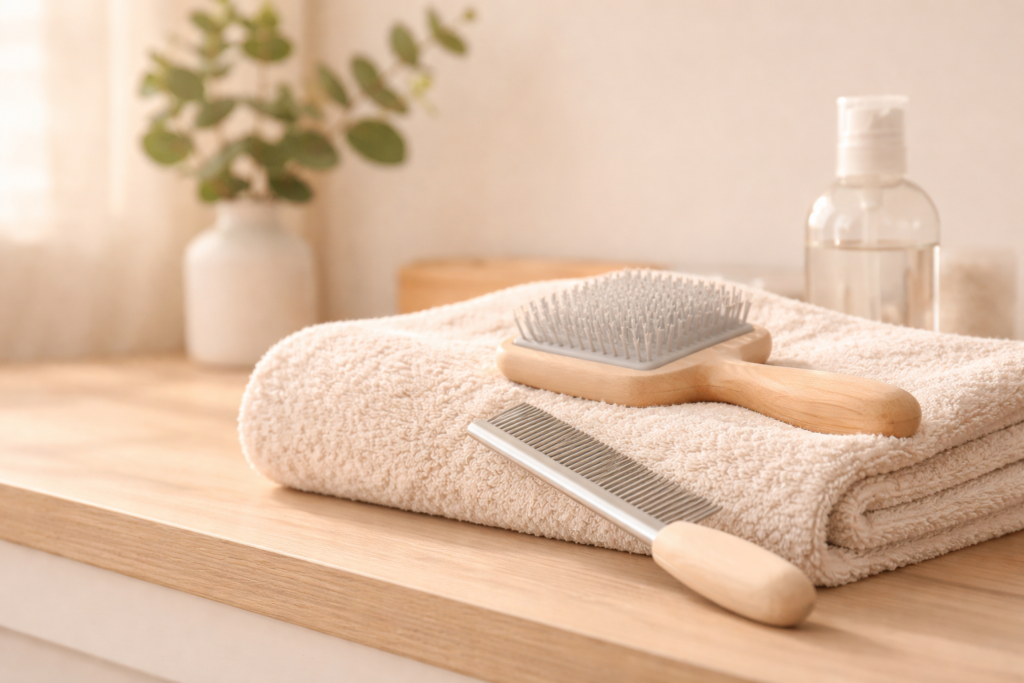
For many dogs, grooming isn’t uncomfortable because of the tools — it’s stressful because of how it feels emotionally.
Slippery floors. Sudden movements. Being restrained. A rushed human standing over them.
If your dog pulls away during brushing, freezes during baths, or panics when you reach for nail clippers, the issue usually isn’t disobedience. It’s lack of emotional safety.
The good news?
A calm, at-home grooming routine can be learned — and once established, it often transforms grooming from a battle into a bonding ritual.
This guide walks you through a gentle, stress-free approach to grooming at home, designed to build trust first and cleanliness second.
Why Many Dogs Hate Grooming (And It’s Not What You Think)
Most dogs don’t dislike grooming because it hurts.
They dislike it because:
- They can’t predict what’s coming
- They feel physically unstable
- They sense human tension or urgency
Grooming becomes stressful when it’s:
- Done only when absolutely necessary
- Rushed to “get it over with”
- Packed with multiple procedures at once
Stress comes from unpredictability, not from brushing itself.
A calm routine removes that uncertainty.
The Core Principle: Grooming Is a Process, Not an Event
Before we talk about brushes, baths, or nails, one mindset shift matters more than anything else:
Grooming should happen more often, but do less each time.
Instead of:
- “Bath + brush + nails + ears in one session”
Think:
- “One calm interaction that ends before stress appears”
This is how trust is built — by ending on a positive note every single time.
Step 1: Set the Environment Before You Touch Your Dog
A calm grooming routine starts before your dog is involved at all.
Focus on:
- Quiet space with minimal distractions
- Non-slip surface (bath mat or thick towel)
- Warm, neutral lighting
- Your own calm state
Dogs mirror human energy.
If you’re rushed, annoyed, or tense, your dog will feel it immediately.
Calm grooming starts with calm humans.
Step 2: Begin With Gentle Contact, Not Tools
Resist the urge to grab the brush right away.
Instead:
- Sit beside your dog
- Use slow, predictable movements
- Start with areas dogs naturally tolerate (chest, shoulders, side)
This stage is about consent and comfort, not grooming results.
If your dog chooses to walk away, let them.
That choice builds trust — and makes future sessions easier.
Step 3: Brushing as a Trust-Building Ritual
When you do introduce brushing:
- Use soft, flexible brushes
- Keep strokes slow and consistent
- Avoid sensitive areas at first (tail, legs, face)
Watch for subtle signals:
- Lip licking
- Turning head away
- Body stiffening
These are signs to pause — not push through.
Stopping early is success, not failure.
Step 4: Bath Time Should Be Rare — and Predictable
Baths are often the most stressful part of grooming, so frequency matters.
For most dogs:
- Baths are needed far less often than owners think
- Spot cleaning is usually enough
When bath time does happen:
- Use lukewarm water
- Avoid spraying directly onto the face
- Massage gently instead of scrubbing
- Keep sessions short
Immediately after:
- Wrap your dog in a warm towel
- Allow quiet decompression time
Comfort after grooming is just as important as the grooming itself.
Step 5: Nail and Paw Care Without Pressure
Nail trimming creates fear quickly when rushed.
A calmer approach:
- Handle paws daily without trimming
- Touch, hold, release — no tools involved
- Reward calm behavior
When trimming:
- One nail per session is enough
- Stop before stress escalates
This builds long-term tolerance instead of short-term compliance.
Step 6: Always End With Something Positive
Every grooming interaction should end with:
- A calm chew
- Gentle massage
- Nap time in a cozy space
This teaches your dog one critical lesson:
Grooming predicts comfort, not confinement.
Over time, anticipation replaces anxiety.
Common Grooming Mistakes That Increase Stress
Even well-meaning owners often:
- Groom only when the dog is already dirty
- Try to “finish everything” in one session
- Ignore early stress signals
- Associate grooming with restraint or correction
The fix isn’t better tools — it’s better pacing.
What a Calm Grooming Routine Looks Like Over Time
With consistency, most owners notice:
- Less resistance to brushing
- More relaxed body language
- Shorter sessions with better results
- Stronger trust overall
Grooming stops being a chore and becomes part of daily care, like feeding or walking.
FAQ
How often should I groom my dog at home?
Most dogs benefit from short, gentle grooming sessions several times per week rather than long, stressful sessions.
How can I groom my dog without causing stress?
Use predictable routines, calm handling, and short sessions to keep grooming stress-free.
Why does my dog get anxious during grooming?
Grooming anxiety is usually caused by past stress, unpredictability, or rushed handling, not the tools themselves.
Can grooming help calm an anxious dog?
Yes. Gentle, consistent grooming routines support emotional regulation and build long-term trust.
Should I stop grooming if my dog resists?
Yes. Stopping early prevents fear from escalating and improves cooperation over time.
Final Thoughts
At-home grooming isn’t about perfection.
It’s about:
- Predictability
- Choice
- Emotional safety
When dogs feel safe, cooperation follows naturally.
And when grooming becomes calm, it stops being something both of you dread — and starts becoming quiet time together.