

This post contains affiliate links. I may earn a small commission if you buy through them, at no extra cost to you.
✅ Yes, dogs can eat watermelon — and most of them love it. It’s hydrating, low in calories, and packed with vitamins. Just remove the seeds and rind before serving.
Quick Answer Box
✅ Watermelon is safe for dogs in moderate amounts.
The flesh is the only part your dog should eat. Remove all seeds (they can cause intestinal blockage) and never let your dog chew the rind (hard to digest and can cause stomach upset). Seedless watermelon is the easiest option.
Intro
Nuggy’s first encounter with watermelon happened on a hot July afternoon — I was eating a slice on the garden step and he parked himself right in front of me, doing his best “I’m literally dying of thirst” impression. I gave him a small piece on impulse, then immediately second-guessed myself.
Turns out, watermelon is one of the safest and most refreshing summer treats you can give a dog. It’s 92% water, low in calories, and has a bunch of vitamins that are genuinely good for them. The catch is in how you serve it — and there are a couple of parts of the watermelon your dog absolutely shouldn’t eat.
Here’s everything you need to know: what makes watermelon good for dogs, what to avoid, how much to give, and a couple of easy ways to make it even more fun for your dog on a hot day.
Is Watermelon Safe for Dogs?
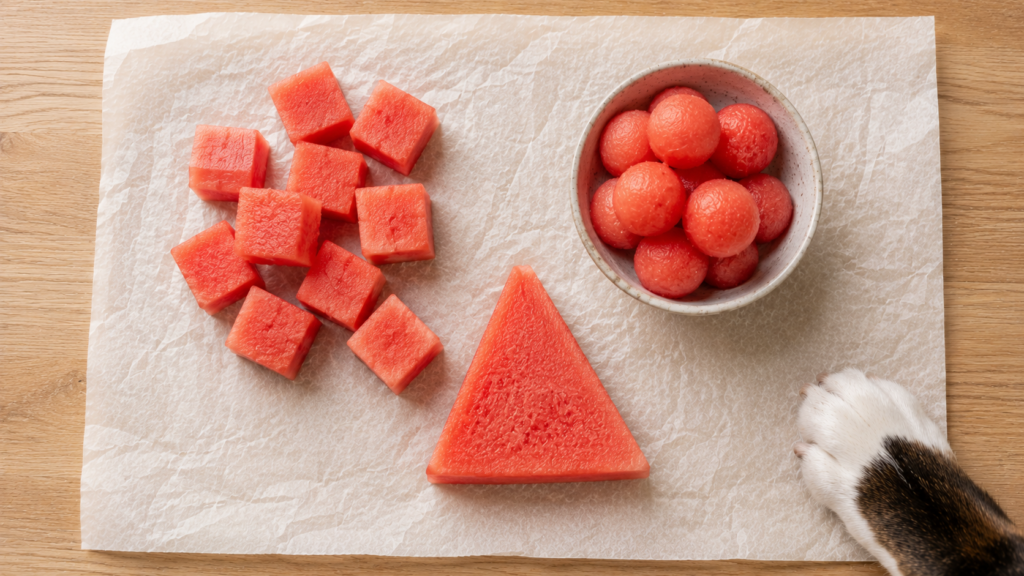
Yes — watermelon flesh is completely safe for dogs and is actually one of the better fruit treats you can offer. It’s 92% water, which makes it naturally hydrating, and it’s low in calories compared to most treats (about 30 calories per 100g).
What’s safe:
- The pink/red flesh — yes, totally fine
- Seedless watermelon — easiest and safest option
What to avoid:
- Seeds — even if your dog swallows a couple accidentally it’s unlikely to be serious, but multiple seeds can cause intestinal blockage, especially in smaller dogs. Always remove them.
- The rind (the white and green outer part) — too tough to digest properly and can cause vomiting, diarrhoea, and stomach cramps. Some dogs will chew it anyway given the chance — don’t let them.
- Flavoured watermelon products — watermelon-flavoured sweets, drinks, or snacks often contain xylitol or artificial sweeteners that are toxic to dogs. Only fresh watermelon.
Benefits of Watermelon for Dogs
Watermelon isn’t just safe — it’s genuinely nutritious for dogs when given in reasonable amounts.
- Hydration — 92% water content makes it one of the best hot-weather treats. Great on summer days when dogs are panting and reluctant to drink enough.
- Vitamin A — supports eye health and immune function.
- Vitamin C — antioxidant that supports the immune system (dogs produce their own vitamin C, but a boost from food doesn’t hurt).
- Vitamin B6 — supports brain health and hormone regulation.
- Lycopene — the compound that makes watermelon red. An antioxidant with potential anti-inflammatory benefits.
- Low calorie — about 30 kcal per 100g, compared to 89 kcal in a banana. Good for dogs watching their weight.
- No fat, no cholesterol — kind to the digestive system and heart.
For a dog that needs extra hydration in summer — or just refuses to drink enough water — a few cubes of watermelon is a much better snack than most commercial treats.
How to Safely Serve Watermelon to Your Dog

The preparation is simple, but it matters. Here’s how to do it right:
Step 1: Remove all seeds.
Even if you’re using seedless watermelon, check for any white seeds hiding in the flesh. Remove them before giving it to your dog.
Step 2: Cut off all the rind.
Leave no white or green on the pieces. Cut down to just the pink flesh.
Step 3: Cut into appropriate pieces.
- Small dogs (under 10kg): small cubes, about 1–2cm
- Medium dogs (10–25kg): 2–3cm cubes, or a thin slice
- Large dogs (25kg+): a slice or a few larger cubes is fine
How much is too much?
| Dog size | Max serving |
|---|---|
| Small (< 10 kg) | 1–2 Small cubes |
| Medium (10–25 kg) | handful (3–4 cubes) |
| Large (> 25 kg) | small slice |
Watermelon should be an occasional treat, not a daily staple — the natural sugar content adds up. A few times a week in summer is a good rhythm.
Fun serving ideas:
- Frozen cubes — freeze small watermelon pieces for a longer-lasting, cooling treat. Nuggy goes absolutely crazy for these on hot days.
- Stuffed KONG — blend watermelon into a smooth purée and freeze it inside a KONG Classic. Takes most dogs 20–30 minutes to work through and keeps them nicely occupied.
- Watermelon lick mat — blend seedless watermelon and spread it on a lick mat, then freeze. Keeps them busy for 10–15 minutes.
- Mixed frozen treat — blend watermelon with plain yogurt (no xylitol) and freeze in a silicone mould for a fun summer treat shape.
If you want more frozen treat ideas, our 10 Homemade Frozen Dog Treats post has a whole summer lineup — and watermelon works brilliantly as a mix-in.
The Bottom Line
Can dogs eat watermelon? Yes — it’s one of the best summer fruit treats you can give your dog. Hydrating, low calorie, and genuinely nutritious. Just remember: pink flesh only, seeds out, rind off. Seedless varieties make the whole thing even easier.
Nuggy now gets a few frozen watermelon cubes most afternoons in summer. It’s become part of our hot-weather routine — and it’s a lot better for him than the commercial treat equivalents.
For more on what your dog can safely eat, our Foods Dogs Can Eat and Can’t guide is the full reference. And if you want to make the most of summer fruit season, check out 10 Homemade Frozen Dog Treats — most of them are fruit-based and dead easy to make.
Does your dog go crazy for watermelon too? Let me know in the comments — and tell me how you serve it!
FAQ
Q: Can dogs eat watermelon seeds?
A: It’s best to remove them. A seed or two accidentally swallowed is unlikely to cause harm, but multiple seeds can cause intestinal blockage — especially in smaller dogs. Always deseed before serving.
Q: Can dogs eat watermelon rind?
A: No. The rind is tough, hard to digest, and can cause vomiting, diarrhoea, and stomach cramps. Cut all the way down to the pink flesh before giving it to your dog.
Q: Can puppies eat watermelon?
A: Yes, in small amounts. Puppies have more sensitive digestive systems, so start with a tiny piece and see how they react. Remove seeds and rind as always.
Q: How much watermelon can a dog eat per day?
A: Treats in general shouldn’t exceed 10% of a dog’s daily calorie intake. For a medium dog, a small handful of watermelon cubes a few times a week is a safe and healthy amount.
Q: Is frozen watermelon safe for dogs?
A: Yes — and most dogs love it even more than fresh. Freeze seedless, rindless chunks and serve as a cooling summer treat. Just watch smaller dogs with large frozen pieces — they can be a choking risk if served too big.
Q: Can dogs with diabetes eat watermelon?
A: Watermelon does contain natural sugar. If your dog has diabetes or is overweight, talk to your vet before adding watermelon to their diet — it may not be suitable in their case.