
This post contains affiliate links. I may earn a small commission if you buy through them, at no extra cost to you.
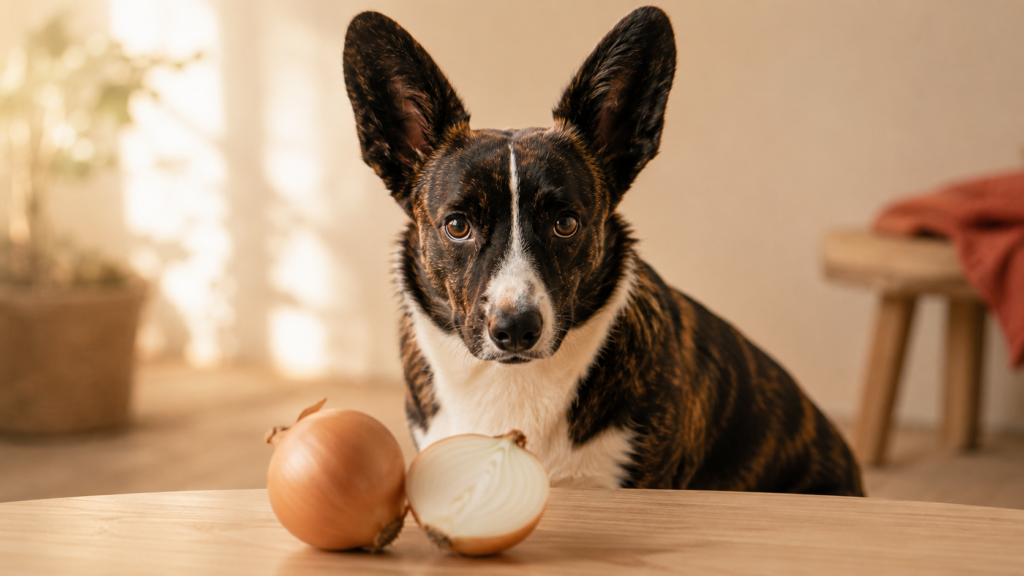
⚠️ No, dogs cannot eat onions. Onions are toxic to dogs — raw, cooked, powdered, or as part of another dish. Even a small amount can damage your dog’s red blood cells and lead to a serious condition called hemolytic anemia. There is no safe serving size.
Introduction
Nuggy once tried to steal a piece of my stir-fry off the counter. He didn’t get any — but it made me realize how many everyday foods contain onions without us even thinking about it. Soups, sauces, leftover rice, seasoned meat scraps… onions are everywhere in human food.
So I looked into it properly, checked with our vet, and the answer is clear: onions are one of the most dangerous foods you can accidentally give a dog. And the scary part? The symptoms don’t always show up right away.
Here’s everything you need to know — including what to do if your dog already ate some.
Are Onions Safe for Dogs?
No — onions are toxic to dogs in every form. Raw, cooked, fried, powdered, or mixed into another dish — it doesn’t matter. The toxin doesn’t go away with heat.
Onions belong to the Allium family, alongside garlic, leeks, chives, and shallots — all of which are also toxic to dogs. But onions are among the most commonly encountered, which makes them one of the most frequent causes of accidental poisoning.
What makes onions toxic?
Onions contain organosulfur compounds — specifically a substance called N-propyl disulfide. When a dog ingests onions, these compounds enter the bloodstream and attach to the oxygen molecules in red blood cells. This causes the body to treat its own red blood cells as foreign invaders and destroy them — a condition called hemolytic anemia.
The result: your dog’s blood can no longer carry enough oxygen to the body’s organs.
Does the amount matter?
Yes — but not in the way you might hope. A large dose can cause acute, rapid-onset poisoning. But even small amounts fed repeatedly over time can accumulate and cause the same damage. There is no safe threshold. The general guideline in veterinary literature is that as little as 0.5% of a dog’s body weight in onions can cause toxicity — for a 10 kg dog, that’s just 50 grams.
Onion powder is especially dangerous because it’s concentrated. A teaspoon of onion powder can be more toxic than a whole raw onion.
Symptoms of Onion Toxicity in Dogs
This is where onion poisoning gets tricky: symptoms are often delayed. Your dog might eat onions and seem completely fine for 24–72 hours while the red blood cell damage builds up inside.
When symptoms do appear, they look like this:
- Lethargy and weakness — your dog seems unusually tired or can’t get comfortable
- Pale, white, or yellowish gums — a key indicator of anemia
- Loss of appetite
- Vomiting or diarrhea — usually within the first few hours of ingestion
- Increased heart rate or rapid breathing — the body compensating for low oxygen
- Red or orange-tinged urine — caused by the breakdown products of destroyed red blood cells
- Fainting or collapse — in severe cases
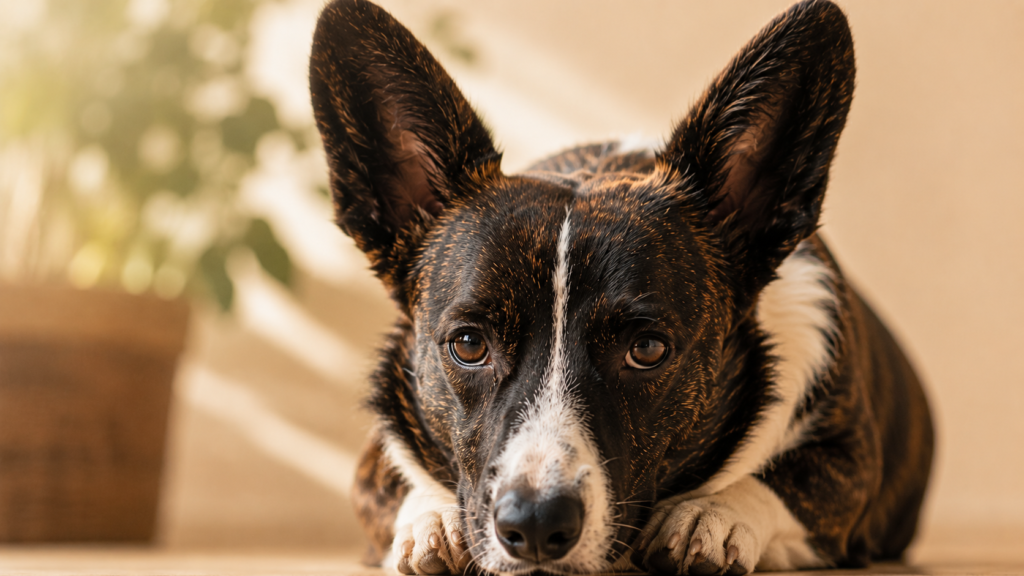
If your dog is showing pale gums, extreme lethargy, or red urine, treat it as a veterinary emergency. Don’t wait to see if it passes.
What to Do If Your Dog Ate Onions
Don’t panic — but do act quickly. Here’s exactly what to do:
Step 1: Estimate how much they ate.
Was it a piece that fell on the floor, or did they get into a pot of soup? The amount matters for the vet’s assessment.
Step 2: Call your vet or a pet poison hotline immediately.
Even if your dog seems fine right now, call. Don’t wait for symptoms to appear.
- Your vet or emergency animal hospital
- ASPCA Animal Poison Control: 1-888-426-4435 (there may be a consultation fee)
- Pet Poison Helpline: 1-855-764-7661
Step 3: Don’t induce vomiting on your own.
Unless your vet specifically instructs you to, don’t try to make your dog vomit. Some situations make this dangerous, and your vet will guide you based on what your dog ate and when.
Step 4: Monitor closely for 72 hours.
Even after a vet consultation, watch for the delayed symptoms listed above — especially pale gums, lethargy, and changes in urine color.
Having a dog first aid kit on hand won’t treat onion poisoning — that requires a vet — but it’s invaluable for the monitoring phase and for handling any secondary symptoms that arise. The ARCA PET Dog First Aid Kit is one we keep at home for exactly these moments.
What About Onions Hidden in Other Foods?
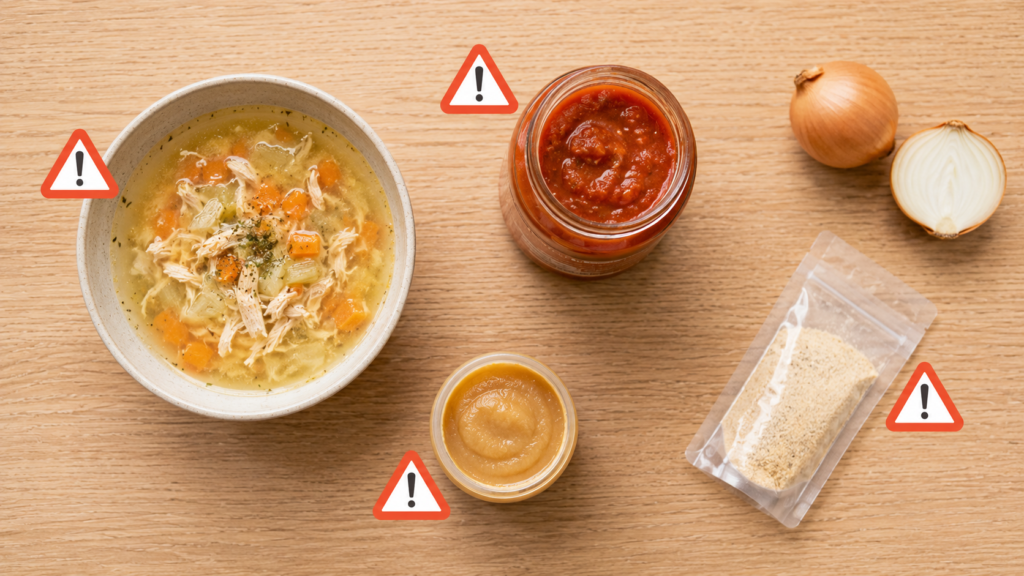
This is where most accidental onion poisoning happens — not from a raw onion, but from human foods that contain onion as an ingredient.
Foods to watch out for:
- Baby food (many varieties contain onion powder)
- Soups, broths, and gravies
- Stir-fry and fried rice
- Pizza and pasta sauces
- Seasoned meat or chicken scraps
- Packaged dips and condiments
- Onion rings — obviously, but also anything fried in the same oil
Onion powder on the ingredient list of any commercial or homemade food is a red flag. Always check labels before sharing human food with your dog.
Safe Alternatives to Onions for Dogs
If you want to give your dog a crunchy, savory snack instead — here are safe options that scratch the same itch:
- Carrots — crunchy, low-calorie, dogs love them
- Cucumber slices — hydrating and mild flavored
- Celery — also crunchy, breath-freshening as a bonus
- Green beans — filling, fiber-rich, useful for weight management
- Plain cooked chicken — if your dog wants something savory from your cooking, a small piece of plain cooked chicken (no seasoning, no onion) is a great option
All of these are covered in more detail in our Foods Dogs Can and Can’t Eat guide.
The Bottom Line
Onions are toxic to dogs — full stop. There’s no safe amount, no safe form, and no way to cook or process the toxin out. The danger is real whether it’s a raw onion, a cooked one, or onion powder hiding in a sauce.
The tricky part is that symptoms are delayed, so your dog might seem fine even after eating onions. If you know or suspect your dog ate onions, call your vet right away — don’t wait.
Nuggy has never gotten into an onion, but knowing the risks has made me a lot more careful about what goes into his bowl and what I leave on the counter. For a full breakdown of what’s safe and what isn’t, check out our complete safe foods guide.
Frequently Asked Questions
Q: Can dogs eat cooked onions?
A: No. Cooking does not neutralize the toxic compounds in onions. Cooked onions, caramelized onions, and onions in sauces or soups are just as dangerous as raw onions. The N-propyl disulfide that causes red blood cell damage survives heat.
Q: How much onion is toxic to a dog?
A: As little as 0.5% of a dog’s body weight can cause toxicity — that’s roughly 50g for a 10 kg dog. But the risk scales with size, so a small dog can be seriously harmed by a much smaller amount. There’s no safe threshold, so it’s best to treat any onion ingestion as a concern.
Q: My dog ate a tiny piece of onion that fell on the floor. Should I be worried?
A: A very small accidental exposure (like a piece that fell during cooking) is unlikely to cause serious harm in a large dog — but it’s worth calling your vet to confirm, especially if your dog is small or if it happened more than once. Don’t dismiss it.
Q: Is onion powder more dangerous than raw onion?
A: Yes. Onion powder is significantly more concentrated than fresh onion. A small amount of onion powder can be more toxic than a much larger serving of raw onion. Check all ingredient labels before sharing food with your dog.
Q: Can puppies eat onions?
A: Absolutely not. Puppies are more sensitive to toxins than adult dogs, have smaller body mass, and their organs are still developing. Any onion exposure in a puppy should be treated as an emergency.
Q: What other foods in the onion family are toxic to dogs?
A: The entire Allium family is toxic to dogs — that includes garlic (which is actually more toxic per gram than onion), leeks, chives, shallots, and scallions. If it’s in the onion family, it’s off the menu for dogs.
Q: What are the signs of onion poisoning in dogs?
A: Pale or white gums, extreme lethargy, loss of appetite, vomiting, diarrhea, increased heart rate, rapid breathing, and red or orange urine. Symptoms can take 24–72 hours to appear after ingestion. If you see pale gums or extreme weakness, go to an emergency vet immediately.