
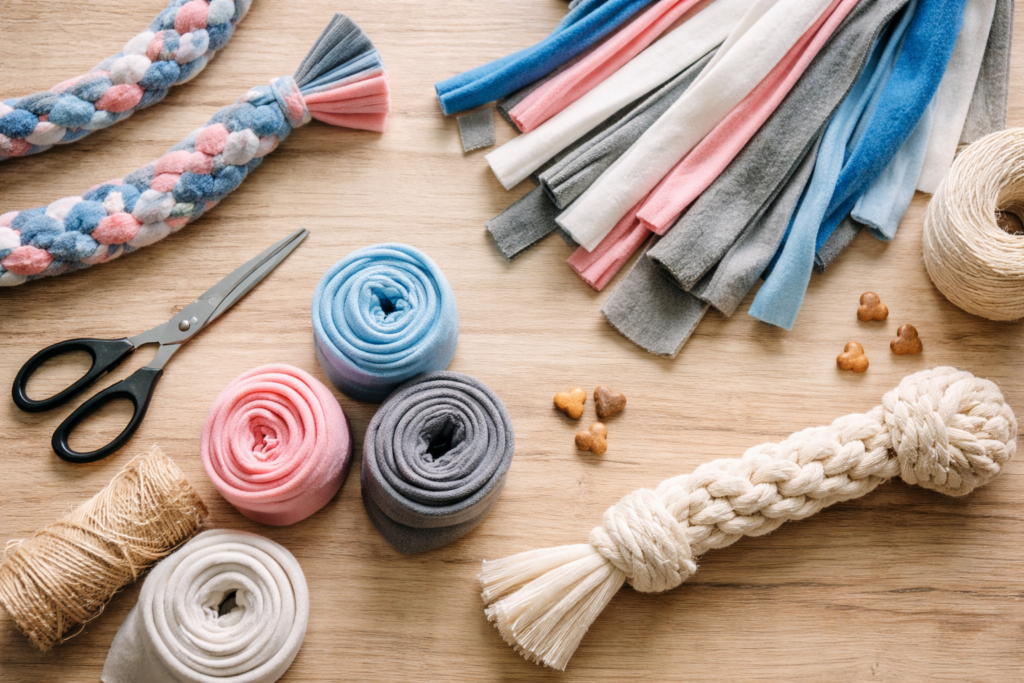
Step-by-Step Enrichment Toys You Can Make at Home (Safe, Cheap & Effective)
DIY dog toys can be incredible — or completely useless.
The difference is not creativity.
It’s purpose, structure, and execution.
This guide is a complete, practical resource for dog owners who want to:
- make safe DIY dog toys
- reduce boredom and destructive behavior
- understand how to use each toy correctly
- stop wasting time on toys that don’t work
Some links in this article may be affiliate links. This means we may earn a small commission if you choose to make a purchase — at no extra cost to you. We only recommend products we believe genuinely support calm, safe, and enriching experiences for dogs.
Why DIY Dog Toys Often Fail (And How to Do Them Right)
Most homemade dog toys fail for one simple reason:
they are built like crafts — not tools.
A good dog toy must serve one primary purpose:
- tug
- sniff
- chew
- problem-solve
When a toy tries to do everything, it does nothing well.
Every toy in this guide:
- has a clear purpose
- includes exact materials
- includes step-by-step instructions
- explains how to play with it
- explains who it’s for
Matching the toy’s purpose to your dog’s natural tendencies is what turns a DIY project into real enrichment.
Before making a toy, ask yourself:
- Does my dog calm down through sniffing, chewing, or interaction?
- Does frustration show up quickly, or can they focus for several minutes?
- Is this toy meant for active play or self-regulation?
1. DIY Knotted Rope Dog Toy
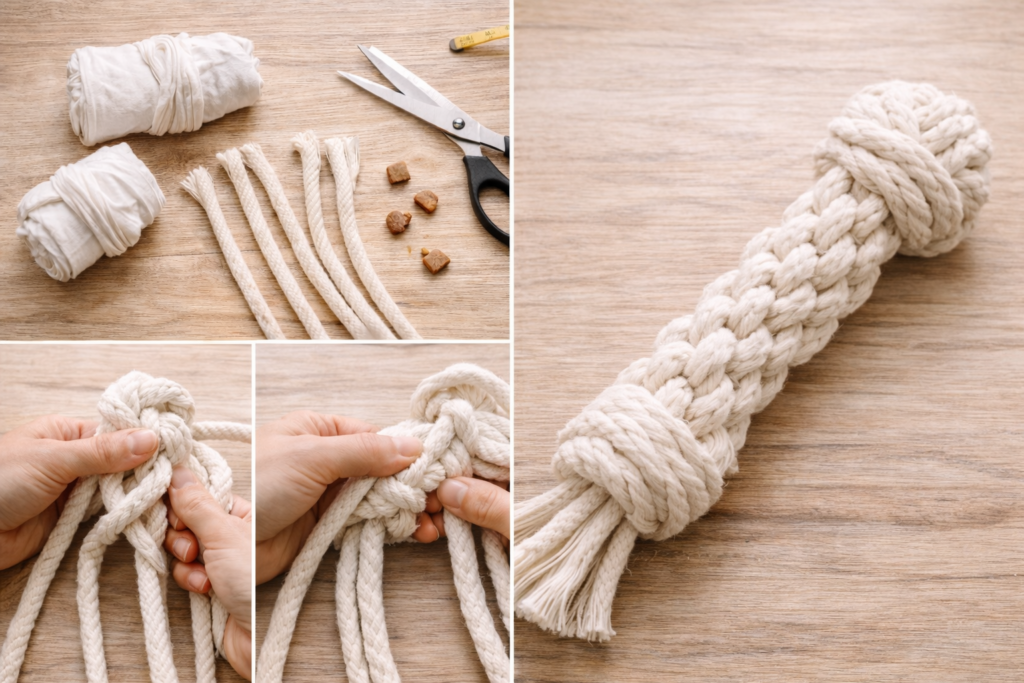
(Best for interactive tug & light chewing)
What this toy is for
- interactive play
- building engagement
- structured tug sessions
This is one of the most durable DIY dog toys when made correctly.
Materials Needed
- 2–3 old cotton t-shirts or untreated cotton rope
- scissors
- optional: ruler (for even length)
Avoid synthetic rope or dyed fabric.
Step-by-Step Instructions
- Cut fabric or rope into 3 long equal strips
- Tie one strong knot at the top
- Braid tightly all the way down
- Tie another tight knot at the end
- Trim loose ends
Key rule:
The tighter the braid, the longer it lasts.
How to Play With It
- Use for supervised tug games
- Keep sessions short (2–5 minutes)
- Let your dog win occasionally
Do not leave as an unsupervised chew toy.
Why It Works
- channels natural tug drive
- builds focus and confidence
- stronger than most plush toys
2. DIY Braided Fleece Dog Tug Toy
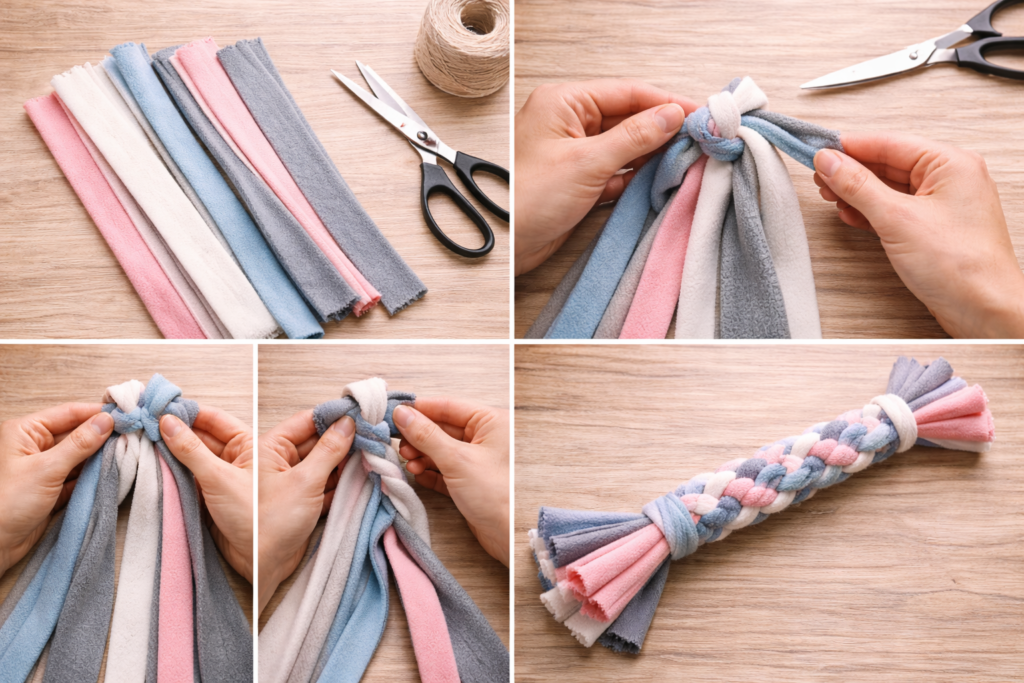
(Perfect for puppies & gentle chewers)
Fleece is ideal for young dogs and apartment living.
Materials Needed
- fleece fabric (cut into strips)
- scissors
Step-by-Step Instructions
- Cut 4 fleece strips, same length
- Stack strips and tie a knot at one end
- Separate into two pairs
- Cross pairs over each other in a tight braid
- Knot securely at the bottom
How to Play With It
- gentle tug
- fetch indoors
- reward-based play after training
Why It Works
- soft on teeth
- washable
- quiet
- great for puppies learning tug rules
3. DIY Woven Rope Dog Toy
(More durable tug option)
This version distributes pressure better than simple braids.
Materials Needed
- 4 cotton rope strands
- scissors
Step-by-Step Instructions
- Fold all ropes in half
- Secure the folded end with a knot
- Weave using an over-under pattern
- Tighten every section as you go
- Knot the end firmly
Best Use
- strong tug players
- interactive outdoor play
4. DIY Fleece Snuffle Ball
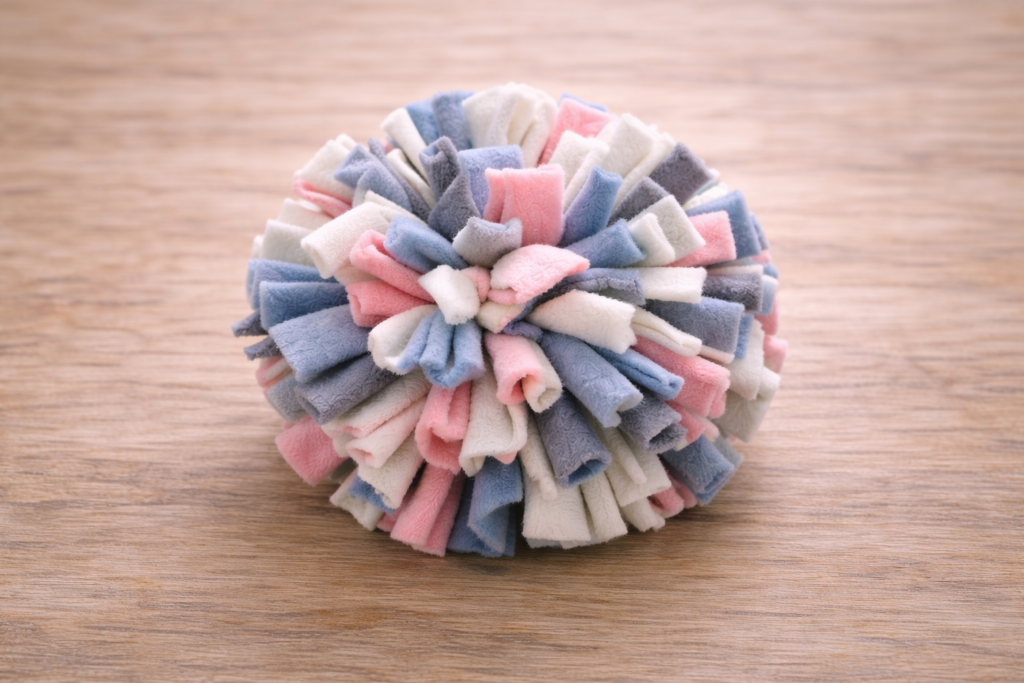
(One of the best boredom-busters)
This is true enrichment, not just a toy.
What This Toy Is For
- mental stimulation
- slow feeding
- calming anxious dogs
Materials Needed
- fleece fabric (many small strips)
- rubber or fabric base (ball or donut shape)
- scissors
Step-by-Step Instructions
- Cut fleece into short strips
- Push each strip through holes in the base
- Tie a tight knot on each strip
- Continue until the base is fully covered
- Hide treats deep between fleece layers
How to Use It
- sprinkle small treats inside
- place on floor
- let dog sniff and search
Why It Works
- sniffing tires dogs mentally
- reduces hyperactivity
- perfect for rainy days
5. DIY Towel Treat Puzzle
(Fastest enrichment toy you can make)
Materials Needed
- bath towel
- small treats
Step-by-Step Instructions
- Lay towel flat
- Scatter treats across surface
- Roll tightly
- Tie a loose knot
- Let dog figure it out
Best For
- beginners
- dogs new to enrichment
- travel & hotels
6. DIY Bottle Crunch Toy (Supervised Only)
Materials Needed
- empty plastic bottle (cap removed)
- sock or fleece sleeve
Step-by-Step Instructions
- Remove cap and ring
- Insert bottle into sock
- Tie ends securely
Important Safety Rule
This toy is always supervised.
If your dog punctures plastic easily — skip this toy.
How Long Should DIY Dog Toys Last?
There is no perfect lifespan.
DIY toys teach you:
- how your dog plays
- how long focus lasts
- what level of challenge is needed
If your dog destroys a toy quickly, it doesn’t mean DIY failed —
it means you learned something valuable.
When DIY Dog Toys Are No Longer Enough
DIY toys are a starting point, not the final destination.
They help you understand:
- play style
- chewing intensity
- enrichment needs
From there, structured enrichment tools become a logical upgrade, not a random purchase. For many dogs, DIY toys are the first step toward understanding their enrichment needs.
Once you know whether your dog prefers sniffing, licking, chewing, or problem-solving, structured enrichment toyscan offer the same benefits with greater durability and consistency — especially for busy days or longer indoor routines.
For example, dogs who enjoy sniffing often transition well to snuffle-style enrichment mats, while dogs who self-soothe through licking may benefit from calm lick-based toys designed for longer, quieter engagement.
Check it here:
FAQ
Are DIY dog toys safe?
Yes, when made from dog-safe materials and used as intended.
What’s the best DIY toy for boredom?
Snuffle toys and treat puzzles.
Are fleece dog toys durable?
Durable for play — not aggressive chewing.
Can puppies use DIY dog toys?
Yes, especially fleece and tug toys.
How many DIY toys should I rotate?
2–4 rotated weekly works best.
Final Thoughts
DIY dog toys work best when they:
- serve one purpose
- are used correctly
- are part of a routine
The real value of DIY toys isn’t saving money — it’s learning how your dog thinks, relaxes, and solves problems. Once you understand that, every future toy choice becomes easier and more intentional.
Craft less.
Observe more.
Your dog will tell you what works.