
Why Calm Enrichment Matters (Before We Start)
Many dogs aren’t hyper because they need more exercise.
They’re restless because they never fully decompress.
Calm enrichment works because it:
- lowers heart rate
- shifts focus inward
- activates natural soothing behaviors (sniffing, licking, chewing)
The goal isn’t excitement.
The goal is emotional regulation.
1. Sniffing Games (The Fastest Way to Calm the Brain)
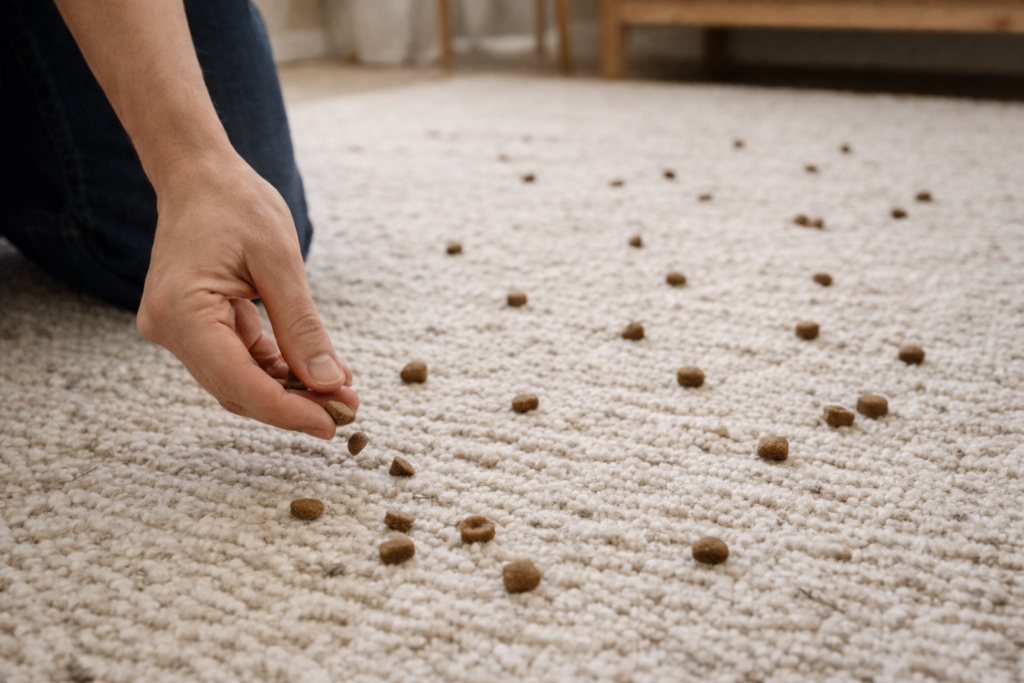
Sniffing is neurologically calming.
Just 10 minutes of nose work can equal a long walk.
How to do it:
- scatter kibble on the floor or in grass
- hide treats under cups or towels
Why it works:
Sniffing activates the parasympathetic nervous system — the calm mode.
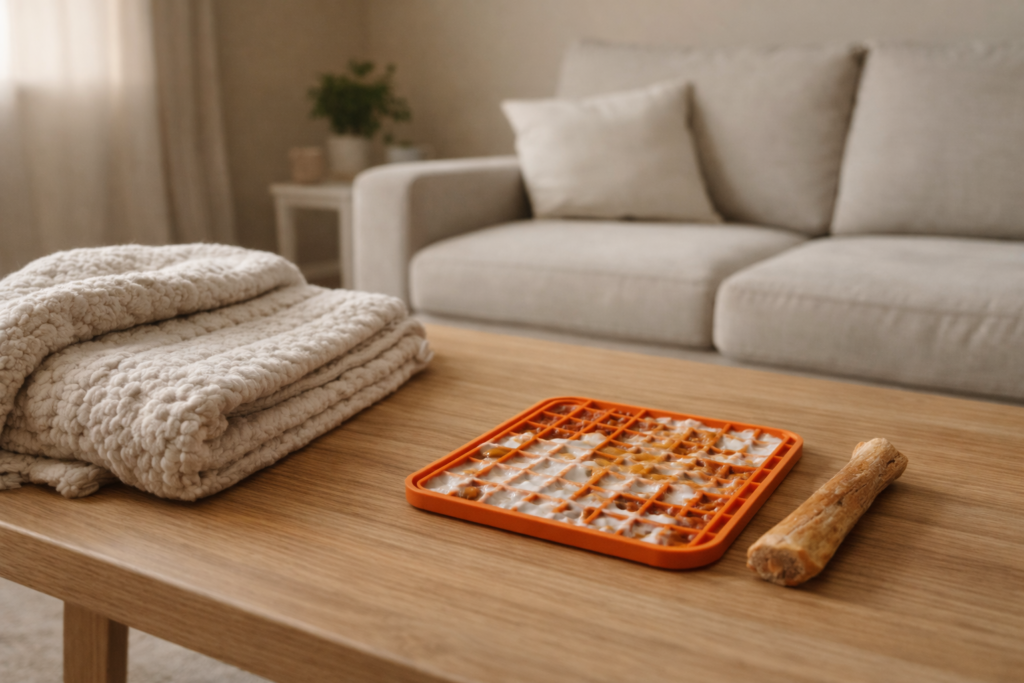
2. Lick Mats & Frozen Treats
Licking is a self-soothing behavior, similar to how babies calm themselves.
Best options:
- frozen yogurt + pumpkin
- wet food spread thin
- single-ingredient purees
Use when:
evenings, post-walk decompression, stressful days.
3. Chewing With a Purpose
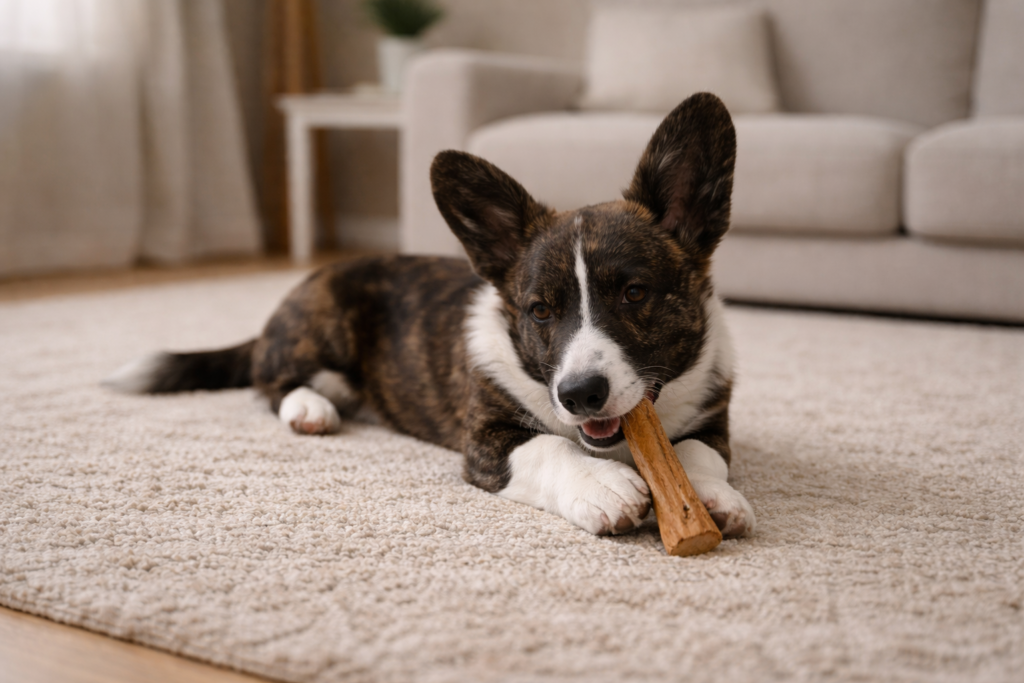
Not all chews calm dogs.
Some overstimulate.
Choose chews that are:
- long-lasting
- non-crunchy
- low-arousal
Chewing releases tension through the jaw and neck — where dogs store stress.
4. Calm Toy Rotation (Less Is More)
Too many toys = constant decision-making.
Better approach:
- 3–5 toys available
- rotate weekly
- mix textures, not noise
Scarcity increases engagement and reduces background chaos.
5. Cardboard Box Destruction (Yes, Really)
Shredding is natural stress relief.
Give your dog:
- empty boxes
- paper stuffing
- no tape or staples
Let destruction happen in a controlled, safe way.
6. “Find It” Micro Games Indoors
Say “find it” and gently toss treats around the room.
Why it works:
- combines sniffing + focus
- no running
- perfect for apartments
This is calm enrichment disguised as play.
7. Towel Treat Rolls (Zero-Cost Enrichment)
Roll treats into a towel and let your dog figure it out.
This encourages:
- problem-solving
- patience
- slower movement
Great for rainy days or evenings.
8. Window Watching (Done Right)
Uncontrolled window access can increase reactivity.
But structured observation can be calming.
Tips:
- limited time
- calm praise
- remove access if arousal spikes
Think mindfulness, not surveillance.
9. Short Training Sessions (2–5 Minutes)
Training isn’t about obedience here.
It’s about confidence and clarity.
Focus on:
- simple cues
- slow pace
- success-based sessions
Mental clarity reduces emotional chaos.
10. Background Sounds for Decompression
White noise, calm music, or nature sounds can:
- mask triggers
- lower environmental stress
- support rest
Especially useful in apartments or busy households.
11. Predictable Evening Routine
Dogs relax when they know what comes next.
A calm routine might look like:
- short sniff walk
- enrichment activity
- chew or lick mat
- rest
Routine = safety.
12. Doing Less (The Most Overlooked Tool)
Sometimes the best enrichment is space.
Too much:
- play
- interaction
- novelty
…can keep dogs in a constant state of arousal.
Calm grows in the gaps.
Common Mistakes That Keep Dogs Restless
• Confusing tired with calm
• Using exciting toys for relaxation
• Constant stimulation without recovery
• Skipping mental decompression entirely
Calm isn’t passive.
It’s trained — gently.
FAQ
How long should calm enrichment last?
10–20 minutes is enough.
Can puppies do calm enrichment?
Yes — especially puppies. It builds regulation early.
Is this instead of walks?
No. It complements physical exercise.
What if my dog gets more excited?
Switch to sniffing or licking-based activities.
How often should I use enrichment?
Daily, ideally at predictable times.
Final Thoughts
A calm dog isn’t a bored dog.
It’s a dog whose needs are met correctly.
When you shift from stimulation to regulation,
everything changes — behavior, focus, and peace at home.