
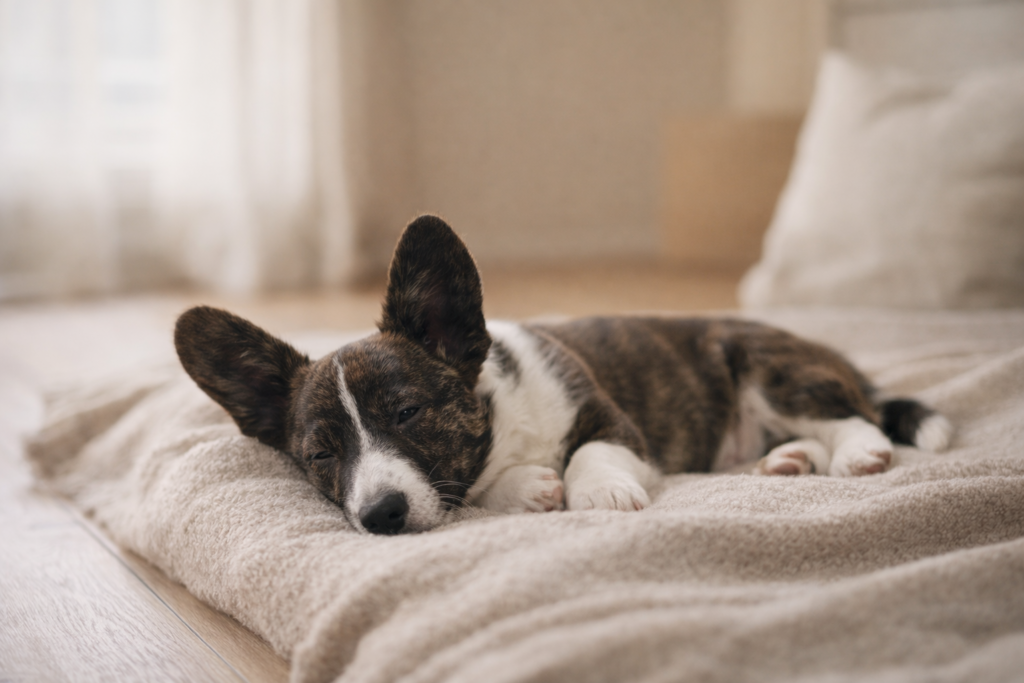
Many behavior problems don’t come from a lack of training.
They come from small missing pieces in a dog’s daily rhythm.
Dogs thrive on predictability, calm energy, and meaningful stimulation — not constant commands or endless activity.
When these simple needs are met every day, most dogs become noticeably calmer, more focused, and emotionally balanced.
Below are 10 simple daily habits that quietly shape a happier, steadier dog — without pressure, overwhelm, or complicated routines.
1. Start the Day With a Sniff Walk (Not a Power Walk)
A walk isn’t just exercise.
For dogs, it’s information gathering.
Let your dog sniff freely — slowly, without rushing — especially in the morning.
Even 10–15 minutes of sniffing can:
- reduce stress hormones,
- mentally satisfy your dog,
- lower restlessness for hours afterward.
A calm dog is often just a mentally fulfilled dog.
2. Keep Feeding Times Predictable
Dogs feel safest when their day has structure.
Feeding at roughly the same times every day:
- stabilizes digestion,
- reduces food anxiety,
- creates natural calm anticipation instead of frantic behavior.
Predictability = emotional safety.
3. Add One Short “Thinking Moment” Daily
This isn’t a training session.
It’s mental engagement.
Examples:
- a short “find it” game,
- basic cues your dog already knows,
- slow treat searching in a towel or mat.
Just 5 minutes of thinking work can be more calming than a long walk.
4. Practice Calm Togetherness
Not every interaction needs stimulation.
Sit with your dog.
No phone. No commands. No toys.
Dogs learn emotional regulation by co-regulating with us.
This habit teaches your dog that calm connection is normal — not boring.
5. Rotate Toys Instead of Leaving Them All Out
Too many toys create noise, not enrichment.
Rotate toys every few days:
- novelty stays high,
- engagement increases,
- overstimulation decreases.
Less clutter = more focus.
6. Use Gentle, Intentional Touch
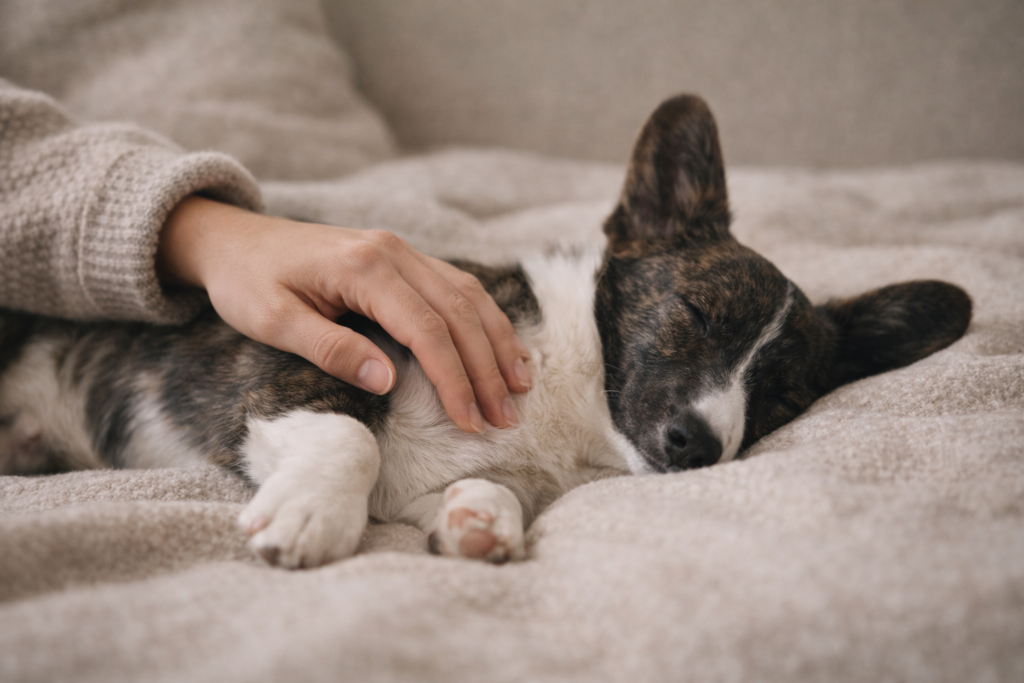
Not all petting is calming.
Slow chest rubs, shoulder strokes, and gentle ear massages:
- activate the parasympathetic nervous system,
- help dogs decompress,
- strengthen trust.
Watch your dog’s breathing — slower is better.
7. Introduce One Small New Experience Per Day
Balance comes from confidence.
A new smell, surface, sound, or short environment change helps dogs:
- adapt more easily to the world,
- build resilience without overwhelm,
- stay curious instead of anxious.
Small novelty beats big chaos.
8. Protect a Consistent Sleep Space
Sleep quality affects behavior more than most people realize.
Your dog’s sleep area should be:
- predictable,
- quiet,
- respected (no constant interruptions).
A well-rested dog learns better, reacts less, and handles stress more smoothly.
9. Regulate Your Own Energy
Dogs read us constantly.
When we rush, multitask, or feel tense, dogs absorb it.
When we slow down, breathe, and move intentionally, dogs mirror that state.
Your calm presence is one of the most powerful tools you have.
10. End the Day Gently
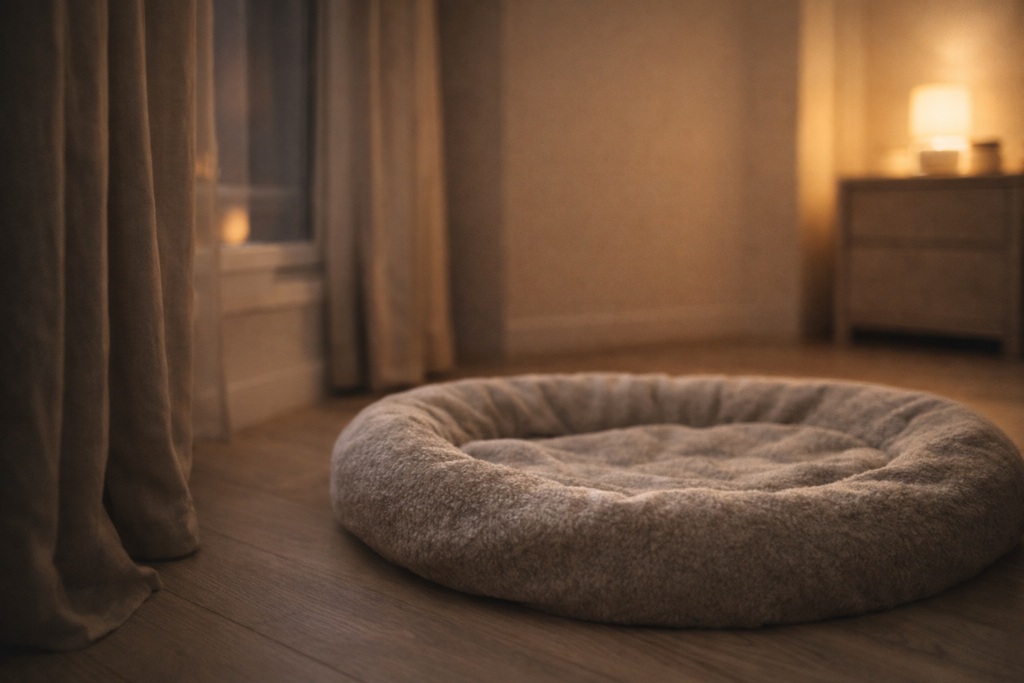
Avoid high-arousal play late in the evening.
Instead:
- offer a calm chew,
- dim lights,
- slow your movements.
Closing the day softly helps your dog sleep deeper — and wake up steadier.
Why These Habits Work (And Why They’re Often Missed)
None of these habits are flashy.
That’s exactly why they work.
They support:
- the nervous system,
- emotional predictability,
- mental satisfaction.
Balanced dogs aren’t created by intensity.
They’re shaped by quiet consistency.
Common Mistakes to Avoid
- Trying to “tire the dog out” instead of calming the mind
- Overloading the day with activities
- Inconsistent routines
- Ignoring rest and recovery
More is not better.
Better is better.
FAQ
How many hours per day should an adult dog rest?
Most adult dogs need 12–14 hours of rest per day, including short naps. Puppies and young dogs may need up to 18–20 hours to stay emotionally balanced.
How much daily activity does a calm dog really need?
Calm dogs need balanced activity, not constant movement. A mix of walks, mental stimulation, and intentional restworks better than trying to tire a dog out.
Are daily routines important for reducing stress in dogs?
Yes. Predictable routines lower stress and help dogs feel safe. Knowing what comes next makes dogs calmer and more confident.
Can mental stimulation calm a dog more than exercise?
Often yes. Mental work and sniffing can calm dogs more effectively than long physical exercise alone, especially for anxious or overstimulated dogs.
How long does it take to see behavior changes from daily habits?
Small improvements can appear within a few days, but lasting calm usually builds over weeks of consistent daily habits.
Final Thoughts
You don’t need a perfect schedule.
You don’t need to train all day.
You need a few daily anchors your dog can rely on.
Start with one or two habits from this list.
Build slowly.
Let calm become your default.
Over time, you’ll notice something powerful:
Your dog isn’t just behaving better —
they’re living better.